Understand any stock in simple English
Enter a ticker to learn what the company does and how it makes money.
Hong Kong Exchanges and Clearing Limited
Hong Kong Exchanges and Clearing runs the Hong Kong stock exchange and related markets, connecting investors who want to buy and sell shares, derivatives, and commodities.
Hong Kong Exchanges and Clearing is the company that runs the main marketplace for buying and selling stocks in Hong Kong. It is not a broker or a bank. It owns and operates the trading platforms and the plumbing behind them, and it collects fees every time investors and companies use those platforms.
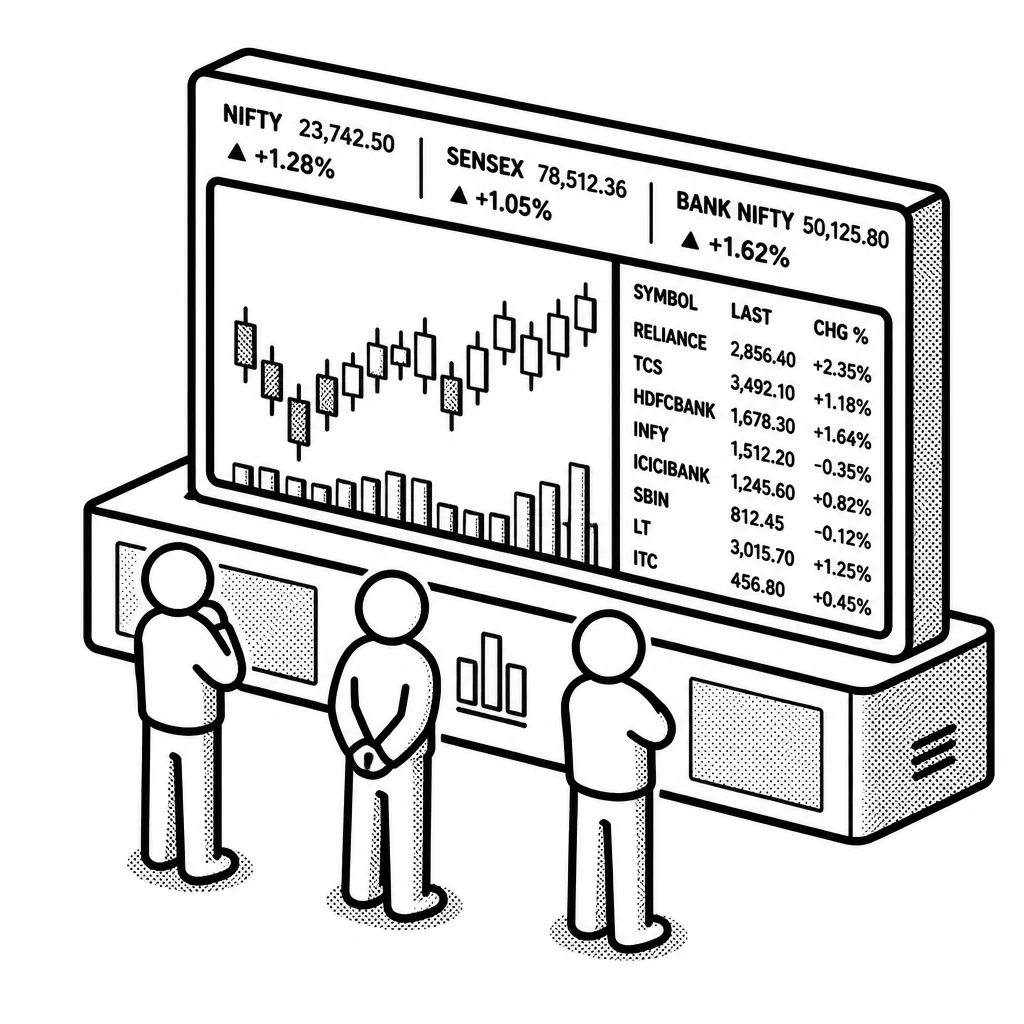
Its biggest business is the cash market, which is where shares trade. Companies list their shares on the exchange, and investors buy and sell them there. The company earns money from trading fees, from listing fees paid by companies that want to be on the exchange, and from the data and technology services around the market. It also runs a derivatives market for futures and options, a commodities business, and a clearing house that stands in the middle of every trade to make sure both sides honor the deal. Its customers are two broad groups. On one side are companies that want to raise money and have their shares traded. On the other are the banks, brokers, funds, and individual investors who trade those shares. Hong Kong's role as a gateway between mainland China and global investors makes the exchange especially important. Many Chinese companies list there to reach international money, and global investors use it to get exposure to China.
Competition comes from other exchanges, especially in mainland China and Singapore, and from private trading venues. But Hong Kong's exchange has a strong position because of its location and its legal system, and its clearing house gives it a steady, reliable stream of fees. The company spends its money on technology, on building new trading tools, and on returning cash to shareholders through dividends.
Saved answer · last researched 12 Nov 2026
BIG PICTURE
Tech stocks now make up about 43% of trading on Hong Kong's stock exchange
- 43% Tech stocks' share of average daily turnover
- 57% All other sectors combined
When investors trade on Hong Kong's exchange, tech companies account for roughly 43 percent of the money changing hands, according to the exchange's chief executive. A few years ago that figure sat around 20 to 25 percent. HKEX earns fees on every trade, so the mix of what people buy and sell shapes its business. Money moving toward AI and tech listings pulls trading volume with it. Source: The Standard (HK), data from 2026
Timeline
Four Exchanges Become One
Hong Kong's stock market used to be four separate exchanges, which made rules and paperwork a mess. In 1986 they merged into a single Stock Exchange of Hong Kong, giving the territory one place to trade and one set of rules — the start of the modern market.
A Single Company Called HKEX
By 2000, the stock exchange, the futures exchange and the clearing company realized they were stronger together than apart. They merged into one holding company, HKEX, putting stocks, futures and the plumbing that settles trades all under one roof. That mattered: a trader could now do everything in one place, which made Hong Kong a tougher competitor against big global exchanges.
The Exchange Lists Itself
Soon after, HKEX did something a little strange: it listed its own shares on its own stock exchange. The company that runs the market became a stock you could buy — a blue chip that rose and fell with the market it operated.
Buying the London Metal Exchange
In 2012 HKEX made its boldest move yet, buying the London Metal Exchange — the world's biggest marketplace for metals like copper and aluminum. It was a big bet to grow beyond Asia and beyond stocks, turning HKEX from a shares-only business into one that also trades commodities.
Clearing the Off-Exchange Trades
That same year, HKEX added a new piece of plumbing: a clearing house for over-the-counter derivatives, the complex deals made privately between banks rather than on an exchange. It was less flashy than the metals deal, but it made the company's back-office machinery more complete.
A CEO Steps Down
The good times did not last. After six straight quarters of falling profits, with trading weak and few companies going public, CEO Nicolas Aguzin left when his three-year contract ended in 2024. Bonnie Chan took over, becoming the exchange's first female CEO.
Back on Top
What a comeback. In 2025 Hong Kong raised more money from new listings than any exchange in the world, with over a hundred companies going public. A surge of mainland tech innovation — the so-called DeepSeek moment — plus market reforms pulled international money back into Hong Kong, and trading volume hit records.
A Tech Index and the Middle East
Riding that wave, HKEX launched its first index focused on Hong Kong's tech companies. It also planted flags in the Middle East, opening an office in Riyadh and a commodities pricing business in Dubai, reaching for investors far beyond Asia.
Beyond the Stock Market
Looking ahead, the chairman warned that Hong Kong cannot lean on stocks alone. In 2026 more than 120 companies listed, raising over HK$400 billion and beating the previous full year, while HKEX pushed into bonds, currencies and gold — building a wider marketplace instead of a one-trick stock exchange.