Understand any stock in simple English
Enter a ticker to learn what the company does and how it makes money.
Singapore Exchange Limited
Singapore Exchange runs the main stock and derivatives market in Singapore, and earns fees from trading, clearing, and listing.
Singapore Exchange is the marketplace where Singapore's stocks and many of Asia's financial contracts change hands. When investors buy or sell shares, derivatives, or commodities, this company provides the electronic platform that matches the two sides, and then the plumbing that makes sure the trade settles cleanly.
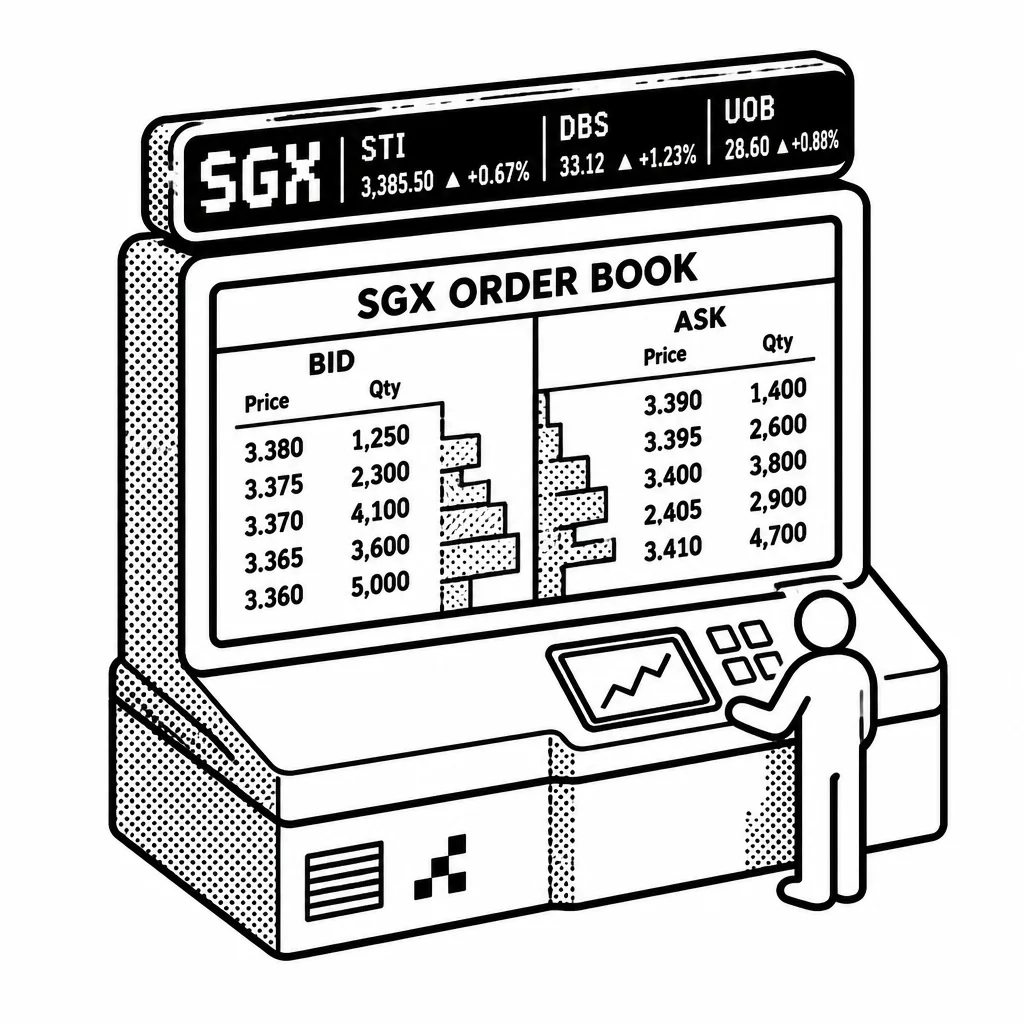
Its business has three main parts. First, it runs the securities market — the stocks and bonds people think of when they hear "the Singapore exchange." Second, it operates the derivatives market, where traders bet on the future price of stock indexes, currencies, and commodities. Third, it owns the clearing houses that stand in the middle of every trade, reducing the risk that one side fails to pay. That clearing role is a bit like being the referee and the bank at the same time: it takes a small fee from both players and guarantees the game stays fair. It also runs an electricity market for Singapore. Who pays it? Traders pay a fee per trade. Companies pay to list their shares on the market. Banks and brokers pay for clearing and settlement services, and for the market data and technology connections they need to trade. Customers stick with it because liquidity — lots of buyers and sellers in one place — creates a network effect. The more people trade there, the easier it is for everyone to trade.
The exchange sits in a crowded neighborhood, competing with bigger regional venues like Hong Kong Exchanges and Clearing and global derivatives powerhouses. Its edge is in niche derivatives, especially a huge franchise in Asian equity index futures and a growing suite of commodity contracts. A big swing factor is regulation and listing flow: when companies choose to list elsewhere, or when new rules change how people trade, the exchange feels it quickly. It pays out a healthy chunk of profits to shareholders as dividends, which makes it popular with income-focused investors.
Saved answer · last researched 12 Nov 2026