Understand any stock in simple English
Enter a ticker to learn what the company does and how it makes money.
Japan Exchange Group, Inc.
Japan Exchange Group runs Japan's main stock and derivatives exchanges, making money from trading fees, listings, and market data.
Japan Exchange Group runs the marketplace where Japanese companies' shares are bought and sold. It owns the Tokyo Stock Exchange, the huge venue where companies list their shares, and the Osaka Exchange, which handles derivatives like futures and options. When you hear about the Nikkei going up or down, that number comes from activity on its markets. It also runs a clearing house that stands in the middle of trades to make sure nobody gets stiffed if a trader goes bust.
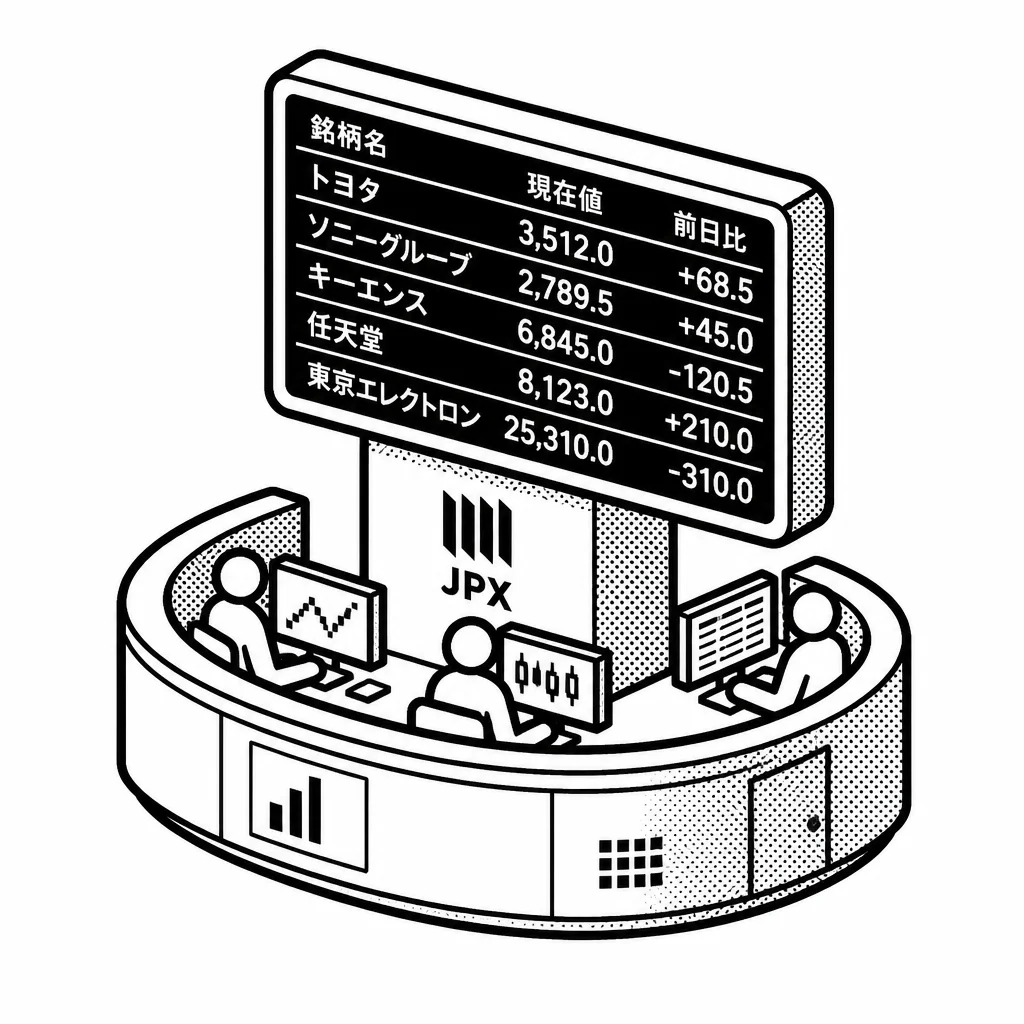
The company is the referee and landlord of Japan's capital markets rolled into one. It does not trade for its own account or bet on stocks; it simply provides the field and takes a small cut of the action. Companies pay to list their shares and to stay listed. Traders and brokers pay fees for each transaction. And everyone who wants real-time prices pays for market data. It earns a bit from clearing services too. Because it sits at the center of a market few can easily replicate, its position is about as entrenched as it gets. The Tokyo Stock Exchange is one of the world's largest by market value, and the Group's push to make Japanese companies treat shareholders better has been a big story. Its "name and shame" list of companies trading below book value, plus new rules on capital efficiency, helped drive a wave of buybacks and a rally in Japanese stocks in recent years. That matters to the exchange because a healthier, more attractive market draws more listings, more trading, and more data subscribers. Global rivals like Hong Kong Exchanges and Clearing and Nasdaq compete for listings and trading volume, but the Group's home-field advantage in Japan is strong.
Its main risk is that trading volumes dry up when markets are calm or when investors sour on Japan. Listing revenue is steady, but transaction fees swing with how busy the market is. The Group has also spent heavily on technology and on making its markets faster and more reliable, which is a constant cost. Still, it throws off plenty of cash, and it returns much of that to shareholders through dividends and buybacks rather than hoarding it.
Saved answer · last researched 12 Nov 2026