Understand any stock in simple English
Enter a ticker to learn what the company does and how it makes money.
Yangtze Memory Technologies Co., Ltd.
YMTC designs and manufactures NAND flash memory chips — the storage that holds data in phones, laptops, and data centers.
YMTC is one of the few companies in the world that can make NAND flash memory, the chips that store photos, apps, and files inside your phone and laptop. Most people never see these chips, but nearly everyone carries several of them around every day. Only a handful of firms globally know how to build them at scale, and YMTC is China's homegrown attempt to break into that club.
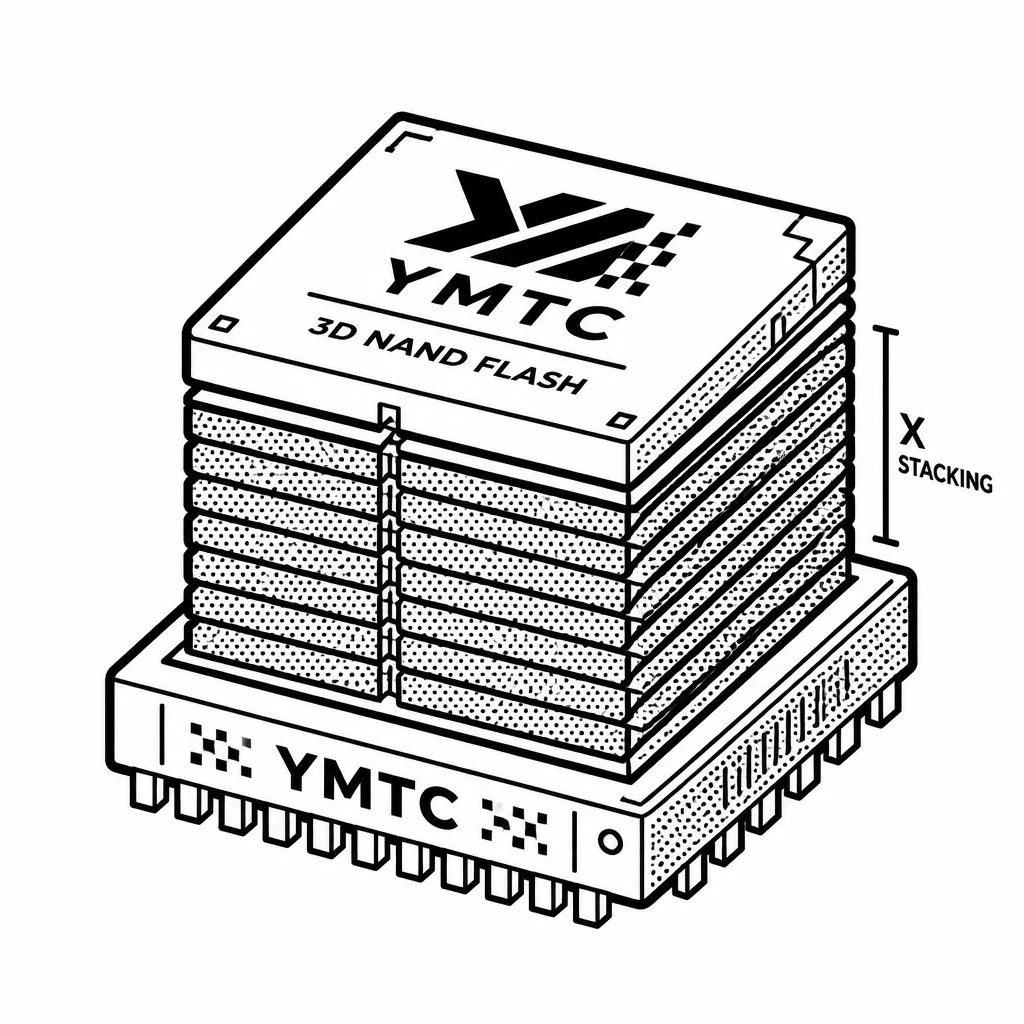
The company designs the chips and runs its own factories, selling them to makers of smartphones, solid-state drives, USB sticks, and memory cards. It stands out for a clever technical trick called Xtacking: it builds the memory cells and the control circuitry on separate wafers, then fuses them together. That lets YMTC pack more storage into less space and build chips faster than some rivals. Its main competitors are other giants like Samsung, SK Hynix, Micron, and Kioxia, all of which have far longer track records and bigger scale. YMTC sits at the center of a geopolitical fight. In 2022, the United States put it on a restricted trade list, limiting its access to American chipmaking tools and parts. That hurt the company's ability to expand and upgrade its factories at the pace it wanted. China has poured money and support into YMTC precisely because NAND memory matters so much to the country's technology base.
The business is brutally cyclical: memory chip prices swing wildly depending on supply and demand across the industry. A company can make huge profits when prices are high and lose money when the market floods with chips. YMTC remains a private company, backed by state and investor funding, and its story is really about whether a young upstart can catch up to companies that have been perfecting this craft for decades — while doing it under heavy export restrictions.
Saved answer · last researched 10 Nov 2026
BIG PICTURE
China's YMTC now ships one in seven NAND memory chips sold worldwide
- 25% Samsung
- 22% SK Hynix
- 14% YMTC
- 39% Kioxia, Micron and others
YMTC's chips sit in phones, laptops and data centers, and by shipment volume it held 14% of the global NAND market in the second quarter of 2026, third behind Samsung and SK Hynix. There is a catch: by revenue it ranks only fifth. Most of what it sells is cheaper consumer storage, while the pricier data-center drives that bring in more money per chip are a smaller part of its business. Source: Counterpoint Research via Chosunbiz, data from 2026
Timeline
A National NAND Champion Is Born
In 2016, China had never mass-produced NAND flash memory, the chips that store data in phones and computers. So Tsinghua Unigroup and a big government fund set up Yangtze Memory Technologies in Wuhan, building on an earlier local chip base, with a clear mission: create a national NAND champion. It was a bet that China could build this industry from almost nothing.
Xtacking Changes the Game
YMTC's answer was a clever trick called Xtacking. Normally, a memory chip is built in one long, compromised process; Xtacking splits the memory cells and the circuits that talk to them onto separate wafers, builds each with its best method, then bonds them together. The idea won a Best of Show award at a major industry conference, and the same year the company shipped its first volume 3D NAND.
Gen 2 Ships With Xtacking
A year later, the second generation of chips built on the Xtacking design went into mass production. The clever architecture was no longer a demo; it was the company's standard way of making memory.
Leapfrogging to 128 Layers
Instead of grinding through every step, YMTC skipped the 96-layer generation and jumped straight to 128-layer chips, including the first of a denser type called QLC in that class. One part claimed the highest bit density, speed and capacity of any released flash at the time. The company also launched its own consumer SSD brand, ZHITAI, putting its chips directly in front of buyers.
The CEO Steps Down
The man who had led YMTC since its founding and drove its rise, Simon Yang, stepped down for personal reasons. Chen Nanxiang took over on an interim basis. The timing was rough: the parent company, Tsinghua Unigroup, had gone bankrupt, and U.S. sanctions were coming.
The U.S. Entity List
In December 2022, the U.S. put YMTC on its Entity List, cutting it off from American technology and equipment. Apple dropped plans to use its chips in iPhones under political pressure. The company later cut about a tenth of its staff and froze hiring as sanctions and weak demand bit.
Buying Through the Downturn
While the big memory makers pulled back during the 2023-2025 downturn, YMTC did the opposite: it kept pouring billions into plants and equipment and paired the expansion with price cuts to grab market share. It was a classic countercyclical bet, spending when others retreat. And it worked — the company roughly tripled its share of global NAND capacity in just a few years.
The IPO That Stalled
YMTC's holding company filed to list on Shanghai's STAR Market, aiming to raise about 33 billion yuan and become China's first publicly traded 3D NAND maker. The review was accepted, but the listing was later put on hold as regulators slowed chip offerings amid a tech stock selloff, with a possible debut pushed into 2027.
Third in the World
By mid-2026, YMTC held about 14% of global NAND capacity — third worldwide and first in China, shipping 294-layer products. The company that started with no domestic NAND industry at all had become a co-runner behind Samsung and SK Hynix.