Understand any stock in simple English
Wispr Flow
Wispr Flow makes AI software that turns your spoken words into clean, polished text and meeting notes.
Wispr Flow is a software company that lets you talk instead of type. You hold down a key, speak naturally, and its AI turns your speech into clean, edited writing that lands in whatever app you're already using — email, Slack, a document, a chat box. It works across the tools professionals live in all day.
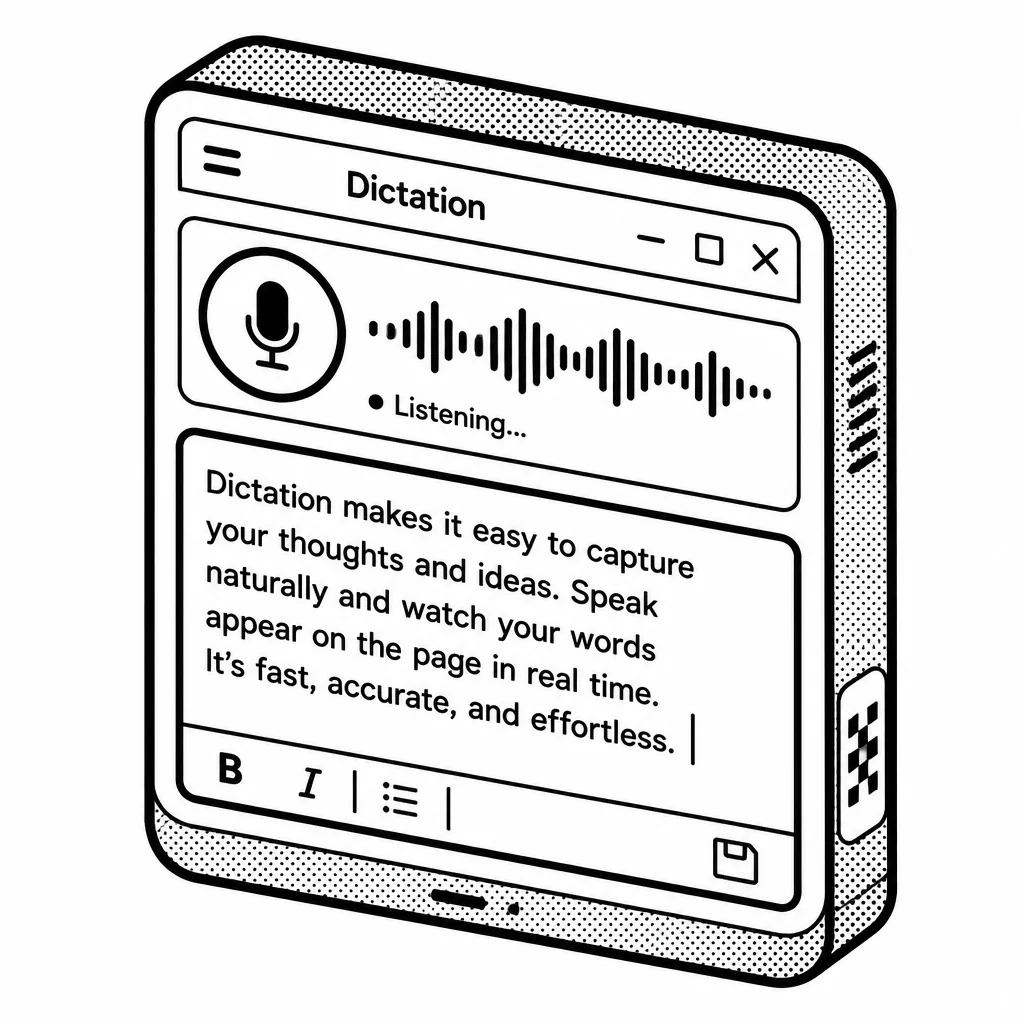
The pitch is simple: people think far faster than they can type, and dictation tools historically produced a messy transcript full of "um"s, false starts, and missing punctuation. Wispr Flow cleans all that up and formats the output so it reads like you wrote it carefully. It also auto-corrects and adapts to how you speak. That polish is the reason people choose it over the free dictation built into their phones or laptops. A big part of the business is meeting notetaking. The software can capture what's said in a call and turn it into usable notes, which is valuable to anyone who spends their day in meetings and hates writing summaries afterward. It sells to both professionals and everyday consumers, typically through a subscription. The market for AI transcription and note-taking is crowded, with well-funded rivals and the platform giants all pushing their own versions, so Wispr Flow's edge rests on making the experience feel effortless and accurate rather than on being the only option.
Wispr Flow is a private, venture-backed startup, so its finances aren't public the way a listed company's are. It has raised money from investors who are betting that voice becomes a normal way to write and take notes, not a novelty. The bet is straightforward: if talking to your computer becomes as routine as typing, the company that makes that feel natural could own a valuable slice of how people work.
Saved answer · last researched 20 Nov 2026
BIG PICTURE
About 60% of everything dictated through Wispr Flow is not in English
- 60% Dictations in languages other than English
- 40% Dictations in English
Most people assume a voice typing app is an English-first tool for American offices. Wispr Flow says roughly three in five dictations happen in another language, which is why the company built a Hinglish model for people who mix Hindi and English mid-sentence. India has become its second-largest market by users and paying subscribers, and local annual pricing was set far below the global rate to pull in more of them. Source: The Rehan Kadri, citing Wispr Flow, data from 2026
Timeline
Two Stanford Friends Chase a Jarvis
In 2021, two Stanford classmates, Tanay Kothari and Sahaj Garg, started Wispr with a wild idea: a wearable that reads silent speech and turns it into text, no keyboard or voice needed. They pictured voice-first computing, a real-life Jarvis. Seed money came in that year to chase a thoughts-powered neural interface, which meant building both the brain-reading hardware and the software behind it.
The Hardware Dream Dies
Three years and about $14 million later, the silent-speech device still had no real consumer market. In July 2024, Kothari laid off most of the team, 35 of 40 people, and stopped hardware work for good. The survivors pivoted to the piece they had already built: the software that cleaned up speech into formatted text. The company had failed at the dream but stumbled onto a real product.
Flow Launches and Takes Off
Wispr Flow launched that October and immediately topped Product Hunt. About one in five users paid for it, far above the usual few percent in software, which suggested the dictation engine was something people actually wanted. The hardware company's leftover software had become its actual business.
Wispr Picks Speed Over Comfort
Voice AI was getting crowded, with polished dictation rivals already on the market and nearly $400 million pouring into the space. Rather than fight feature by feature, Wispr chose to grow fast before Big Tech or bigger-funded rivals could catch up. It bet on breadth: working across platforms, supporting 104 languages, and offering a command mode.
A $30 Million Series A
In June 2025, Menlo Ventures led a $30 million funding round, bringing total money raised to $56 million. Users were growing about 50% month over month, and more than 30% came from outside tech, a sign the product was reaching ordinary people. The company was nearing profitability but took the cash anyway, to pour fuel on revenue before competitors did.
Valuation Jumps to $700 Million
By November 2025, Wispr raised another $25 million at a $700 million valuation, led by Notable Capital with Steven Bartlett's Flight Fund, for $81 million total. The numbers told the story: 100 times year-over-year user growth, customers inside 270 of the Fortune 500, and users writing over 70% of their characters by voice after six months.
Android Arrives, Then a $280 Million Series B
In February 2026, Wispr launched its Android app, completing coverage across Mac, Windows, iPhone and Android, and added Flow Notetaker for meeting transcription. Then in August 2026 it raised a $280 million Series B at a $2 billion valuation, taking total funding to $361 million and turning a scrappy pivot into one of the category's biggest bets.
Canto, Wispr's Own Speech Model
With the Series B came a peek at Canto, Wispr's first speech model built in-house. In hard conditions it cut word error rates from over 30% down to 5-10%, aiming for a 30-35% drop in dictations that need edits. The money is meant to buy accuracy, and to push Wispr beyond dictation toward a voice-native operating system where talk turns into action.