Understand any stock in simple English
Enter a ticker to learn what the company does and how it makes money.
Valve Corporation
Valve runs Steam, the biggest digital store for PC games, and makes its own hit games like Counter-Strike and Dota.
Valve is a video game company that does two big things. It makes its own games, and it runs Steam, the online store where most PC gamers buy and play games. If you play games on a computer, there's a very good chance you've used Steam.
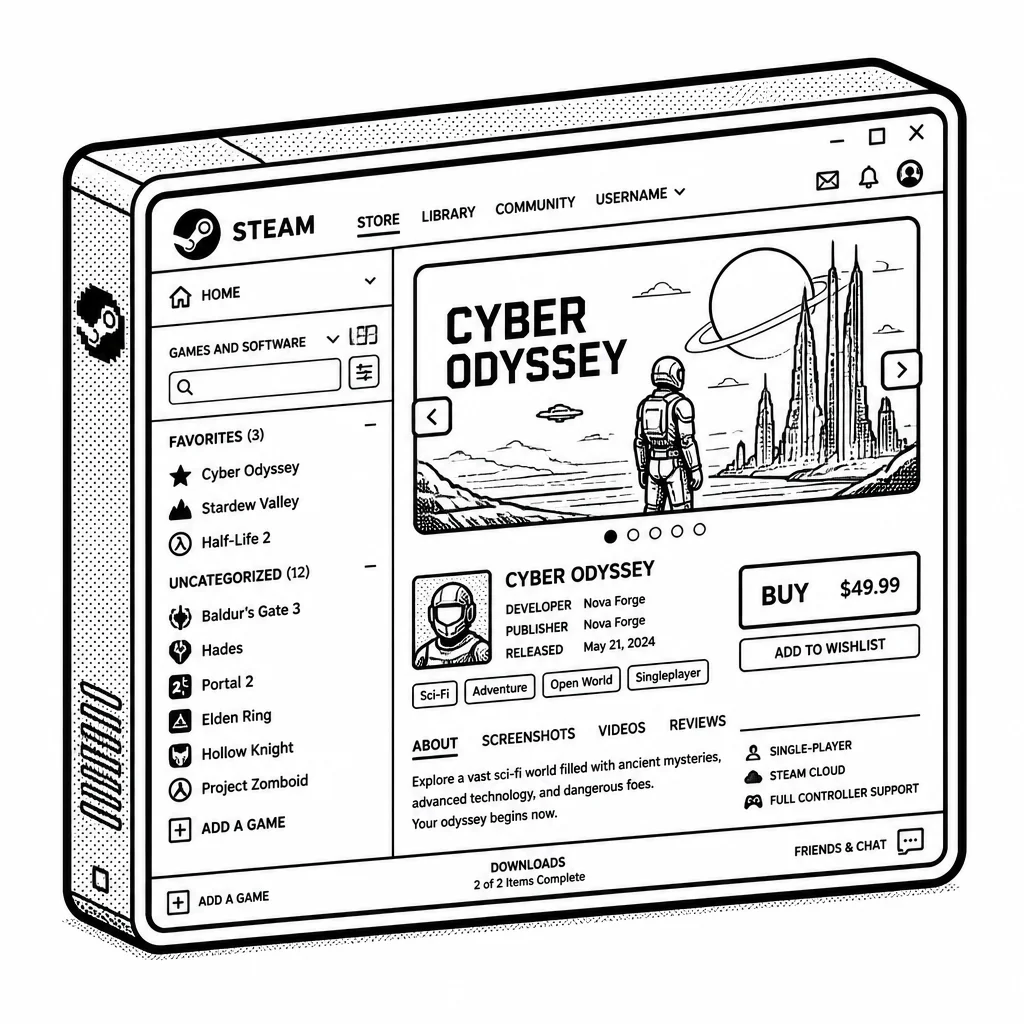
Steam is the money machine. Game makers sell their titles there, and Valve takes a cut of every sale. The store also sells in-game items, offers community features, and hosts massive multiplayer games. Gamers keep coming back because their whole library lives in one place, their friends are there, and the sales are frequent and deep. That lock-in is Valve's real moat—once your games and social circle are on Steam, leaving is a hassle. Valve's own games are a second engine. Counter-Strike, Dota 2, and Team Fortress 2 are free to play but sell cosmetic items, and those sales are enormously profitable. The company also makes money from hardware like the Steam Deck handheld. Famously, Valve is privately held and lean—no big public shareholder pressure, few bosses, and a flat structure where employees pick their projects. That freedom produced hits like Half-Life and Portal, but it also means the company ships things at its own unhurried pace.
The risks are real. Competitors like Epic Games (private) challenge Steam's store dominance, and regulators in various countries have pushed back on loot boxes and platform fees. Still, Steam's grip on PC gaming, built over two decades, is one of the strongest positions in the industry.
Saved answer · last researched 10 Nov 2026
BIG PICTURE
On Steam, the top 1% of paid games pull in about 85% of all money spent
- 85% Top 1% of paid games
- 15% All other paid games
A study of nearly 100,000 paid Steam games found that the top 1% take in 84.5% of the store's estimated total revenue. Half of all paid games earn under $4,000 in their lifetime. Valve collects its cut from every sale either way, so it profits whether a game sells millions or barely sells at all. Source: WeLoveIt and VaporLens study on Steam game economics, data from 2026
Timeline
Two Microsoft Men Start Valve
Gabe Newell spent years at Microsoft working on Windows, and he pushed hard to make it good for games. Then he and Mike Harrington left to start their own game studio in Kirkland, Washington. They called it Valve, a quiet name in an age of loud, macho ones, because they wanted to make clever PC games their own way.
Half-Life Changes Everything
The studio's first game, Half-Life, came out and changed what people expected from a shooter. It mixed horror and science fiction, told a story as you played, and built enemies that felt alive, and it is still named among the most important games ever made. Valve was suddenly a serious game developer.
Newell Takes Sole Control
Mike Harrington sold his shares and left, leaving Gabe Newell as the only boss. From then on, the company's direction was his to set.
Steam Starts as a Patch Tool
Valve built Steam to solve a small problem: getting updates and fixes for its own games onto players' computers without a hassle. Then it grew into a digital store and social platform, and Valve opened it to other publishers too. That store became the company's main business and the engine that paid for everything else.
Half-Life 2 Sells Steam
Half-Life 2 arrived on Valve's new Source engine, and you could only get it through Steam, even if you bought a physical copy. That pushed a huge number of players onto the platform, and the game's acclaim sealed Steam's reach.
The Orange Box Bundles Four Games
Valve packed Half-Life 2, its episodes, Portal and Team Fortress 2 into one box for the price of a single game. It was a hit everywhere it went, on PC and consoles alike, and it reminded everyone that Valve could still make landmark releases.
The Steam Machine Stumbles
Valve tried to bring PC gaming into the living room with the Steam Machine and a matching Steam Controller. The console sold poorly, and the idea went quiet for years.
The Steam Deck Finds the Formula
Valve came back to the living-room idea in a new shape: a handheld PC at a price people could actually pay. The Steam Deck sold in the millions, created a whole new device category, and pulled rivals like Asus, MSI and Lenovo in after it. It became Valve's biggest hardware success.
Hardware Becomes Core to Valve
Valve released new Steam Machines and controllers, and announced a VR headset called Steam Frame for later in the year. Steam kept pouring out money, over eleven billion dollars in the first half of the year alone. What began as a patch tool and a failed console now sits alongside a real hardware business.