Understand any stock in simple English
Enter a ticker to learn what the company does and how it makes money.
United Launch Alliance, LLC
United Launch Alliance builds and launches rockets that carry satellites and spacecraft into orbit for the U.S. government and other customers.
United Launch Alliance is a rocket company. It builds big rockets, sells the launches to customers who need to put something in orbit, and then flies the mission. Its main customer is the U.S. government — especially national security satellites and NASA science missions — along with a mix of commercial satellite operators.
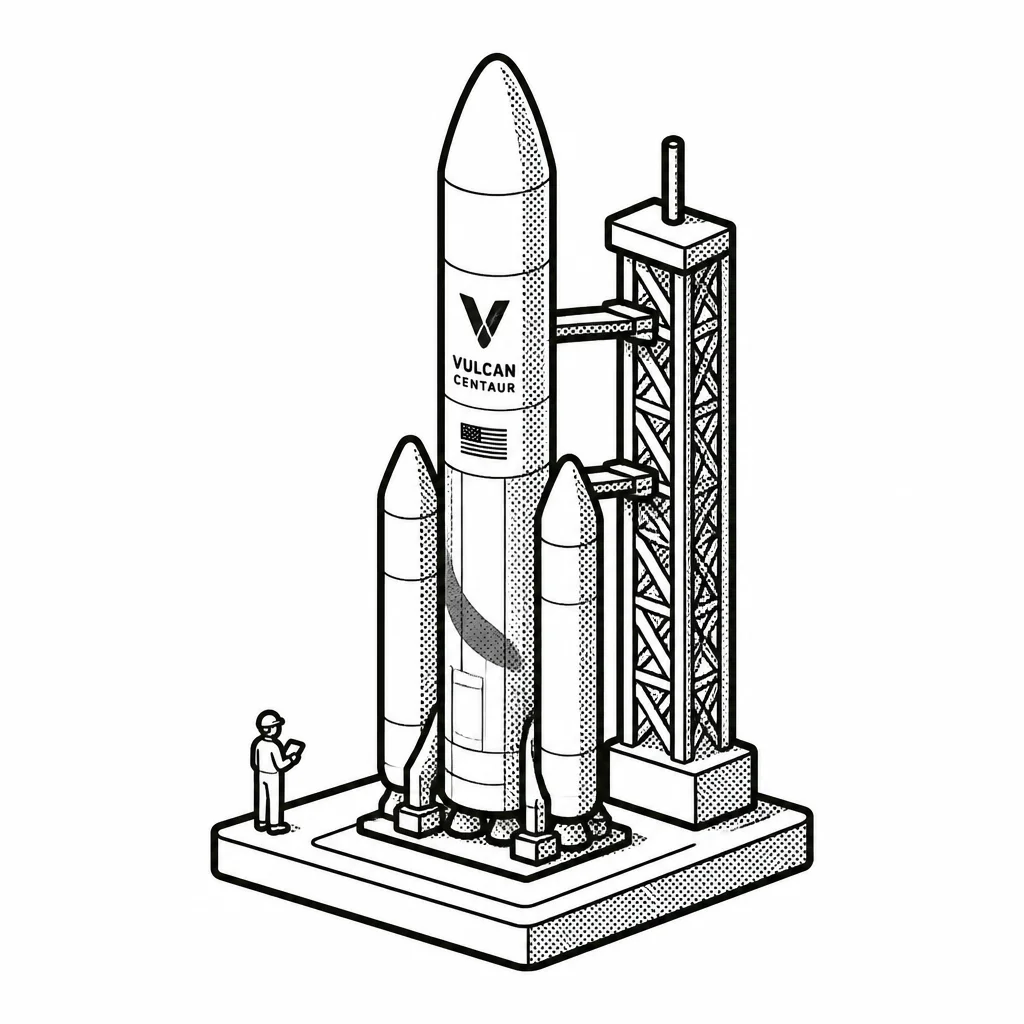
The company is a 50-50 joint venture, owned equally by Boeing and Lockheed Martin, created in 2006 by merging their separate rocket businesses. For years it was the dominant way America got expensive, high-priority payloads to space, flying Atlas and Delta rockets with a remarkable reliability record. It earns money per launch, and customers pay a premium for that track record and for the assurance of a trusted ride. That comfortable position has been shaken. SpaceX now competes aggressively for the same national security launches, and ULA has been transitioning to its new Vulcan Centaur rocket, which is meant to replace the retiring Atlas V and Delta IV. Vulcan's first flight came in early 2024, but getting the new rocket certified and ramping up production has been slow, and ULA has faced launch delays tied to its engines and to customer readiness.
The company's real strength is trust: decades of successful launches and deep relationships with the Pentagon and NASA. Its vulnerability is that its owners are two old aerospace giants, its new rocket arrived late, and its rival is faster and cheaper. ULA is now effectively for sale, with Boeing and Lockheed exploring a sale of the business — a sign that the joint venture's founders see a harder road ahead in a market SpaceX has reshaped.
Saved answer · last researched 10 Nov 2026
BIG PICTURE
SpaceX launches 18.3% of the world's satellite rockets; ULA holds 14.3%
- 18.3% SpaceX
- 14.3% United Launch Alliance
- 9.4% Arianespace
- 58% Others
The satellite launch business is far more crowded than its reputation suggests. SpaceX, the company most people can name, holds an estimated 18.3% of the global market, with ULA close behind at 14.3% and Europe's Arianespace at 9.4%. Most of the remaining launches are spread across smaller players, so no single company controls the field. For ULA, that means its government contracts sit in a market where it is a near-peer of its loudest rival. Source: Global Market Insights, data from 2026
Timeline
Boeing and Lockheed Join Forces
Boeing and Lockheed Martin used to fight each other for every military launch contract. In 2006 they decided to stop fighting and instead split the business down the middle, merging their Atlas and Delta rocket programs into one company called United Launch Alliance. The government loved the idea because it said the deal would save taxpayers over a hundred million dollars a year and keep America's access to space safe. SpaceX cried foul and said it was a monopoly, but regulators let it through anyway, choosing national security over a fair fight.
The First Cuts
A few years in, ULA discovered that running two separate rocket families under one roof was not cheap. The company laid off hundreds of workers and shut down two of its seven launch pads to try to stay lean. But costs kept creeping up, and newer, cheaper competitors were starting to circle.
Tory Bruno Takes the Wheel
Tory Bruno became CEO in 2014 with a clear mandate: build a next-generation rocket and slash costs before SpaceX ate ULA's lunch. He also had to find a replacement for the Russian-made RD-180 engine after Congress banned its military use. Bruno delivered, shrinking the workforce by about a third and cutting the launch pads from five down to two.
Building Vulcan
That same year, ULA started work on Vulcan Centaur, a rocket meant to replace both Atlas and Delta in one go. It was designed to cost less, borrow the best tech from both families, and run on Blue Origin's BE-4 engine instead of the Russian RD-180. In other words, Vulcan was ULA's bet on its own future.
Amazon Comes Calling
Then came a surprise from a very different corner of the sky. Amazon picked ULA to launch a huge chunk of its Project Kuiper internet satellites, with dozens of Atlas and Vulcan missions. It was ULA's biggest commercial deal ever and gave the company a real business beyond government work — a growth engine it had never really had.
Vulcan Finally Flies
After years of delays — the rocket was originally supposed to debut way back in 2019 — Vulcan Centaur finally blasted off in January 2024, sending a lunar lander toward the moon. The flight was a win, and Vulcan's whole job was to keep ULA relevant as the older Atlas and Delta rockets headed for retirement.
Bruno Leaves for Blue Origin
At the end of 2025, after nearly twelve years running the show, Tory Bruno resigned. He didn't go far — he soon joined ULA's engine supplier and competitor Blue Origin to run its new National Security Group. Chief operating officer John Elbon stepped in as interim CEO.
Vulcan Gets Grounded
Then things got ugly. In early 2026, a Vulcan launch suffered a solid rocket booster burn-through — the second booster problem in just four flights. The Space Force grounded Vulcan from national security missions until it was fixed and even handed one of ULA's missions to SpaceX. Between that and an engine issue at Blue Origin, ULA couldn't fly, and the money started to hurt.
Mark Peller Takes Over
In August 2026, ULA named Mark Peller, the longtime executive who had led Vulcan's development, as its new president and CEO. He replaced interim chief John Elbon and inherited a tough hand: a grounded rocket and a backlog of more than seventy missions waiting to fly.