Understand any stock in simple English
Enter a ticker to learn what the company does and how it makes money.
Udemy, Inc.
Udemy runs an online marketplace where people buy courses and subscriptions to learn new skills, and where companies and governments buy those courses in bulk for their employees.
Udemy is an online learning marketplace. Anyone with something to teach can build a course — a coding bootcamp, a photography class, a course on Microsoft Excel — and list it on Udemy, and anyone who wants to learn can buy it. The catalog is enormous, with tens of thousands of courses across just about every subject, which is the whole point: whatever you want to learn, chances are someone has already made a course about it.
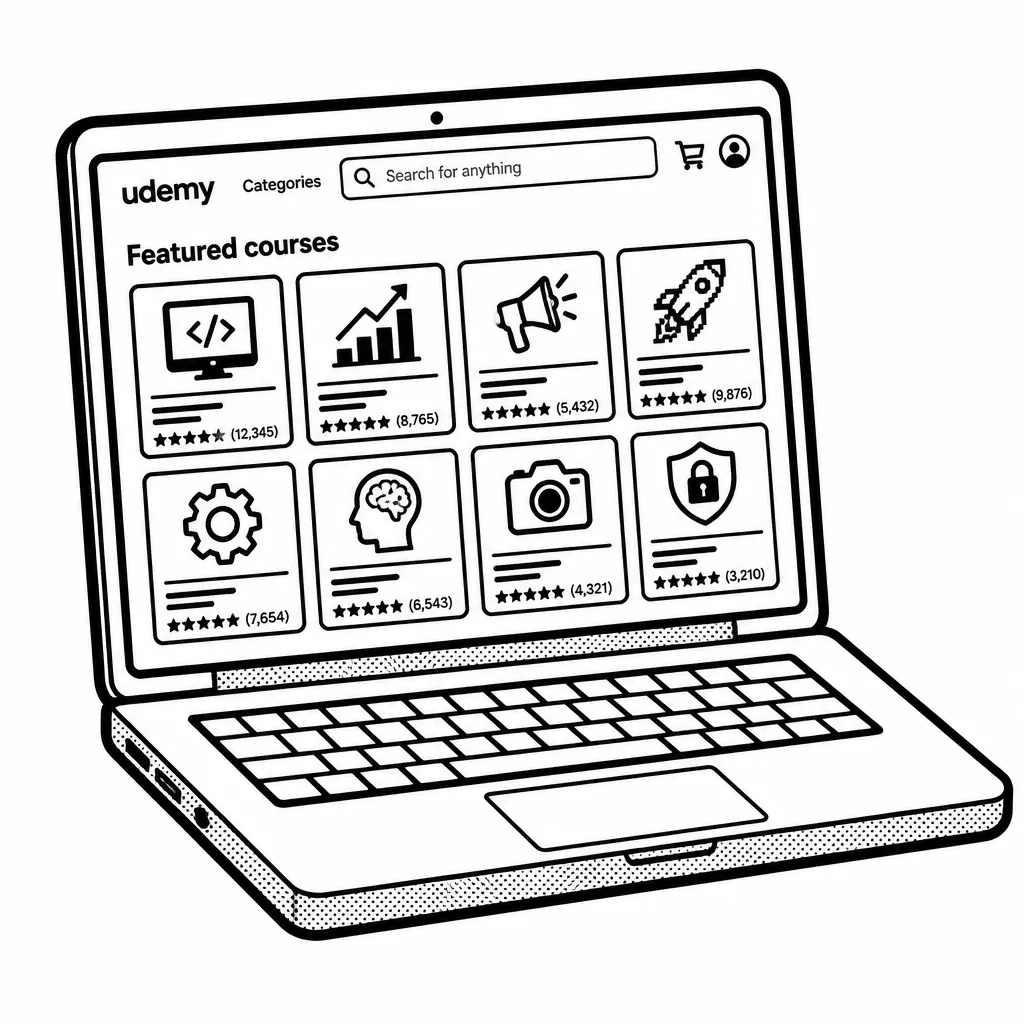
The company makes money two ways. Individuals buy courses one at a time or pay for a subscription that unlocks a bundle of them. Separately, Udemy sells seats to businesses and government agencies through a product called Udemy Business, which lets an employer give its staff a library of courses to use. That enterprise side is the part investors tended to like most, because companies pay on recurring contracts and tend to stick around, while selling single courses to individuals is a more fickle, hit-driven business that rises and falls with consumer moods and marketing spend. The business sits in a crowded field. Coursera sells courses and degrees, often with university partners, and LinkedIn Learning bundles video courses into a professional network owned by Microsoft. Udemy's edge is breadth and openness: because instructors create the content, Udemy doesn't pay to produce most of it, and it can offer practically any topic without building a curriculum itself. The trade-off is quality control — the catalog ranges from excellent to amateur — and a marketplace where the most popular courses can be copied or undercut.
The big recent change is that Udemy is no longer a public company. Its shares, formerly listed on Nasdaq under the ticker UDMY, stopped trading after the company was taken private by Naspers-backed Prosus, the Dutch technology investor, in a deal completed in 2025. That matters because the pressures that shaped Udemy as a public company — growth expectations, quarterly scrutiny, a share price that had fallen far from its 2021 debut — are now somebody else's problem, and the new owners can invest for the long term instead of managing to the market.
Saved answer · last researched 15 Nov 2026