Understand any stock in simple English
Enter a ticker to learn what the company does and how it makes money.
Naspers Limited
Naspers owns and operates internet businesses — classifieds sites, food delivery apps, online payments, and education software — mostly in Africa, Asia, and Europe.
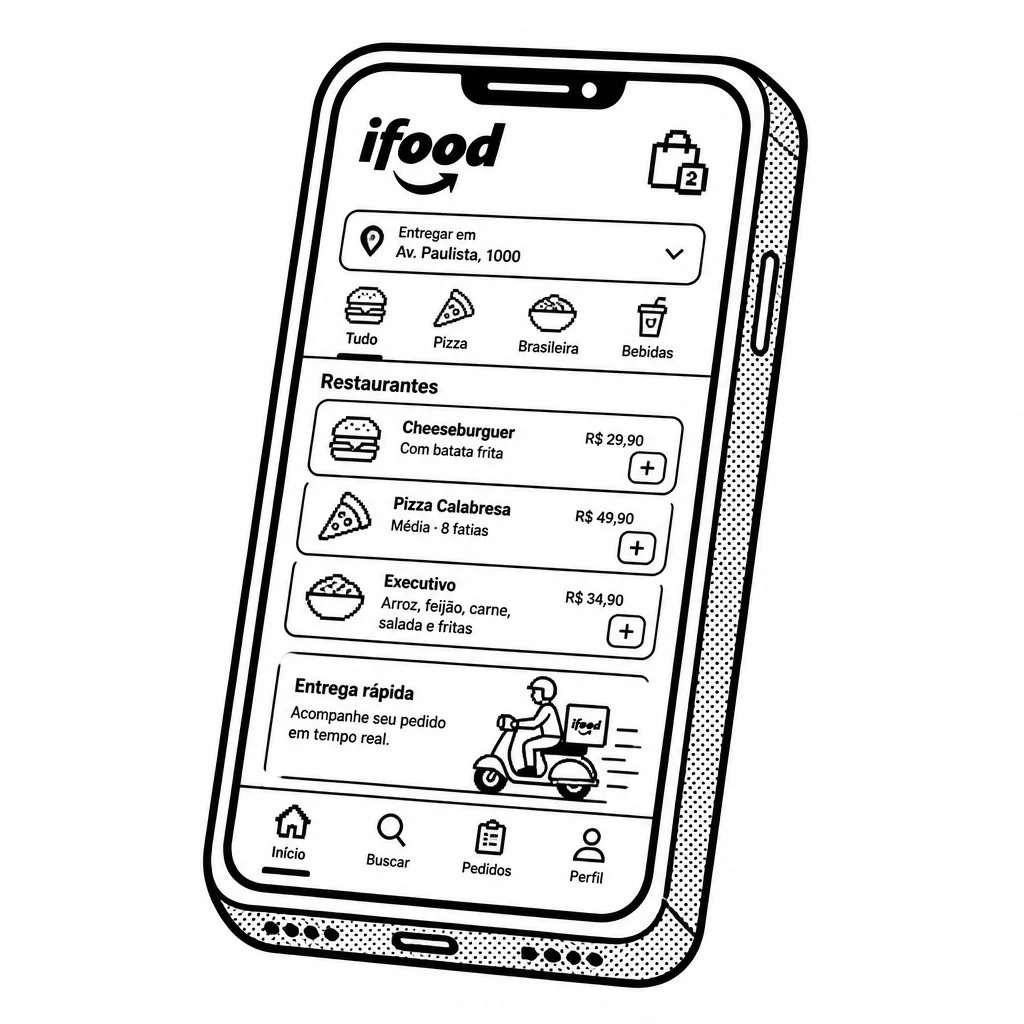
Naspers is a South African internet company that builds and runs online platforms people use every day. In South Africa, its most visible business is Takealot, the country's biggest online retailer, along with classifieds such as OLX and payments through PayU. Across Asia and Europe, it runs food delivery apps (Swiggy and iFood among them), online classifieds platforms, and education technology through its subsidiaries. So it is really a collection of internet businesses spread across many countries, serving billions of users.
The way it makes money is simple: people pay for the things they buy, local merchants and restaurants pay to be listed and to take orders, and companies pay for classified ads. In education, schools and students pay for software. Naspers owns these platforms, so it pockets a slice of the activity on each one — an order fee here, an ad fee there, a delivery charge elsewhere. It chooses to compete by being local: its apps know the streets, payment habits, and languages of each market better than global giants do. The giant, surprising fact about Naspers is that its wealth came from one early bet. In 2001 it bought a huge stake in Tencent Tencent, the Chinese messaging and games company, for a tiny sum. That stake grew into one of the most valuable investments in history and for years was worth more than all of Naspers put together. In 2019 it listed that holding separately in Amsterdam as Prosus Prosus, which now holds the Tencent stake and most of Naspers' international internet assets. Prosus is the majority owner of Naspers, and the two are entwined — a slightly awkward structure Naspers has been trying to simplify.
That history explains both its strength and its problem. The Tencent stake is a cash machine, but it also meant investors valued Naspers' other businesses at close to nothing. So Naspers and Prosus have been selling Tencent shares to fund buybacks of their own stock, a way of handing value back to shareholders. The operating businesses — Takealot, food delivery, payments, edtech — are a bet that local internet platforms can make real money in markets the global giants underserve. The risk is that many of these businesses are still losing money, face tough local rivals, and depend on the cash the Tencent stake throws off. In short: Naspers is a portfolio of everyday internet apps, funded for years by one lucky, brilliant Chinese investment.
Saved answer · last researched 12 Nov 2026
BIG PICTURE
Two-thirds of Naspers' ordinary investors voted against its pay report, and it passed anyway
- 66% Ordinary N shareholders who rejected the pay report
- 34% Ordinary N shareholders who did not reject it
At Naspers' annual meeting, about 66% of ordinary shareholders voted against the executive-pay implementation report. The resolution still passed with roughly 92% support because a small set of A shares carries 1,000 votes each. That split control matters for anyone owning the stock: the people with the most money at risk can be outvoted by a handful of special shares. Source: Business Insider Africa, data from 2026
Timeline
Two Brothers Start a Newspaper Company
In 1915, a group of Afrikaners founded De Nationale Pers Beperkt to publish Afrikaans newspapers and support Afrikaner nationalism. It started with the daily De Burger, then a magazine, De Huisgenoot, the next year. The company's first product was ink and paper, and its real customers were readers who wanted news in their own language.
Naspers Launches Pay-TV
Seventy years after it began as a newspaper publisher, the company launched M-Net, the first pay-TV system in the region. That step turned a publisher into a media company, and it showed the company was willing to move into new businesses before it had to.
Naspers Lists on the JSE
Listing on the Johannesburg Stock Exchange gave the company access to public capital and positioned it for growth. It was now a public company, with shareholders to answer to and money to spend.
Die Nasionale Pers Becomes Naspers
The company changed its name from Die Nasionale Pers to Naspers Limited. A long Afrikaans newspaper name became a short, global one, which fits what came next.
The Tencent Bet
In 2001, Naspers put $32 million into Tencent, a loss-making Chinese internet startup, for a stake of about 46.5%. That single bet became one of the most successful venture capital deals of all time and turned a newspaper company from South Africa into a global tech investment powerhouse.
Koos Bekker Hands Over the Top Job
Koos Bekker stepped down as CEO and Bob van Dijk took over, while Bekker became chairman the next year and kept influencing strategy. The man who had pushed the company into the Tencent bet was no longer running it day to day.
Prosus Lists in Amsterdam
Naspers listed its international internet assets as Prosus on Euronext Amsterdam and kept about 75% of it. The move was meant to shrink the gap between what Naspers was worth and what its investments were worth, but the shares still tumbled more than 30% on the JSE as the value was handed to shareholders.
Bob van Dijk Steps Down
Bob van Dijk stepped down as CEO, and Fabricio Bloisi, who ran iFood, was named to replace him. The company handed the top job to someone from inside its internet businesses, not its publishing past.
Naspers Shares Peak, Then Fall
Naspers shares peaked at over R1,305 each, pushing the market value close to R1 trillion, then dropped 46% and wiped out R420 billion in value. The fall came from global tech valuation adjustments and worries over Tencent, which had mattered so much for so long.