Understand any stock in simple English
Enter a ticker to learn what the company does and how it makes money.
TymeBank Limited
TymeBank is a digital bank that lets people open an account in minutes using just their phone and their ID, with no monthly fees and no need to visit a branch.
TymeBank is a digital bank built for people who have been ignored by the big traditional banks. You open an account from your phone in a few minutes using just your national ID and a selfie, then collect a debit card from a machine at a Pick n Pay or Boxer supermarket. No paperwork, no queues, no monthly account fee. It is aimed squarely at lower- and middle-income South Africans, many of whom had never had a proper bank account before.
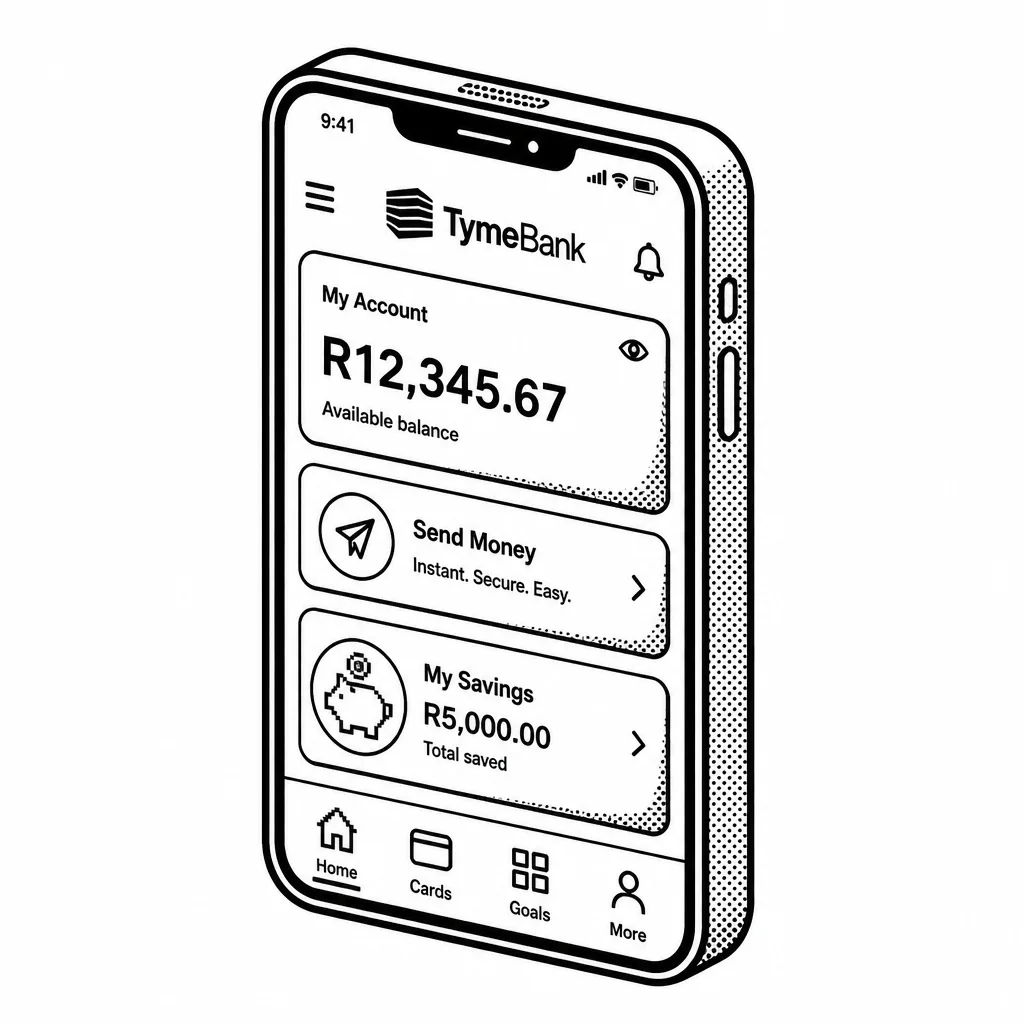
The business makes money in the ordinary banking way, just cheaper to run. It earns a small cut every time you swipe your card in a shop, collects fees on things like cash withdrawals and extra services, and pays you interest for keeping money in a savings account while lending that money out at a higher rate. Because there are no branches and almost everything is automated, its costs per customer are a fraction of what a traditional bank spends. That low cost base is the whole trick: it can serve people who are not worth serving to a bank with buildings and staff. Its big idea was going where the customers already are. The card-issuing kiosks inside supermarkets meant it could reach millions of people who shop there weekly but rarely walk into a bank branch. It later pushed into lending with its own unsecured loans and expanded into insurance and other add-ons. The bank has grown fast and is now one of the largest digital banks in South Africa by customer numbers. Its backers include African Rainbow Capital, and it has been working toward a listing on the Johannesburg Stock Exchange.
The company has also taken its model abroad through GoTyme, a venture in the Philippines with the Gokongwei Group, which is why it has been rebranded as GoTyme Bank in some contexts. The risks are real: lending to customers with thin credit histories is dangerous if the economy turns, fraud is a constant battle, and the big incumbents are fighting back with their own cheap digital offerings. Building a bank from scratch is expensive, and it has burned through a lot of investor money to get to scale. The bet is that once the customer base is large and loyal, low costs plus steady fee and lending income turn into real profit.
Saved answer · last researched 10 Nov 2026