Understand any stock in simple English
Enter a ticker to learn what the company does and how it makes money.
Capitec Bank Holdings Limited
Capitec is a South African retail bank that serves ordinary people with simple, low-cost savings, loans, and transaction accounts.
Capitec is a South African bank built for everyday people. It takes in deposits, hands out loans, and runs the payment accounts that millions of customers use to get paid, pay bills, and swipe their cards at the till. If you walk into one of its branches, you can open an account, apply for a loan, or get help in person — and you can do most of it through a phone app too. Its customers are mostly regular South African households, not big corporations.
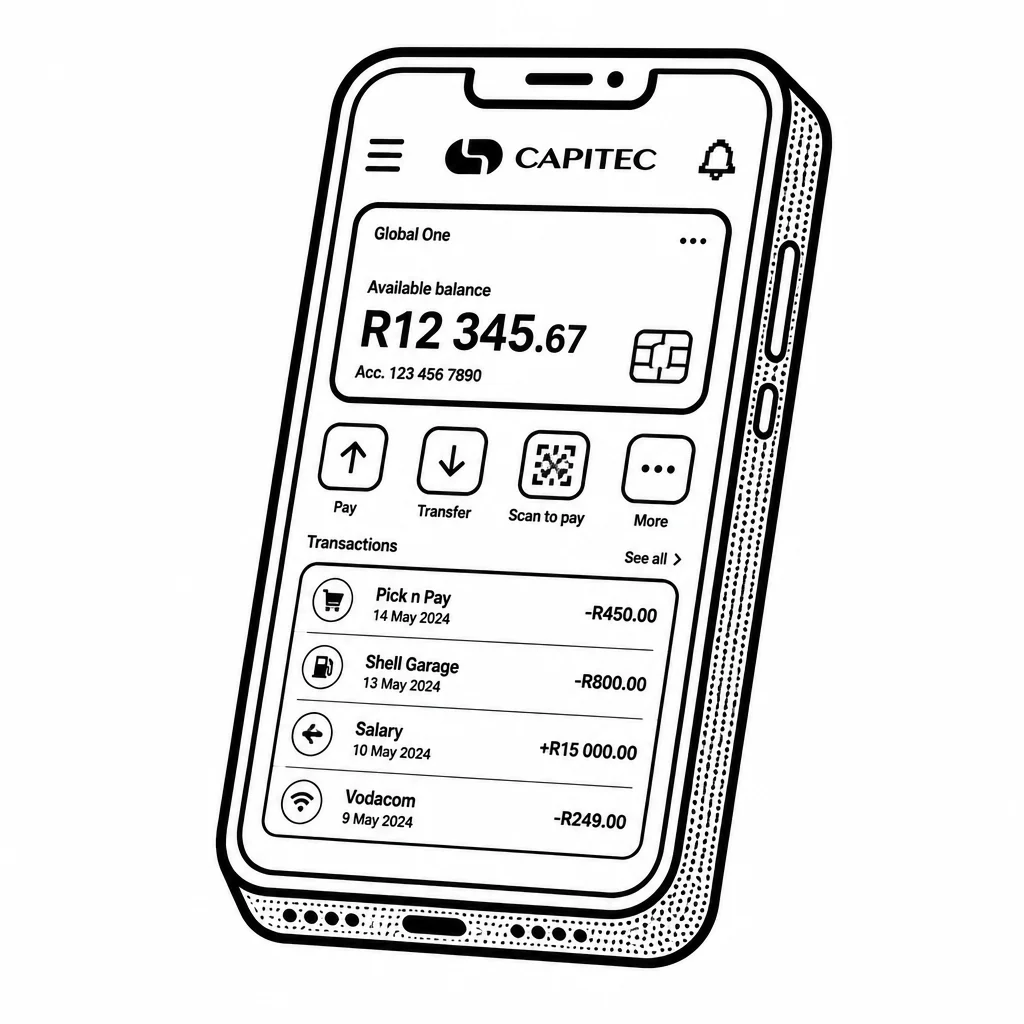
The business earns money in two main ways. First, it charges interest on the loans it hands out, mostly short-term personal loans and, more recently, longer-term credit. Second, it earns fees and interest from the money customers keep in their transaction and savings accounts. Capitec's pitch is simplicity and price: a basic account with low monthly fees, no confusing tiers, and fast loan decisions. That has pulled in customers who felt ignored or overcharged by the big traditional banks. The company started in 2001 as a microlender — small, short-term cash loans to people the big banks did not serve well. In 2016 it bought Mercantile Bank to get a full banking licence and step properly into business banking. It has since pushed into credit cards, insurance, and a growing app-based offering. Its biggest competitors are the large incumbent banks: Standard Bank, FirstRand, Absa, and Nedbank. Capitec's edge is cost control and a huge, loyal customer base. Its branches are lean, its products are few, and it uses data well to decide who gets a loan. The flip side is credit risk: when South African consumers struggle with high unemployment and rising prices, more of them fall behind on repayments, and that hits the loan book. The company has also faced regulatory scrutiny over past lending and debt-collection practices, which it has worked to clean up.
It is a profitable, cash-generative business that pays dividends and keeps investing in its app and digital tools. Investors treat it as a bellwether for the South African consumer — if households are borrowing and repaying on time, Capitec tends to do well. Its headquarters are in Stellenbosch, near Cape Town, and it is listed on the Johannesburg Stock Exchange.
Saved answer · last researched 12 Nov 2026