Understand any stock in simple English
Enter a ticker to learn what the company does and how it makes money.
Too Good To Go ApS
Too Good To Go runs a mobile app that lets people buy surplus food from restaurants, bakeries and grocery stores at a big discount before it gets thrown away.
Too Good To Go is a Danish company that runs an app connecting hungry people with food that would otherwise be tossed in the trash. Cafés, bakeries, restaurants and grocery stores list "Surprise Bags" of leftover food near closing time, and customers buy them for roughly a third of the normal price. The customer gets a cheap meal; the shop earns a little money and wastes less; and less food ends up in a landfill. Everybody wins, which is a big part of why the idea spread so fast.
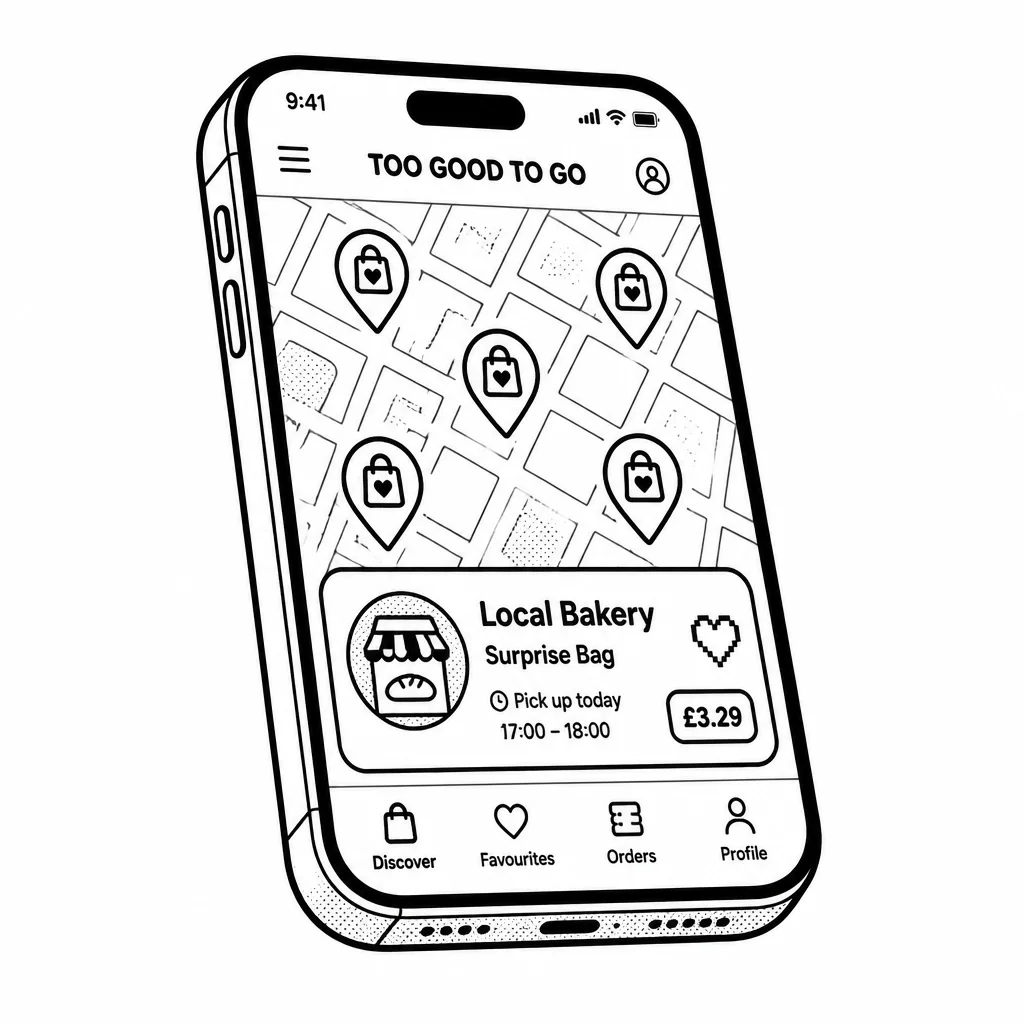
The company makes money by charging the businesses a fee for each bag sold through the app, and it also sells "Waste Warriors" memberships to frequent users that unlock extra features. For the shops, this is almost free money — the food is already made and would be thrown out, so a discounted sale beats a total loss. For Too Good To Go, the trick is scale: it needs lots of stores in lots of cities so the app feels useful every day. It now operates across Europe and North America, and the company says it has saved hundreds of millions of meals from going to waste since it started in 2015. The app is a two-sided marketplace, which is the fancy term for a business that has to win over both buyers and sellers at once. Early on, Too Good To Go had to knock on doors to sign up bakeries and restaurants, then convince enough locals to download the app. Once a city reaches a critical mass of stores, the flywheel starts spinning: more stores pull in more users, and more users make it worth a store's while to join. Competitors like Olio exist, but Too Good To Go's biggest advantage is simple brand recognition — it has become the default name in many countries for "cheap leftover food."
There is real tension in the model. If the app works perfectly, there is less wasted food to sell, which is a strange thing for a company to wish for. It also depends on a steady flow of surplus, which falls if stores get better at predicting demand. And the fees per bag are small, so the company has to keep growing the number of bags and markets to make the economics work. Still, as a private company backed by investors, it has chosen to grow first and worry about squeezing profit later, betting that a widely used app with a feel-good mission can find plenty of ways to earn its keep.
Saved answer · last researched 10 Nov 2026
BIG PICTURE
94% of shoppers would leave their supermarket for one that fights food waste
- 94% Would switch supermarkets to fight food waste
- 6% Would stay with their current supermarket
In a survey by Too Good To Go and the Spanish retail group Anged, 94% of shoppers said they would leave their usual supermarket for one that does more to cut food waste. The app earns money by charging stores a fee and a commission on each surprise bag of surplus food sold. If shoppers really pick stores on waste, that gives supermarkets a reason to sign up. Source: Too Good To Go and Anged report, reported by Sonoco, data from 2026
Timeline
Too Good To Go Starts in Copenhagen
A group of young entrepreneurs in Copenhagen looked at all the good food Danish buffet restaurants were throwing away and decided that was a problem worth solving. Their idea was simple: an app that connects food businesses with people who want to fight the climate crisis, eat well and save money. Three goals, one app.
The App Launches in Denmark
Early in 2016 the app went live, and it took off almost at once. Within weeks, hundreds of businesses were listing their surplus food and thousands of users were showing up to rescue it. The demand was there from day one.
The Company Goes International
Later that year, more food enthusiasts joined the founders, people who had already tried to fight food waste in their own countries. With them, Too Good To Go opened in Norway, the UK and France, and the same thing happened there. The idea clearly traveled well.
Mette Lykke Takes Over as CEO
One of those new people was Mette Lykke, a Danish entrepreneur who had co-founded Endomondo. She first heard about the app on a bus, then became an investor, and in spring 2017 she was so inspired by the mission that she took the top job. A builder of companies now led one.
The Pandemic Hits
Then the pandemic arrived and much of the business simply stopped. Planned offices in New York and Boston were put on hold, hiring slowed sharply, and revenue in Southern Europe collapsed because partner cafes and restaurants were closed. Mette Lykke described the shift plainly: the company went from managing growth to managing a crisis.
North America Takes Off
The company pushed into North America anyway, starting operations in late 2020 and spreading quickly across major US cities. The US turned into a major growth market, exactly the kind of engine the company needed after the pandemic years.
The First Profitable Year
After years of losses, the company finally swung to its first profit in 2023. Revenue kept climbing the next year, though net profit slipped as the company spent to grow. Making money at all was the milestone that mattered.
Tokyo and a New Business Model
In 2026 the company launched in Tokyo, its first Asian market and its 21st country, with more than 80 partner businesses. But the bigger shift was in how it made money: instead of only taking a cut of each bag sold, it started selling an AI-powered surplus food management platform directly to grocery retailers like Spar, Whole Foods and Eataly. It was becoming a software business too.
Beyond Food
The marketplace also widened beyond food, into personal care, pet care, flowers and plants, nutrition and home goods. More than 8,500 stores now supply items in these categories, which deepened retail partnerships and applied the same surplus-saving model to things that aren't food.