Understand any stock in simple English
Enter a ticker to learn what the company does and how it makes money.
Pishgaman Fanavari va Danesh Aramis Public Joint Stock Company
Tapsi is an Iranian ride-hailing app that connects passengers with drivers through a mobile platform.
Tapsi is Iran's homegrown ride-hailing app — the local answer to Uber. You open the app, type in where you want to go, and it matches you with a nearby driver who uses his own car. The fare is calculated upfront, you pay through the app, and the driver keeps most of the money while Tapsi takes a small commission on each trip. For millions of Iranians in Tehran and other big cities, it has become a normal way to get around without hailing a street taxi or waiting for a bus.
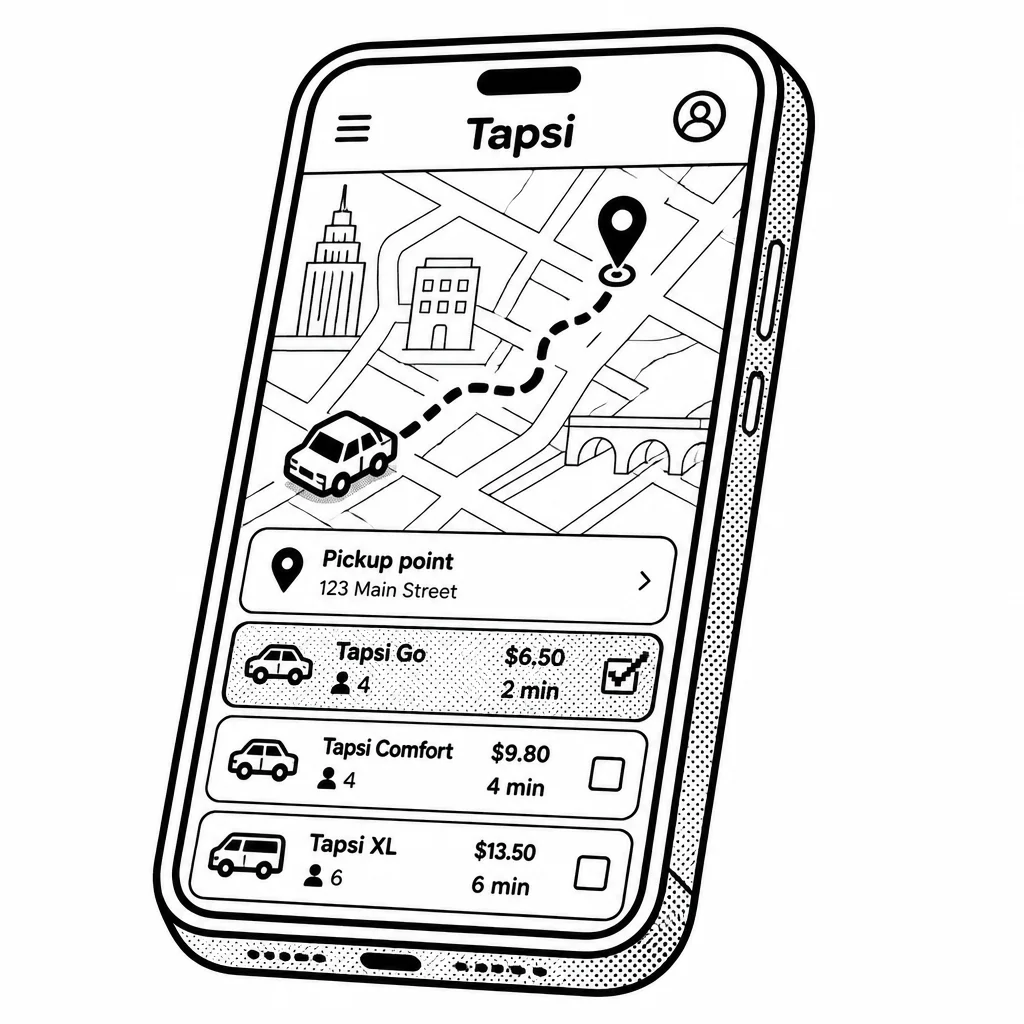
The company sits inside a larger Iranian technology group, and it trades on the Iran Fara Bourse, a market for smaller and newer listed companies. That listing matters because it gives Tapsi access to public capital to fund growth in a market where foreign competitors have largely stayed away. Its main rival is Snapp, another Iranian ride-hailing service, and the two fight hard for drivers and passengers in the same cities. Tapsi's edge comes from local knowledge: it understands Iranian streets, pricing, and payment habits in a way an outside giant would struggle to copy. Beyond simple rides, Tapsi has pushed into adjacent services — things like food delivery and package transport — to squeeze more value out of the same driver network. That is the classic playbook for ride-hailing everywhere: once you have millions of users opening your app, you try to sell them more than just a trip across town. It also launched a motorcycle ride option, which helps it move through heavy city traffic and reach price-sensitive customers. The business is a two-sided marketplace, which is the fancy way of saying it must keep both drivers and passengers happy at once. Drivers stay if they earn decent money; passengers stay if cars arrive fast and fares feel fair. Tapsi earns its cut by sitting in the middle and taking a slice of every transaction. The big risks are familiar to anyone who follows ride-hailing: price wars with Snapp, the cost of subsidizing fares to win users, and the fact that sanctions and Iran's isolated banking system make it hard to raise outside money or expand abroad.
Under the surface, Tapsi is a bet that Iran's growing, young, phone-obsessed population wants a modern, app-based way to move around — and that a local company can own that market better than any foreign giant.
Saved answer · last researched 10 Nov 2026