Understand any stock in simple English
Enter a ticker to learn what the company does and how it makes money.
Takenaka Corporation
Takenaka is one of Japan's oldest construction companies, designing and building everything from skyscrapers and factories to hospitals and homes.
Takenaka is a Japanese construction giant — the kind of company that builds the big, hard things. It designs and constructs office towers, factories, hospitals, schools, and homes, mostly in Japan but increasingly overseas. When a developer wants a skyscraper in Tokyo or a semiconductor plant somewhere in Asia, Takenaka is one of the few firms on the shortlist to build it.
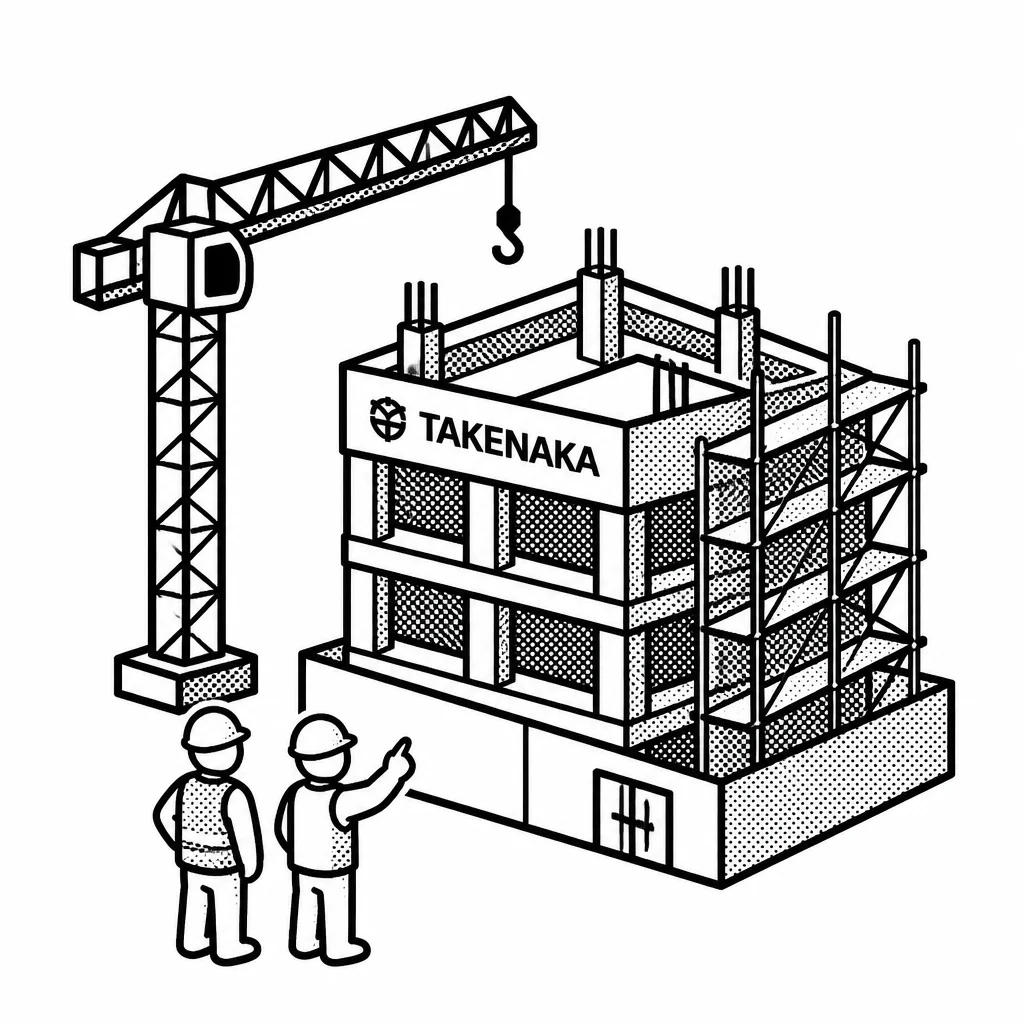
The company makes its money through construction contracts, collecting a fee on each project it designs and builds. It also has a smaller real estate development arm, but construction is the engine. Customers pick Takenaka for its reputation for quality and its willingness to take on technically difficult jobs — the kinds of projects where getting it right matters more than getting it cheap. Founded in 1610 as a family carpentry business in Nagoya, it has survived for more than four centuries partly by being the contractor that doesn't cut corners. Takenaka is not a household name outside Japan, but inside the country it carries weight. It has worked on branches of Walmart in Japan and has built major facilities for Japanese manufacturers and hospitals. Like all construction firms, its fortunes rise and fall with Japan's building cycle and the health of corporate capital spending. It is a steady, conservative business rather than a fast-growing one.
The company's strength is its brand and its long relationships with large corporate clients who trust it with complicated work. Its vulnerability is the opposite side of the same coin: construction is a low-margin, cyclical business, and Japan's shrinking population and slow economy limit how much new building the country needs. Takenaka has pushed into overseas markets and into advanced fields like semiconductor cleanrooms to find growth.
Saved answer · last researched 10 Nov 2026