Understand any stock in simple English
Enter a ticker to learn what the company does and how it makes money.
Suno, Inc.
Suno makes an AI music app that lets anyone type a description and get a finished song — vocals, instruments, and all — in seconds.
Suno is an AI music company. You type something like "a sad country song about my dog moving away," hit a button, and out comes a complete song with a singer, a band, and a chorus you can play or share. No instrument, no studio, no bandmates required. That is the whole pitch, and it is why millions of people who have never written a song in their lives suddenly started making them.
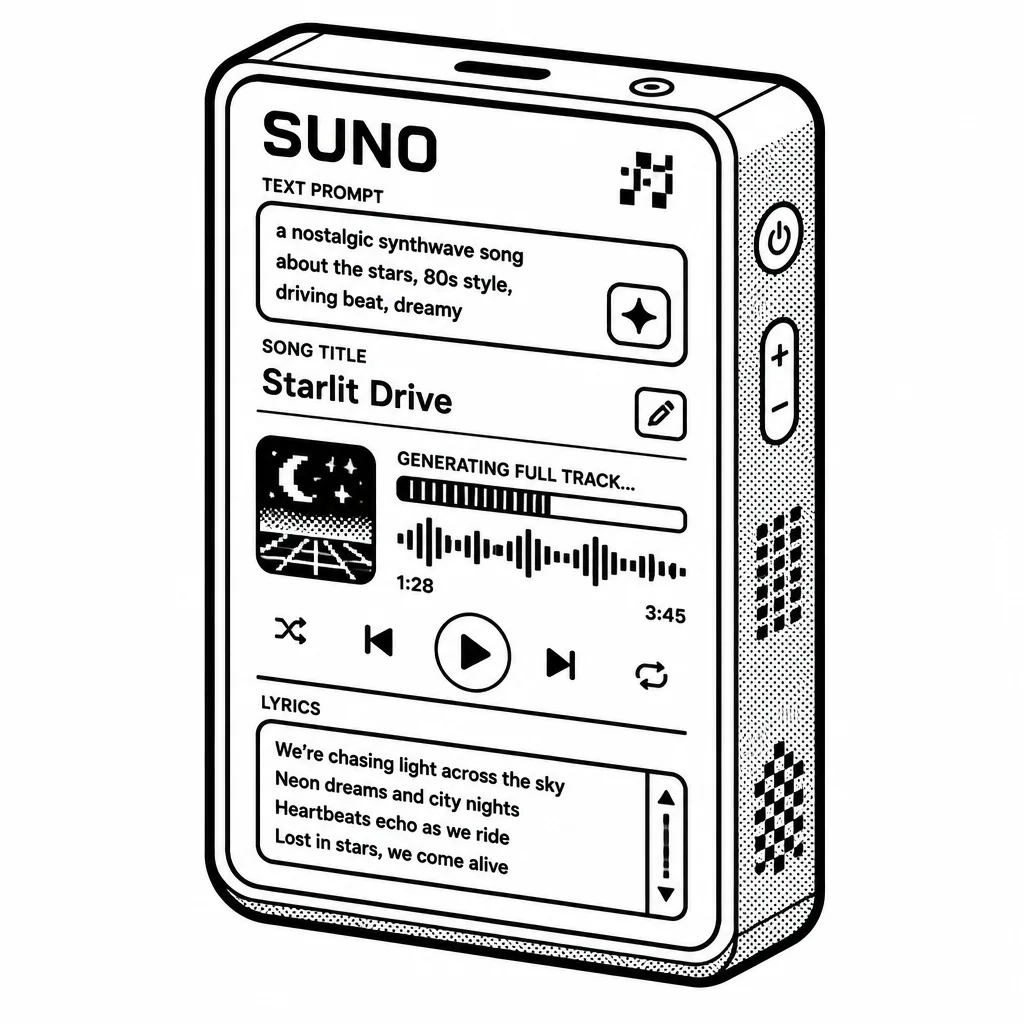
The company sells this through a simple subscription. You get a free allowance of songs, then pay a monthly fee for more credits and better tools. It also sells access to businesses and developers who want to build music generation into their own products. The customers are hobbyists making birthday songs, aspiring musicians sketching ideas, and content creators who need background music without hunting for a licensed track. Suno keeps the lights on the way most consumer AI apps do: cheap to try, easy to upgrade, and the bill arrives every month. Suno did not exist a few years ago and is now one of the most talked-about names in music. It was founded in 2022 by a small team of machine learning engineers, and its early versions spread largely by word of mouth because the output was startlingly good — full songs with convincing vocals, not just instrumental loops. That speed is also its biggest problem. The recorded music industry sued Suno in 2024, arguing that training the models on copyrighted songs was illegal copying. Suno has defended the practice and has since struck licensing deals with some labels and publishers, but the legal fight is not fully resolved, and how it ends will shape what the company is allowed to do. Meanwhile, it competes with other AI music generators and, more broadly, with every tool that lets people make music cheaply.
The interesting tension is that Suno is selling a shortcut past the thing the music business has spent decades protecting: the recorded performance. If a teenager can generate a passable pop song for a few dollars a month, the value of a generic studio track falls toward zero — while the value of a real artist with a real following may go up, because you cannot generate a fanbase. Suno's bet is that making music creation feel like play is a huge new market, not a replacement for the old one. Whether courts and labels agree is the open question hanging over the whole business.
Saved answer · last researched 10 Nov 2026