Understand any stock in simple English
Enter a ticker to learn what the company does and how it makes money.
Sierra AI Inc.
Sierra sells software that lets businesses build AI agents to handle customer service conversations.
Sierra is a customer service software company. It sells a platform that lets businesses build AI agents — chatbots that actually talk, text, and email with customers — and put them to work handling support requests. When you message a company and get a helpful reply from an assistant that seems to understand you, there's a real chance Sierra's software is behind it.
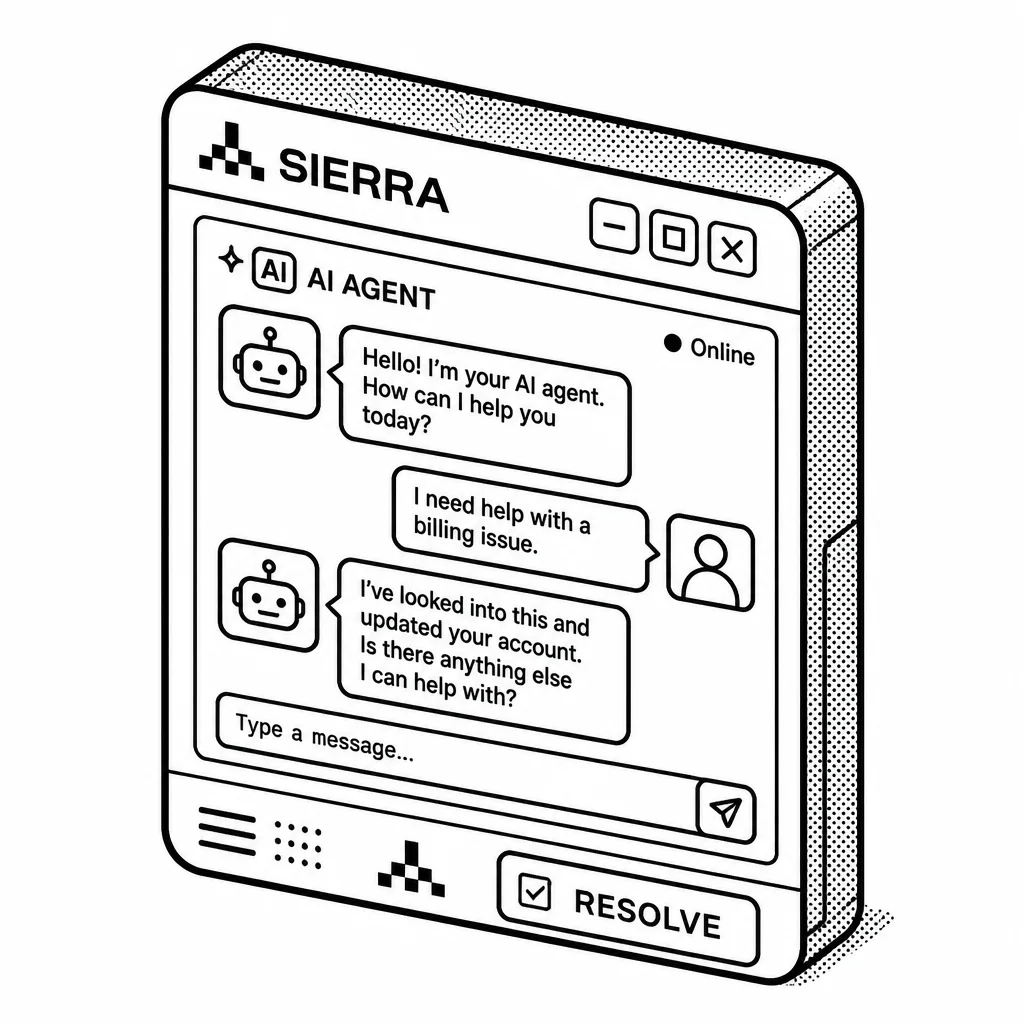
The key idea is that most customer service is repetitive. People ask the same questions about refunds, delivery dates, and passwords, and human agents answer them all day. Sierra's agents connect to a company's own systems — its order database, its payment processor, its help articles — so they can actually do things like cancel an order or issue a refund, not just talk. That's the pitch: not a scripted FAQ bot, but something that can act. Customers pay Sierra for the software, typically per conversation handled. The company was founded by Bret Taylor, a former co-CEO of Salesforce and one-time board chair of OpenAI, and Clay Bavor, a former Google executive. That star power helped it land big-name customers early. Its competition is a mix of established customer service software vendors and newer AI-native startups, and the risk is real: the AI agent space is crowded and moving fast.
Sierra is private, so its finances are not public. It has raised large sums from investors and has been valued in the billions, but it does not report revenue or profit. The business bet is that companies will pay to automate the boring majority of support conversations while keeping humans for the hard stuff. Whether that bet pays off depends on whether the agents are genuinely good enough that customers don't notice — or don't mind — that they're talking to software.
Saved answer · last researched 4 Nov 2026