Understand any stock in simple English
Enter a ticker to learn what the company does and how it makes money.
Qonto SA
Qonto is a digital bank for small businesses and freelancers, offering business accounts, cards, and money management tools.
Qonto is an online business bank built for small companies, freelancers, and startups. Instead of walking into a branch, a founder signs up on a website, gets a French or German bank account, and receives a debit card within days. The account comes with tools to send and track invoices, manage spending, and let a team share access with different permission levels — the boring but essential plumbing of running a small business.
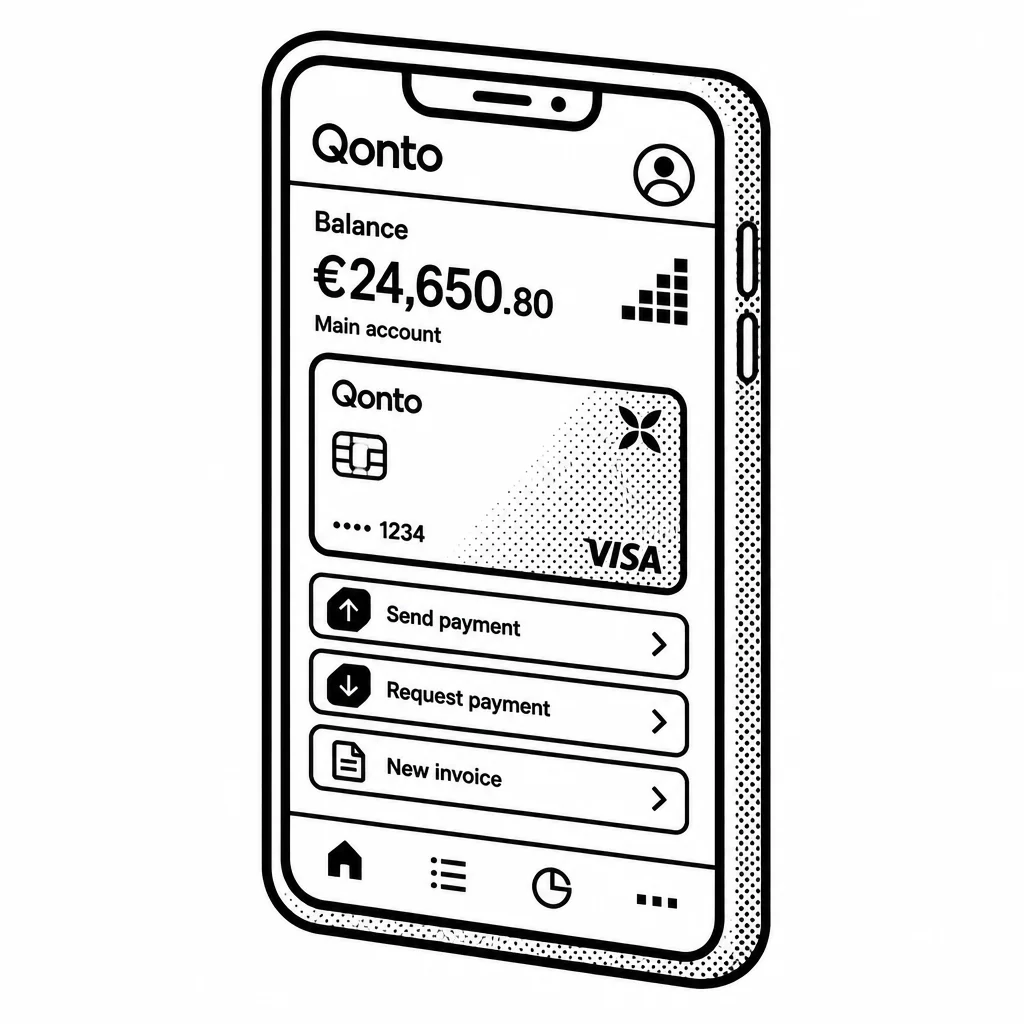
The company makes money in a few simple ways. Customers pay a monthly subscription for their account, with higher tiers unlocking more features and extra cards. Qonto also earns a slice of the fees merchants pay when a customer taps a Qonto card, and it sells add-ons like expense management and payment collection. The pitch to a small business is speed and simplicity: traditional banks often take weeks to open a business account and bury it in paperwork, while Qonto aims to be set up in minutes and run from a phone. Qonto was founded in Paris in 2016 by Alexandre Prot and Steve Anavi, and it has grown into one of France's most valuable fintechs, reaching a valuation of around €5 billion in 2022. It now serves hundreds of thousands of small and medium businesses across France, Germany, Italy, Spain, and the Netherlands. Its main rivals are other digital business banks and the business arms of traditional banks, and it has expanded by acquiring smaller players to add lending and other services.
The business is not without risk. It has burned cash to grow, and it faces competition from well-funded neobanks, including Revolut and others chasing the same small-business customers. It also depends on banking partners and regulators for licenses, so rule changes can bite. But the basic bet is straightforward: if millions of small businesses want banking that feels like a modern app rather than a branch visit, the company that gets there first and stays cheap can collect a small monthly fee from each one.
Saved answer · last researched 10 Nov 2026