Understand any stock in simple English
Enter a ticker to learn what the company does and how it makes money.
Preferred Networks, Inc.
Preferred Networks builds artificial intelligence software and specialized chips, and it makes money by helping other companies use AI in their products and factories.
Preferred Networks is a Japanese artificial intelligence company. It builds the software brains that let machines do clever things, and it also designs its own computer chips to run those brains. Its customers are mostly manufacturers and technology companies, especially in Japan, who need AI but don't want to build it from scratch.
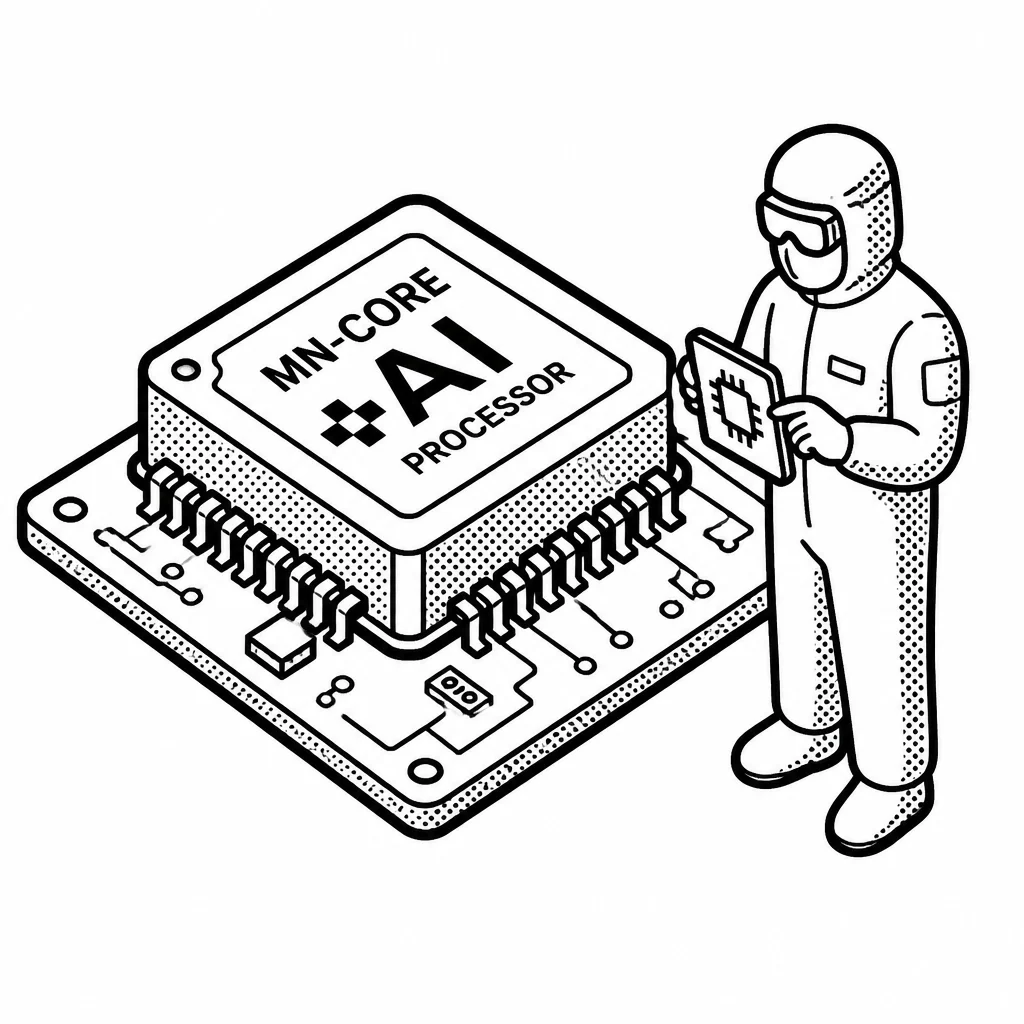
The company got its start making deep learning software, the kind of AI that learns from examples instead of following hand-written rules. One of its most famous early wins was powering the driver assistance system in Toyota cars, where the AI learns to recognize pedestrians and lane markings. Toyota is one of its biggest backers and customers, and the two have a long partnership. That relationship is a big reason the company grew from a small startup into one of Japan's most valuable private tech firms. The company's boldest bet is building its own chips. Regular computer chips are fine for many tasks, but AI training needs a huge amount of power, so Preferred Networks designed custom processors under its MN-Core brand to run its own giant AI systems. This is expensive and risky, but it gives the company control over the hardest and most costly part of modern AI. It also recently pushed into selling its AI software more widely, and it has raised money from investors like Toyota and the chip equipment maker Applied Materials to fund its expansion.
The honest downside is that Preferred Networks is still small compared with the giants of AI, and its future depends on a few deep relationships, especially with Toyota. It is private, so we can't watch its finances like a public company's. Its bet on custom chips could pay off big if AI keeps needing more and more computing power, or it could be a costly detour if off-the-shelf hardware gets good enough. Either way, it is one of the clearest examples of a Japanese company trying to build serious AI from the ground up.
Saved answer · last researched 10 Nov 2026