Understand any stock in simple English
Enter a ticker to learn what the company does and how it makes money.
Mitsubishi Corporation
Mitsubishi Corporation is a giant Japanese trading house that buys, sells, invests in, and operates businesses across energy, metals, machinery, food, and infrastructure all over the world.
Mitsubishi Corporation is one of Japan's famous "sogo shosha" — general trading companies — and it is best understood as a massive global matchmaker and investor. It buys and sells commodities like iron ore, natural gas, and food, and it also takes stakes in real businesses that run mines, power plants, and supermarkets. When a country needs liquefied natural gas or a factory needs raw materials, Mitsubishi is often the party connecting the buyer and seller, taking a thin margin on enormous volumes and earning dividends and profits from the businesses it owns a slice of.
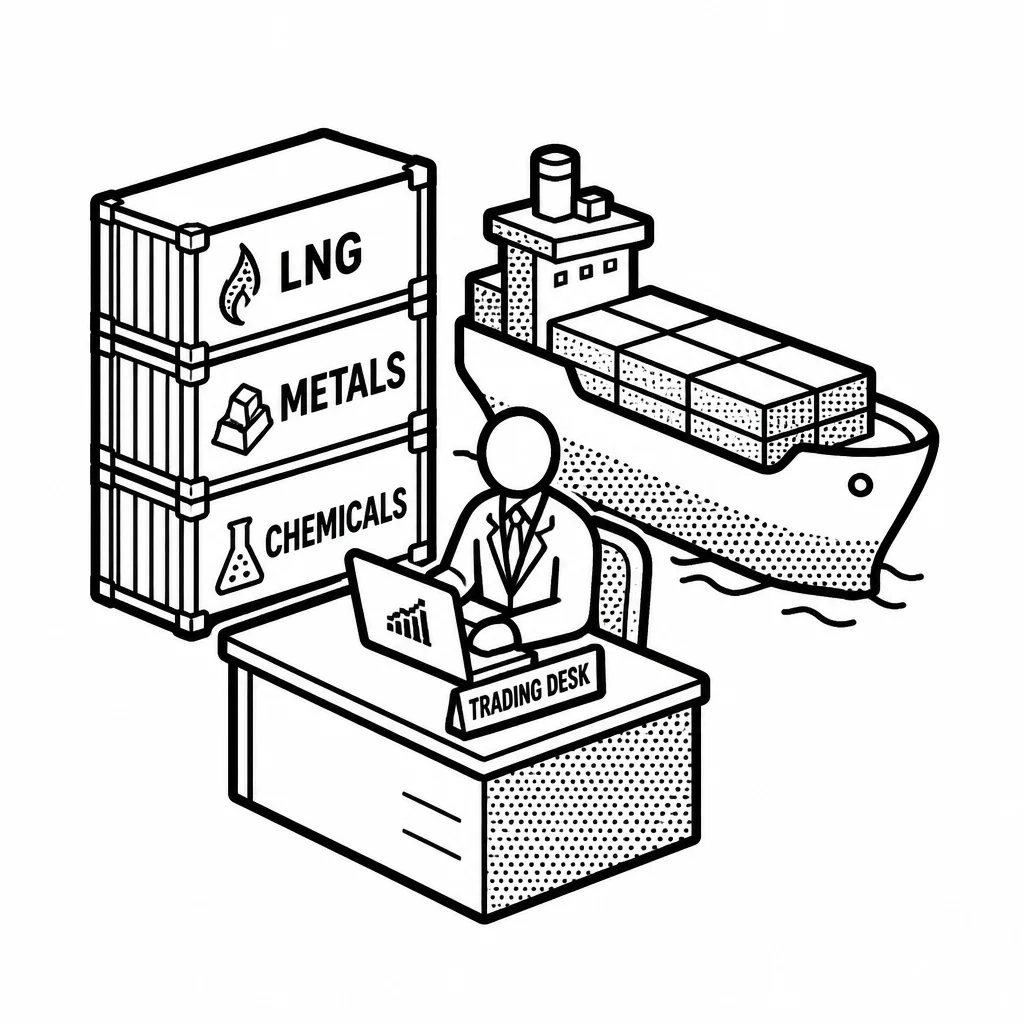
The company is not a household brand like a carmaker, because it usually sits in the middle of the supply chain rather than selling to you directly. Its business spans several large segments: energy and metals trading, machinery and infrastructure projects, chemicals and consumer goods, and food. A big part of its earnings comes from its investments, not just from buying and selling, so think of it as part owner of a sprawling portfolio of real assets around the world. That mix makes its profits swing with commodity prices, which is both its strength and its weakness. Being one of the largest trading houses in Japan puts it in a group with rivals like Itochu and Mitsui & Co., and those firms compete for the same deals and investment opportunities. Mitsubishi's edge is its sheer scale, its global network, and the trust it has built over decades. The downside is that commodity prices, exchange rates, and global demand are largely outside its control, so a slump in oil, gas, or metal prices can dent profits even when its operations are running fine.
Mitsubishi uses its cash to keep investing in new projects and to return money to shareholders through dividends and share buybacks. Like its peers, it has been shifting attention toward areas such as renewable energy and cleaner infrastructure, though traditional resources still dominate its earnings. The company's real value sits in a portfolio that is hard to see from the outside, which is why investors treat it less like a trading desk and more like a diversified global asset owner.
Saved answer · last researched 12 Nov 2026