Understand any stock in simple English
Enter a ticker to learn what the company does and how it makes money.
Panduit Corp.
Panduit makes the physical plumbing of networks — cables, connectors, racks, and cabinets — that keeps data centers, offices, and factories connected.
Panduit is a quiet giant of the physical internet. When a company builds a data center, wires up an office building, or connects machines on a factory floor, someone has to supply the cables, connectors, cable trays, racks, and cabinets that hold everything together. That someone is often Panduit. Founded in 1955 and headquartered in Tinley Park, Illinois, the company is privately held, so it doesn't report quarterly earnings or trade on a stock exchange — which is exactly why most people have never heard of it despite its products sitting inside countless buildings and server rooms.
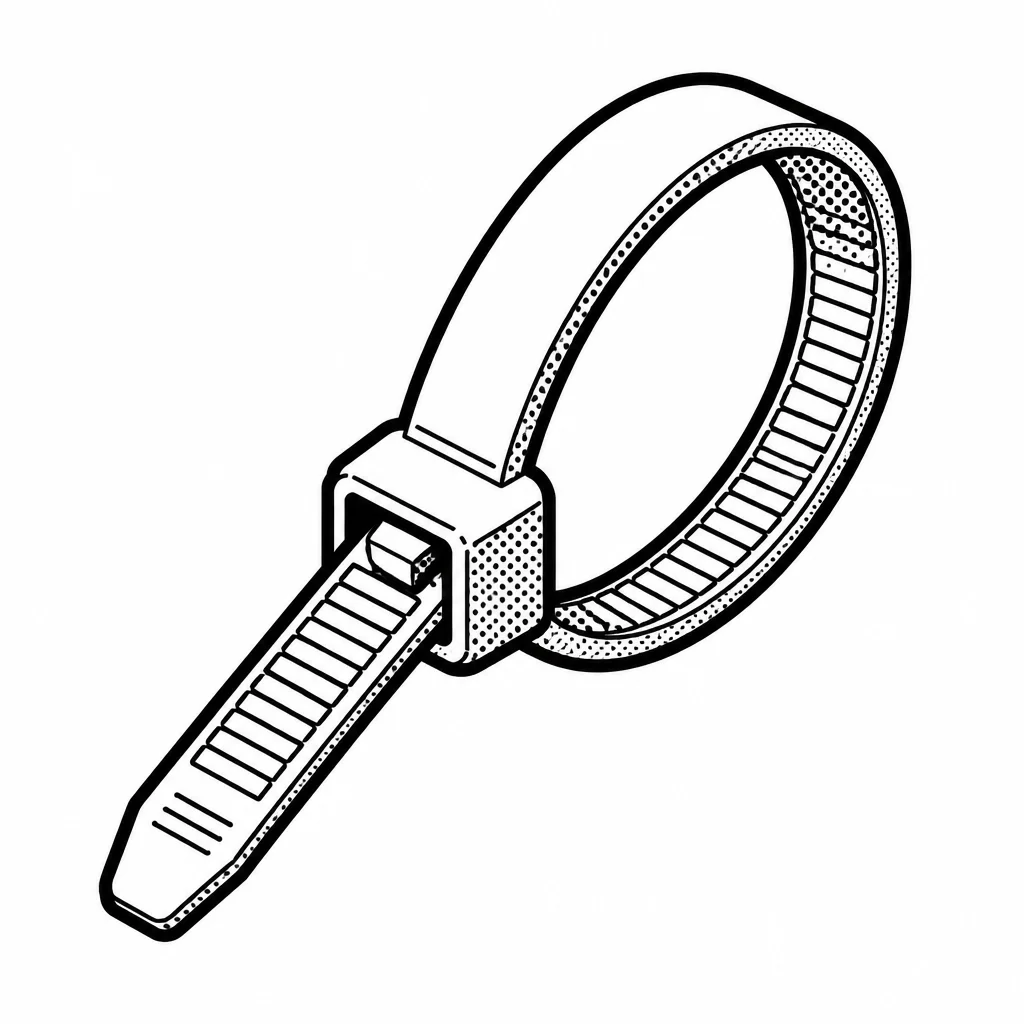
The business works because networks are only as good as their weakest physical link. A fancy switch means nothing if the cable connecting it is junk. Panduit sells the whole chain: copper and fiber cabling, patch panels, connectors, cable management, and the enclosures that organize it all. In recent years it has pushed hard into industrial customers, selling rugged connectors and network gear for factory automation, plus power and cooling products for data centers. Its customers are typically contractors, integrators, and network engineers who buy through distributors — they choose Panduit largely because its products are tested to work together as a system and because the brand is trusted to meet strict standards. What makes Panduit strong is switching costs and spec lock-in. Once a big project is designed around Panduit's parts, swapping brands means re-engineering the whole installation, so buyers tend to stick with what the spec sheet says. That stickiness, plus steady demand as data centers multiply and factories get smarter, has kept the company growing for decades. It also faces real competition from larger rivals who sell similar cabling and connectivity gear, including CommScope COMM and Corning GLW, and from cheaper Asian suppliers in commodity cable.
Because it is private, Panduit's finances are opaque — no public revenue figures or buyback programs to track. That obscurity is part of its charm for the founding family and its owners: the company can invest for the long haul without explaining itself to Wall Street every three months. The lesson is a familiar one in business: the most profitable companies are often the ones nobody notices, quietly selling the unglamorous parts that everything else depends on.
Saved answer · last researched 14 Nov 2026
BIG PICTURE
Panduit says the wiring it sells is just 7% of a project's cost but carries 80% of its reliability
- 7% Share of total investment spent on physical network and electrical infrastructure
- 93% Everything else a project spends money on
A company executive puts the physical cabling and power gear at only about 7% of what a project spends, yet says that same plumbing accounts for roughly 80% of how reliably it runs. A small slice of the budget decides whether the network stays up. Panduit sells exactly that slice, so customers pay little for the part they can least afford to get wrong. Source: Rumbo Económico, data from 2026
Timeline
Two Founders and a Better Wiring Duct
Panduit started in 1955 with a simple, practical idea: a wiring duct called Panduct that organized the jumble of wires inside control panels and let new wires be added quickly and neatly. That first product set the tone for everything after it. The company describes itself as born from innovation, the start of a problem-solving culture.
Panduit Goes to Japan
Nearly twenty years in, Panduit pushed beyond the U.S. market by setting up a Japanese subsidiary, a sign it wanted to sell its problem-solving products far from home. That early bet on international expansion became part of how the company grew.
A CFO Steps Into the Top Job
In 2021 the board picked Shannon McDaniel, then the finance chief, to become CEO and President at the start of the next year, succeeding Dennis Renaud, who retired. The board pointed to big forces reshaping the company's markets: the digital economy, the push for zero carbon, and electrification. Those trends would set the direction for what came next.
A Global Plant and a Growth Streak
By 2024 Panduit was reporting 18 straight quarters of growth and explosive growth in fiber optic connectivity, and it closed several large wiring and data center projects in Latin America. It also announced its largest global production plant would open in Monterrey, Mexico. The company was clearly scaling up to meet demand.
Leadership Team Reshuffled
In late 2026 Panduit announced executive appointments meant to strengthen leadership and speed up innovation. McDaniel began serving solely as CEO, with Marc Naese named President and Tom Kelly named CTO. Rebecca Hulse was named Director of AI and Digital Strategy to lead responsible AI adoption across the company.
A Cabinet Built for AI Data Centers
The same year, Panduit launched the Net-Verse Cabinet platform for high-density and AI data centers. It offers strong airflow and supports very heavy loads, aimed at the shift to AI and high-performance computing, where denser racks and rising power demand make cooling and structural strength critical. The wiring-duct company from 1955 was now building for the AI era.