Understand any stock in simple English
Anomaly Innovations, Inc.
Anomaly Innovations makes opencode, an open source AI coding agent that helps developers write and fix software from their terminal.
opencode is a coding agent you run from the terminal: a program that reads your code, edits files, runs commands, and works through programming tasks largely on its own, with the developer steering. Anomaly Innovations, Inc. builds it and gives the core away as open source, meaning anyone can inspect, modify, and use the code for free — a deliberate move to win trust and contributions from developers who are wary of black-box AI tools. The company then sells the pieces a serious team needs around that free core: hosted access to top AI models, shared sessions, and admin controls for organizations.
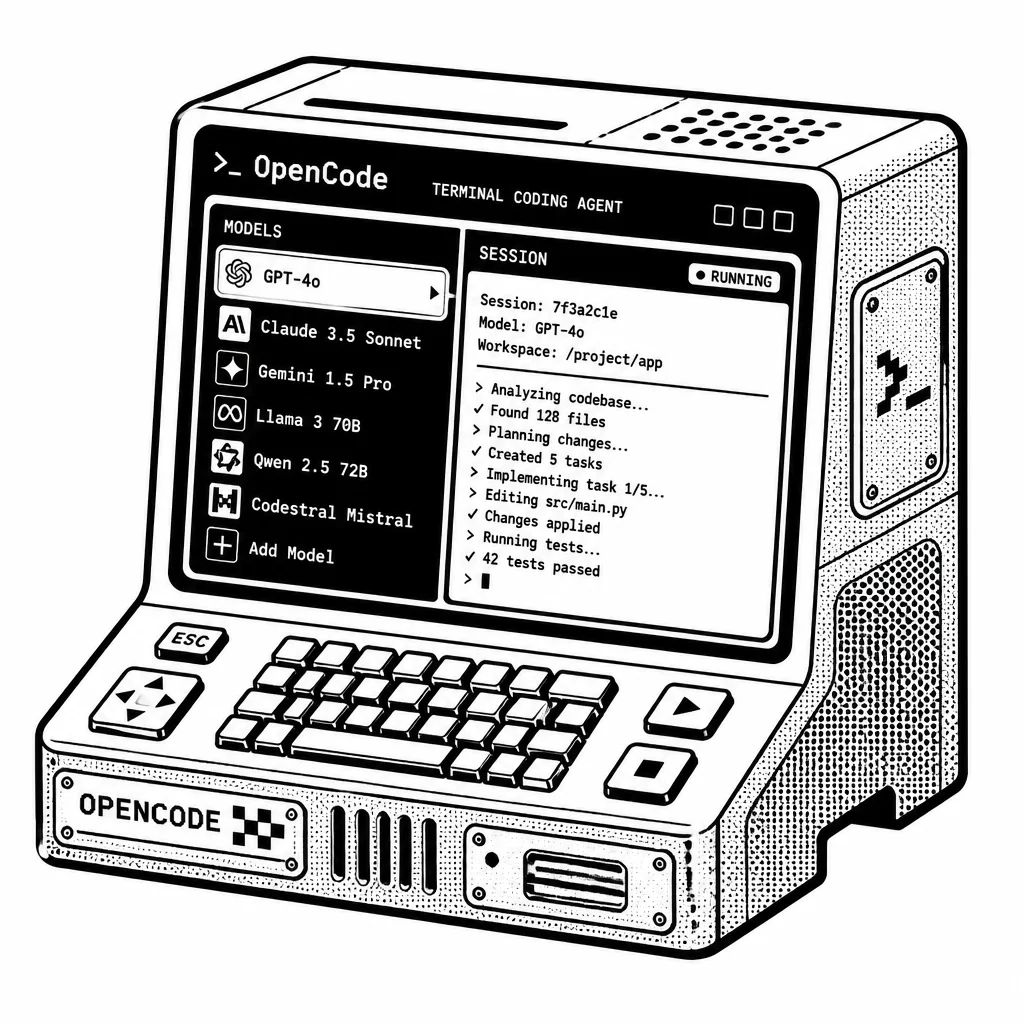
The paying customers are developers and enterprises who want an AI assistant that lives where their work already happens — the command line — and can plug into whichever AI model they prefer rather than being locked to one vendor. That flexibility is the pitch against rivals like Anthropic's Claude Code or Cursor (private), which tie users more tightly to a single model or editor. The catch: open source means competitors can copy features freely, and the AI models underneath are rented from big labs rather than owned, so margins and pricing depend on others. opencode got a real boost in late 2025 when it was highlighted alongside Cloudflare's new agent-focused developer platform. The company has said the project reached millions of developers — an unusual scale for a young startup — and it is now working to convert that free-user base into paying enterprise accounts.
Whether that works is the whole bet. Free coding agents are spreading fast, and opencode's edge is goodwill and openness, not a technical moat. It has to convince companies that paying for hosting, controls, and support is worth it before a bigger lab bundles the same thing for free.
Saved answer · last researched 22 Nov 2026
Timeline
Two Friends Start Anomaly Innovations
Jay V and Frank Wang met at the University of Waterloo, where they started building developer tools together. In 2010 they turned that habit into a company, incorporating Anomaly Innovations in Delaware and setting up shop in San Francisco. The bet was simple: people who build software will always need better tools to build it. One of those tools, a framework called Serverless Stack, or SST, would eventually change the company's path.
SST Goes Through Y Combinator
For more than a decade the founders kept applying to Y Combinator, and in the winter of 2021 they finally got in. After demo day they raised around a million dollars and, more importantly, became profitable, which meant they could grow on their own terms. SST had earned a strong reputation among developers working with serverless infrastructure, the kind of quiet respect that does not pay the bills by itself but builds a base.
OpenCode Is Launched
In June 2025 the team launched OpenCode, a tool for AI coding, publicly. The story behind it was messy: they forked an existing Go-based tool by Kujtim Hoxha, then rewrote it in TypeScript after a falling out with Charm, the company behind the original. Charm renamed its version Crush, while Anomaly kept the OpenCode name and domain. It was a small launch with a complicated past, and nothing suggested it would become the main event.
Anthropic Blocks Third-Party Agents
In January 2026, Anthropic started blocking third-party agents from using Claude Pro and Max credentials, which pushed developers to look for alternatives. OpenCode was sitting right there, and the timing was perfect. In two weeks it gained 18,000 GitHub stars, and suddenly it was one of the major open-source AI coding tools in the world. A policy decision made by someone else had handed Anomaly its opening.
Eight Million Monthly Users
By May 2026, OpenCode had roughly 8 million monthly active users and 162,000 GitHub stars, with annualized revenue around $25 million in less than a year. Those are the numbers of one of the fastest-adopting open-source developer tools ever built, and they turned a scrappy side project into the center of the company.
The Company Rebrands as Anomaly
The company renamed itself publicly under the Anomaly name and changed its GitHub organization from sst to anomalyco, while the product stayed OpenCode. It was a signal about what the company now was: a shift away from infrastructure tooling and toward AI coding tools. The old identity, built over fifteen years, was set aside for the one that was growing fast.
OpenCode 2.0 Rewrites the Core
Anomaly released OpenCode 2.0, a major overhaul that moved the runtime from Bun to Node.js and from Tauri to Electron. The catch was that old 1.x plugins stopped working, so developers had to update their integrations. The point was engineering maturity: with millions of daily users, the tool had to grow up.
OpenCode Go Breaks Even
OpenCode Go, the inference subscription, reached two straight weeks of breaking even in September 2026. The business model had become selling affordable inference at low margins, more like a distributor than a software company, and opencode.ai claimed over 16 million developers using it monthly. The scrappy tool from a decade of side projects had become a real business.