Understand any stock in simple English
Enter a ticker to learn what the company does and how it makes money.
Nium Pte. Ltd.
Nium runs the plumbing that lets businesses send money across borders and issue cards to their customers and workers, earning a small fee on each transaction.
Nium is a payments company that helps businesses move money across borders and put money onto cards. If a company in London needs to pay a freelancer in Manila, or a startup in San Francisco wants to give its drivers a card they can spend instantly, Nium is one of the firms that quietly handles the mechanics. It connects businesses to local payment rails in dozens of countries, so a transfer that would normally take days and pass through several banks can land in minutes.
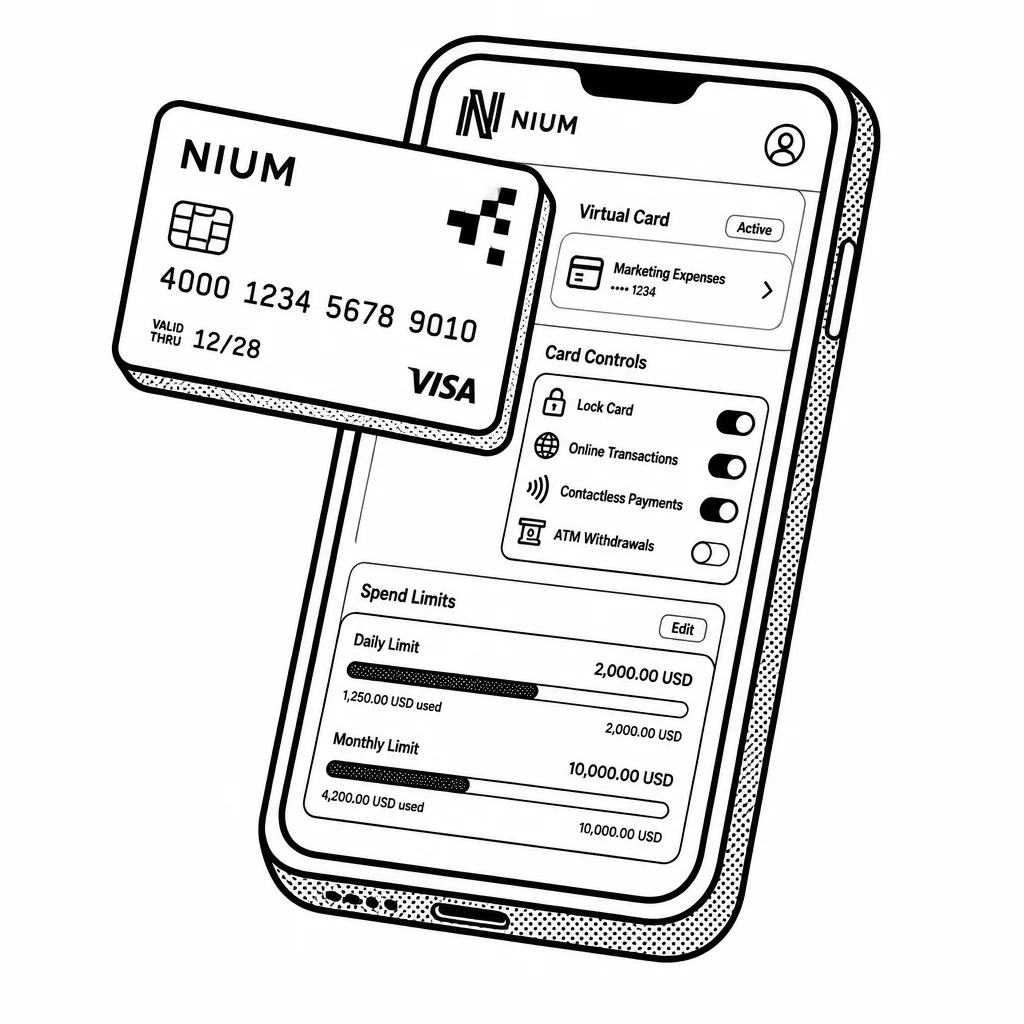
Its two big businesses are payouts and card issuing. On the payout side, Nium plugs into local banking systems around the world, so a business customer sends one instruction to Nium and Nium gets the money to the recipient through the fastest local route. On the card side, it lets a business create its own branded cards — virtual or physical — and control them in real time, setting spending limits or freezing a card instantly. Customers pay Nium small fees per transaction rather than a big upfront license, which is why volume matters so much to the business. The company was founded in Singapore in 2014 and grew partly by buying rivals: it acquired InstaReM, an early cross-border remittance business, and later snapped up card-issuing specialists including Ixaris and Socure's card business to build out the card side quickly. It has raised hundreds of millions of dollars from investors and reached a valuation above $1 billion, making it one of Asia's better-known fintech unicorns. Its real competition is a mix of legacy banks, wire networks like SWIFT, and other fintech infrastructure players such as Wise and Airwallex.
What makes Nium interesting is also what makes it fragile. Cross-border payments are a low-margin, high-volume game, and Nium has to maintain licenses, banking partners, and compliance teams in country after country — an expensive, regulated grind. The upside is that once a business builds Nium into its payment stack, switching is painful, so customers tend to stick. The bet is that as more companies sell and pay globally, the pipes underneath become more valuable, and Nium collects a sliver of an enormous river of money moving between countries.
Saved answer · last researched 10 Nov 2026