Understand any stock in simple English
Enter a ticker to learn what the company does and how it makes money.
Micro Center
Micro Center runs big retail stores that sell computers, electronics, components, and maker gear, mostly to people who like to build, repair, and tinker with their own tech.
Micro Center is a chain of big-box electronics stores, but it is not really trying to be the place where you grab a phone charger and a TV on your way home. It is the store for people who build their own computers, fix their own laptops, and want to walk out with a graphics card or a motherboard the same day. Shoppers come for parts, accessories, networking gear, 3D printers, and maker supplies, and many of them come back again and again because the staff actually know the products.
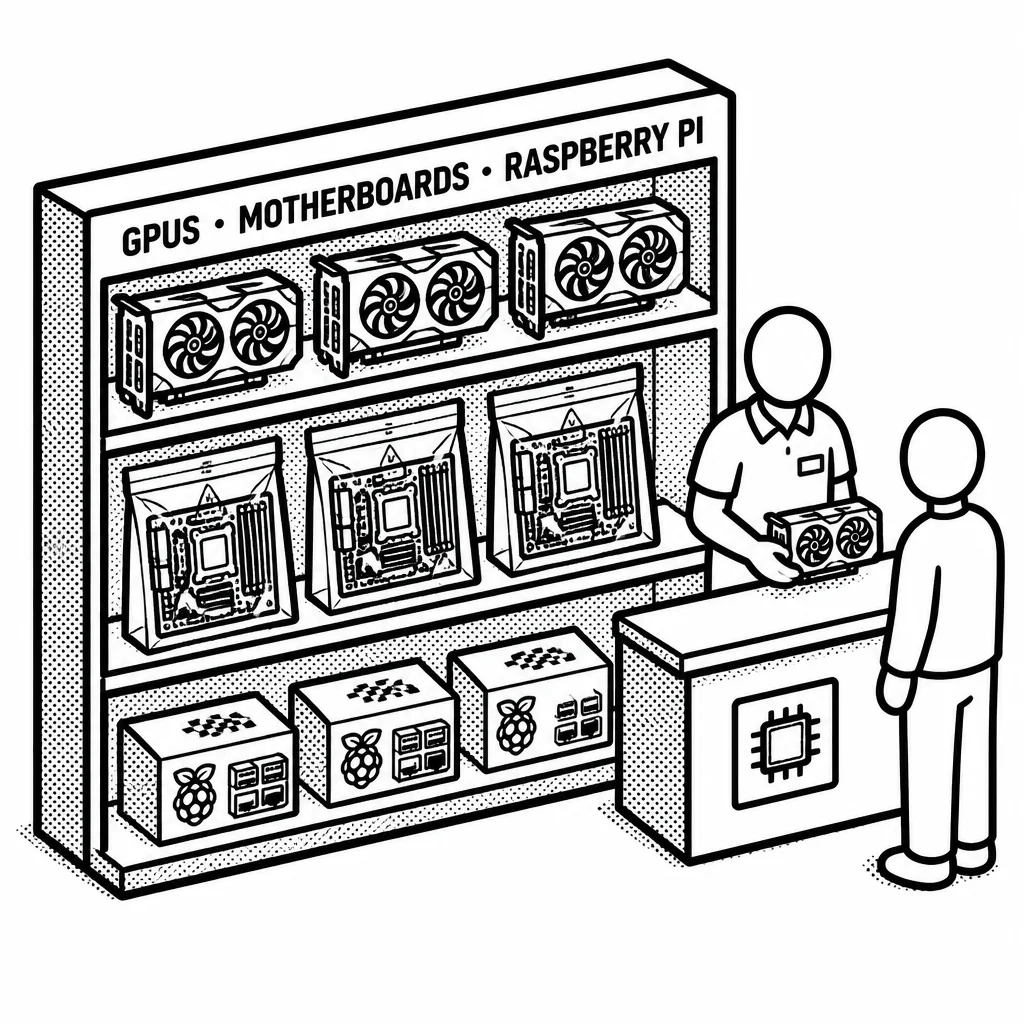
The heart of the business is the physical store. Micro Center keeps shelves stocked with components that most mainstream retailers don't bother carrying, and it pairs that with in-store service counters where customers can get repairs, upgrades, or advice. That combination — a deep catalog under one roof plus people who can help you use it — is hard for online-only sellers to copy. The chain also leans on aggressive in-store deals, especially on processors and other parts, to pull customers in the door. Micro Center is privately held, so it doesn't report quarterly earnings or trade on a stock exchange. That makes it something of a quiet operator in an industry where many competitors have struggled. Big generalist retailers and online marketplaces can beat it on price and convenience for mainstream gadgets, but Micro Center's edge is the enthusiast and small-business customer who needs a specific part today and wants a real person to talk to.
The honest picture is a niche business with a loyal following and a real moat in expertise and selection, but also one that is exposed to the same pressures as any brick-and-mortar retailer: rent, inventory risk, and the shift of everyday electronics shopping online. Its bet is that the people who build and repair things will keep showing up in person — and so far, that bet has held.
Saved answer · last researched 15 Nov 2026
Timeline
Two Radio Shack Veterans Start Micro Center
In 1979, two former Radio Shack employees, John Baker and Bill Bayne, put in a small pile of their own money and opened a tiny storefront in Columbus, Ohio. The spot sat near Ohio State University and a big research institute, which handed them a steady stream of customers who actually understood computers. Their goal for the first year was an eye-popping $30 million in sales, and they came within a whisker of hitting it.
Micro Electronics Launches WinBook
As the chain grew, it built its own independent arm, Micro Electronics, and launched its first house-brand product, the WinBook notebook. A desktop line followed the next year, and the division grew strong enough to become one of central Ohio's biggest privately held companies.
Micro Center Takes On Fry's in California
Micro Center jumped into Silicon Valley with a store in Santa Clara, right in the backyard of Fry's Electronics, the giant that ruled California computer retail. Instead of matching Fry's on price alone, Micro Center leaned on paying its people better and giving customers real service. That rivalry would shape both companies for decades.
Redemtech Handles Old Computers
The company spun off Redemtech to deal with the flip side of selling computers: what happens to the old ones. The business took in used equipment, resold what it could, and disposed of the rest.
Santa Clara Store Closes Suddenly
Micro Center's only Silicon Valley store shut its doors without warning when the company couldn't strike a new lease. The building had grown shabby, still wearing logos from the late 1990s. The same year, Redemtech was sold to Arrow Electronics.
Pandemic Turns Stores Essential
When the pandemic hit, Micro Center was declared an essential business and kept its doors open. Sales nearly doubled as a wave of new customers came in.
Micro Center Returns to Santa Clara
Micro Center came back to Silicon Valley in 2025, opening a new Santa Clara store in a former Bed Bath & Beyond spot. The timing was good: Fry's had closed in 2021, leaving Best Buy as the only big electronics chain around. The chain also opened its 30th store, in Phoenix, that November.
Austin Store Opens With AI Section
Micro Center opened its 31st store and third in Texas, in Austin, once again filling space left by Fry's. The new store went further than the usual shelves, with a section for AI development hardware, a networking experience area, and a 3D printing department stocked with hundreds of filament options. That same year, PCMag readers named it America's Best Tech Retailer for the third year running.