Understand any stock in simple English
Enter a ticker to learn what the company does and how it makes money.
Mammoet Holding B.V.
Mammoet is a Dutch heavy-lift and transport company that moves and installs extremely heavy objects like refinery modules, wind turbine parts, and bridges.
Mammoet is the company you call when something is too big, too heavy, or too awkward to move with normal equipment. It lifts and transports giant pieces of industrial equipment — refinery modules weighing thousands of tonnes, offshore platform topsides, wind turbine components, bridge sections, and entire factory units — and delivers them where they need to go. Its customers are the big industrial players: oil and gas companies, petrochemical plants, power producers, offshore wind developers, and construction firms building mines, ports, and infrastructure.
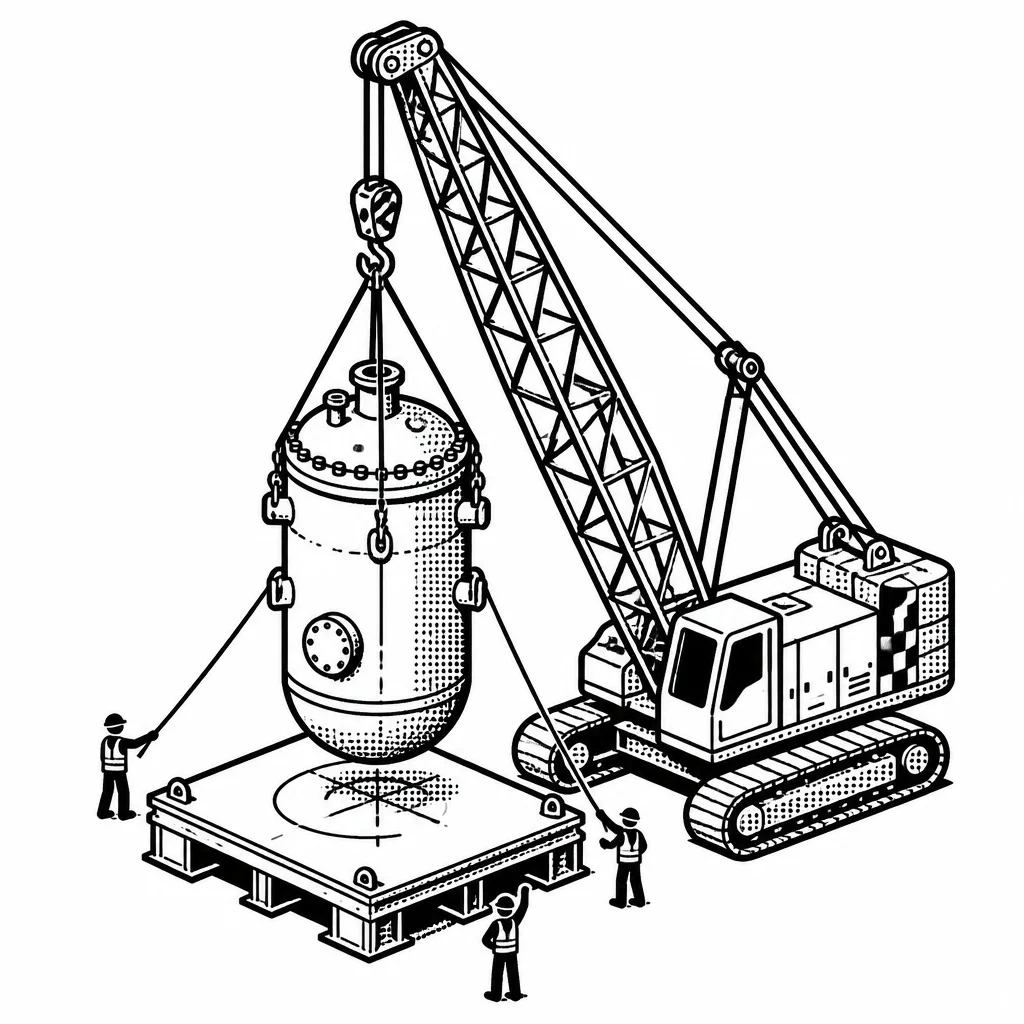
The business rests on a simple idea: when a piece of equipment is too heavy for a crane you can buy off the shelf, you need someone with specialist machinery and the engineering know-how to use it safely. Mammoet owns some of the largest cranes in the world and a fleet of modular transporters — self-propelled platforms that can carry loads of tens of thousands of tonnes on hundreds of wheels. It also builds and engineers custom lifting solutions. Customers pay for the equipment, the planning, the engineers, and the crews who execute the lift. Choosing Mammoet over a rival is mostly about capability and track record: if the lift is genuinely difficult, the list of companies that can do it shrinks fast, and Mammoet is usually on that short list. The company traces its roots to the Netherlands in the early 1800s and grew into a global specialist, with its headquarters in Schiedam. It expanded through acquisitions and now operates across Europe, the Americas, the Middle East, Asia, and Australia. Its most visible work tends to be headline-grabbing: Mammoet helped remove sections of the collapsed Francis Scott Key Bridge in Baltimore in 2024, and it has handled record-setting lifts and transports that made it the go-to name for extreme heavy lifting. That reputation is its real moat — clients trust it with projects where a mistake would be catastrophic and enormously expensive.
The heavy-lift business is deeply cyclical, tied to spending on energy, petrochemicals, and large infrastructure. When oil prices are high and megaprojects are being built, demand for giant cranes and transporters surges; when capital spending dries up, so does the work. Mammoet is privately held, owned by the Dutch family investment firm SHV, which means it does not answer to public shareholders and can take a longer view. It also invests in its own equipment, develops low-emission and electric heavy transport options to meet tightening emissions rules, and continues to position itself as the specialist that gets called when the job is too hard for anyone else.
Saved answer · last researched 10 Nov 2026