Understand any stock in simple English
Enter a ticker to learn what the company does and how it makes money.
Kry International AB
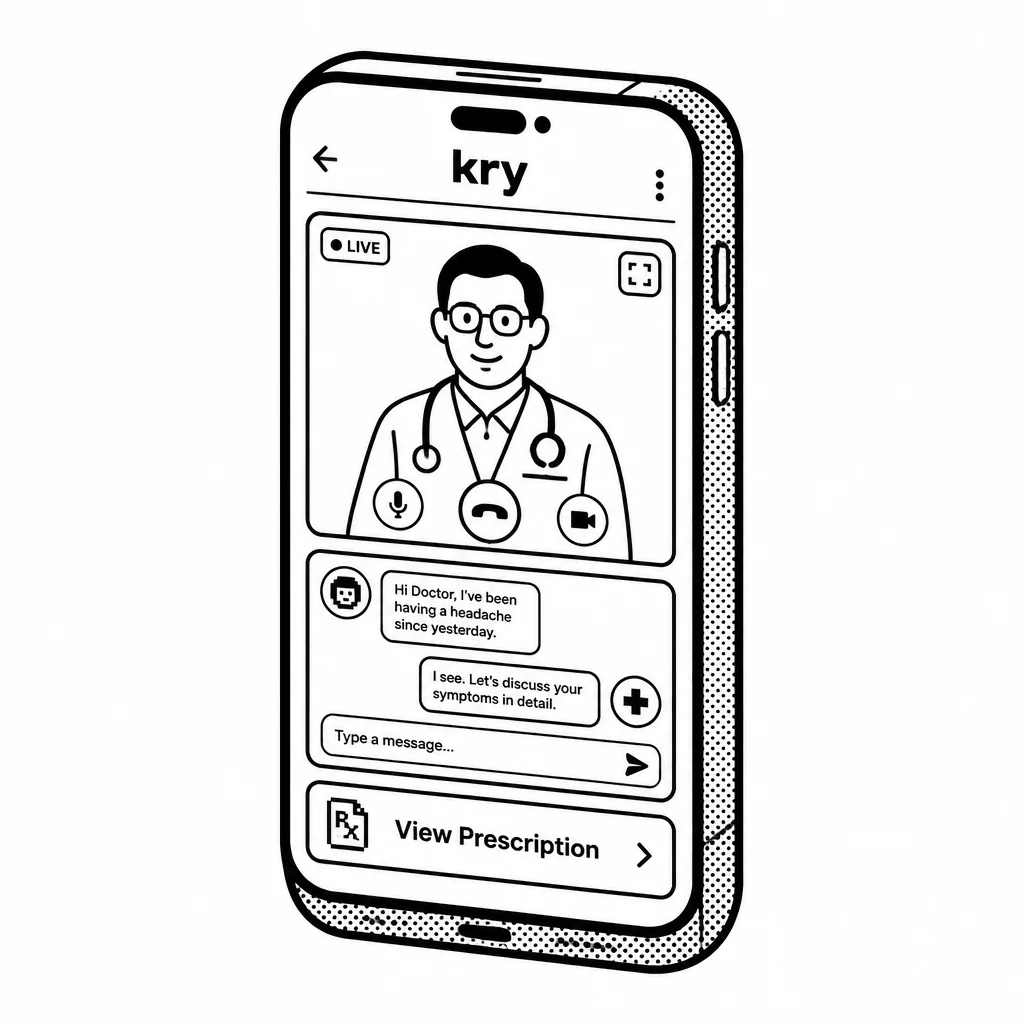
Kry is a digital healthcare company that lets people see a doctor by video through a smartphone app.
Kry is a Swedish healthcare company that lets you see a doctor without leaving your home. You open its app, describe what's wrong, and within minutes you're talking to a licensed doctor or psychologist by video. It treats everyday problems — a sore throat, a rash, anxiety, a prescription that needs renewing — the kinds of things that would otherwise mean waiting days for a clinic appointment or sitting in an emergency room for hours.
The business works because it fixes an annoying problem: seeing a doctor is slow. Kry's app skips the waiting room. Doctors work from a central studio, see patients one after another, and the whole visit usually takes about fifteen minutes. In Sweden, the company is paid mainly through the public healthcare system, so a visit costs the patient roughly the same as a normal clinic visit. In other countries it also sells visits directly to private patients and to employers and insurers who want to give their people faster access to care. Kry was founded in 2014 by Johannes Schildt and Josefin Landgård, and it grew fast by riding a simple trend: people already do everything else on their phones, so why not this too? It expanded across Europe and now operates under local brand names — Kry in Sweden, Livi in the UK and France, and others elsewhere. That patchwork of brands and payment systems is also its main headache, because healthcare rules differ sharply from country to country, and the company must adapt its app, its doctor licensing, and its billing to each market.
The honest picture is a company that proved digital doctor visits work at scale but is still figuring out how to make real money from them. It has raised hundreds of millions in venture capital and has periodically reported losses as it spends to enter new markets and add services like therapy and specialist care. Its rivals are a mix of local telehealth startups and traditional clinics moving online, and its biggest risk is regulatory: if public health systems decide to pay less per digital visit, the economics get harder. The bet is that convenience wins and that being one of Europe's largest digital care providers gives it a durable edge as more everyday medicine moves onto the phone.
Saved answer · last researched 10 Nov 2026