Understand any stock in simple English
Enter a ticker to learn what the company does and how it makes money.
Instabug, Inc.
Instabug makes software that helps app developers find bugs and hear feedback from users before and after they ship their apps.
Instabug is a software company that helps mobile app makers catch problems and hear from users. When you use an app and something goes wrong — it crashes, a button doesn't work, a screen loads slowly — Instabug is often the tool quietly collecting that information and sending it to the developers who built the app.
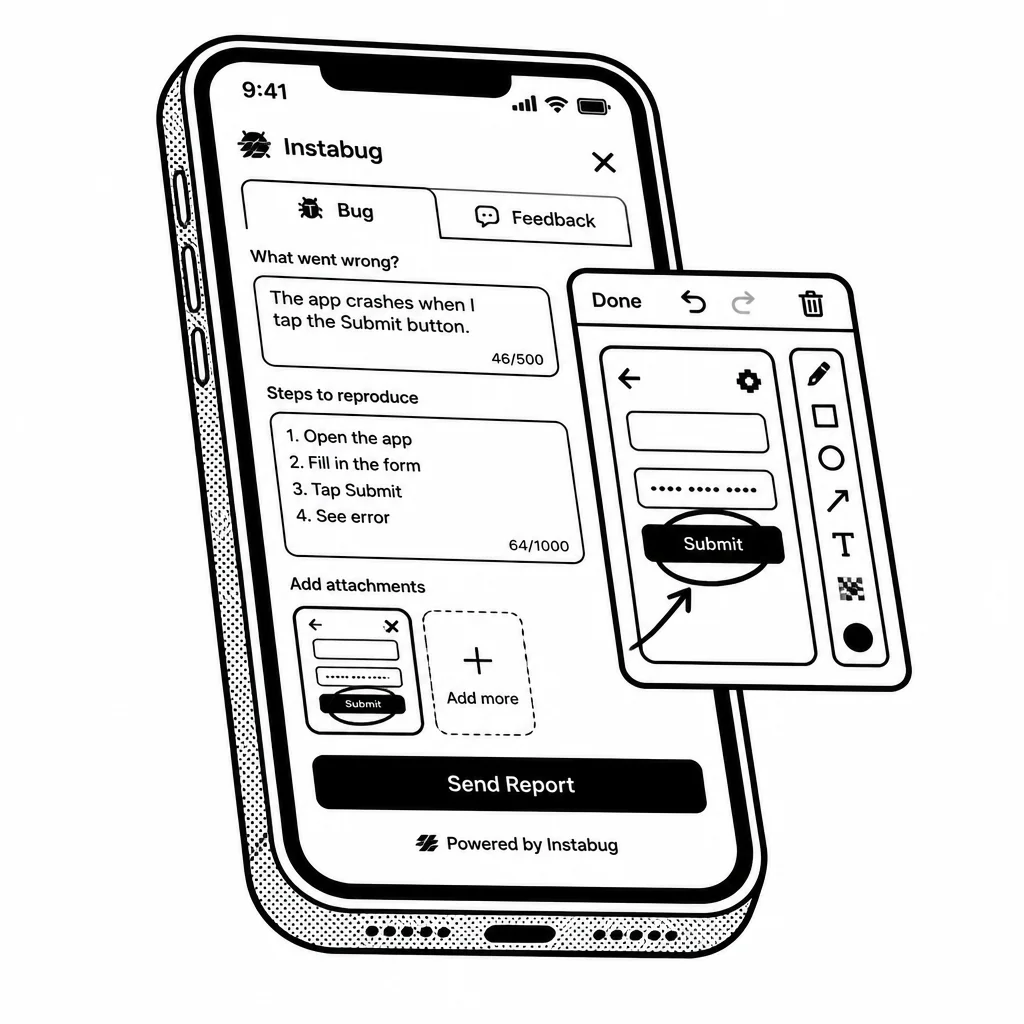
The product works like a feedback loop baked into the app. A tester or real user can shake their phone, draw on the screen, record a comment, or report a bug, and Instabug automatically attaches the technical context developers need: the device, the operating system, the network conditions, and a trace of what happened right before the problem. That saves engineers from the painful game of guessing why something broke on a phone they don't own. Alongside bug reporting, Instabug offers crash monitoring, performance tracking, and in-app surveys, so teams can watch both how the app behaves and how users feel about it. It's largely aimed at mobile teams — the people building iOS and Android apps — where testing on thousands of different devices is genuinely hard. The company was founded in 2013 in Cairo, Egypt, by Moataz Soliman and Omar Gabr, and it later moved its base to San Francisco while keeping a large engineering presence in Egypt. That origin story matters because it shaped the company's practical, developer-first style: it grew by word of mouth among app builders rather than by chasing big enterprise sales. Customers pay through subscription plans priced by usage, and the tools are meant to slot into the workflow developers already use, hooking into systems like Jira for tracking work.
Its competitors include larger app-monitoring and analytics outfits that bundle overlapping features, so Instabug's pitch is simplicity and focus — one place for bug reports, crashes, and user feedback instead of stitching several tools together. The appeal is strongest for teams that ship mobile apps often and need fast, clear signals about what's broken. The main vulnerability is the same as its strength: it lives inside a crowded, consolidating market of developer tools, so it has to keep proving it's the easiest, most useful option rather than a nice-to-have extra.
Saved answer · last researched 10 Nov 2026