Understand any stock in simple English
Enter a ticker to learn what the company does and how it makes money.
PT Halodoc Indonesia Sehat
Halodoc is an Indonesian health-tech app that lets people chat with doctors, order medicine, and book lab tests or hospital visits from their phone.
Halodoc is Indonesia's best-known health app, a place where someone with a fever, a rash, or a worried question about a prescription can open their phone, tap a button, and talk to a real doctor within minutes. You can chat with a licensed physician, order medicine delivered to your door, book a lab test, or arrange a hospital appointment — all inside one app. It became the default way millions of Indonesians handle small health problems without leaving home.
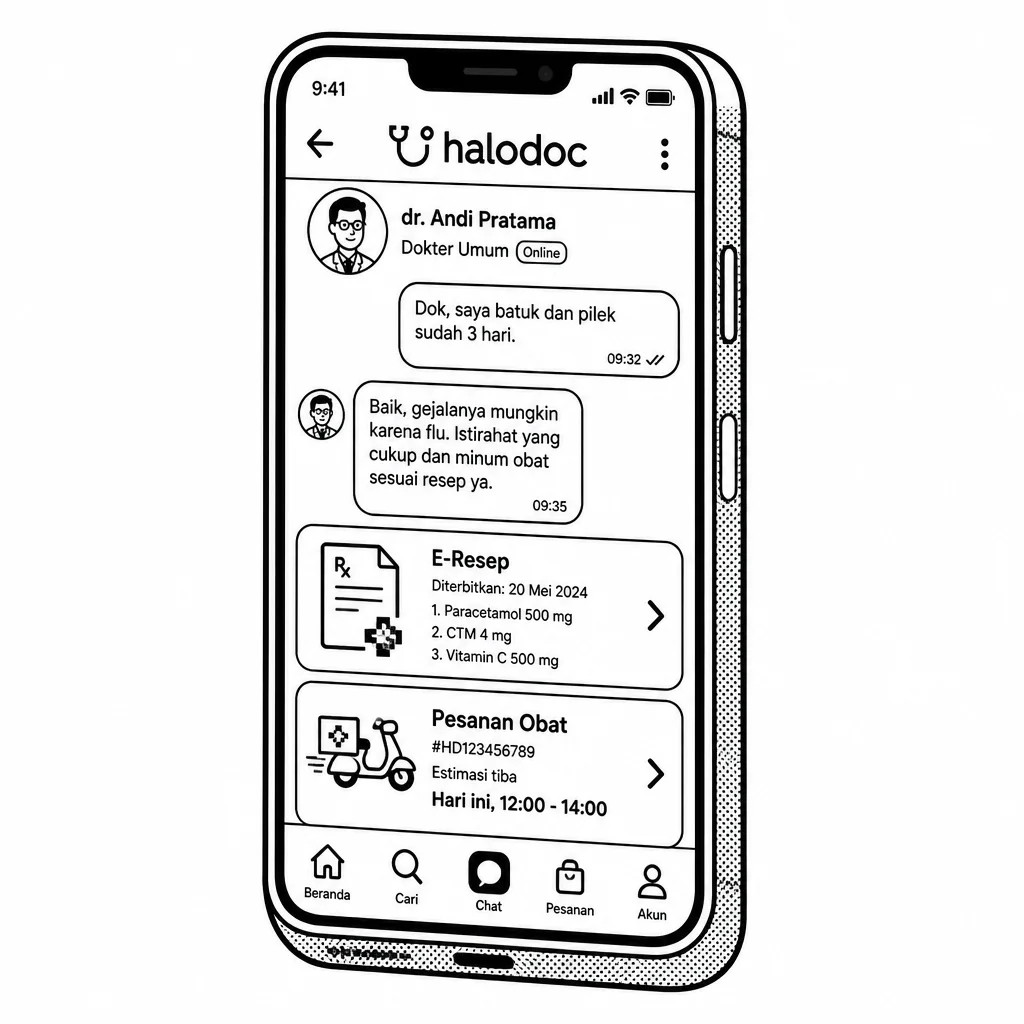
The core product is telemedicine: a chat or video consultation with a doctor, often for a small fee, sometimes free. Around that sit the paid services that actually move money — pharmacy delivery through partners, lab tests, and health packages. Halodoc itself employs the doctors on its platform and works with licensed pharmacies and lab networks rather than owning the pill bottles and testing machines. It also sells subscription-style health plans and corporate health packages, and it works with insurers who pay for members to use the service. The business case is straightforward: Indonesia is a huge archipelago with too few doctors, especially outside Jakarta, and long waits and travel are the norm. Telemedicine removes the trip. The tricky part is that consultations are cheap while doctor time costs money, so the company makes its margin on the attached orders — medicine, tests, and appointments — and on the recurring insurance and corporate deals. It competes with other Indonesian health apps and with GoTo-backed services, since Gojek and Tokopedia's ecosystem touches many of the same customers.
Halodoc is a private company, backed by investors including Bill & Melinda Gates Foundation-linked funds and GoTo-era partners, and it raised large rounds during the pandemic when demand exploded. That surge faded as lockdowns ended, and the whole sector shifted toward proving it could make money rather than just grow. The company has leaned into insurance partnerships and corporate health plans, and it is widely watched as a test of whether app-based healthcare can be a real business in Southeast Asia, not just a pandemic habit.
Saved answer · last researched 10 Nov 2026