Understand any stock in simple English
Enter a ticker to learn what the company does and how it makes money.
Haldiram's India Pvt Ltd
Haldiram's makes and sells Indian snacks, sweets, and packaged foods.
Haldiram's is India's biggest snack and sweets company. It sells bhujia, namkeen, papad, ready-to-eat meals, and boxes of traditional mithai — the kind of food Indians grab for a quick tea-time bite or hand out as festival gifts. Walk into almost any Indian grocery store and you'll find its bright orange and yellow packets lined up on the shelf.
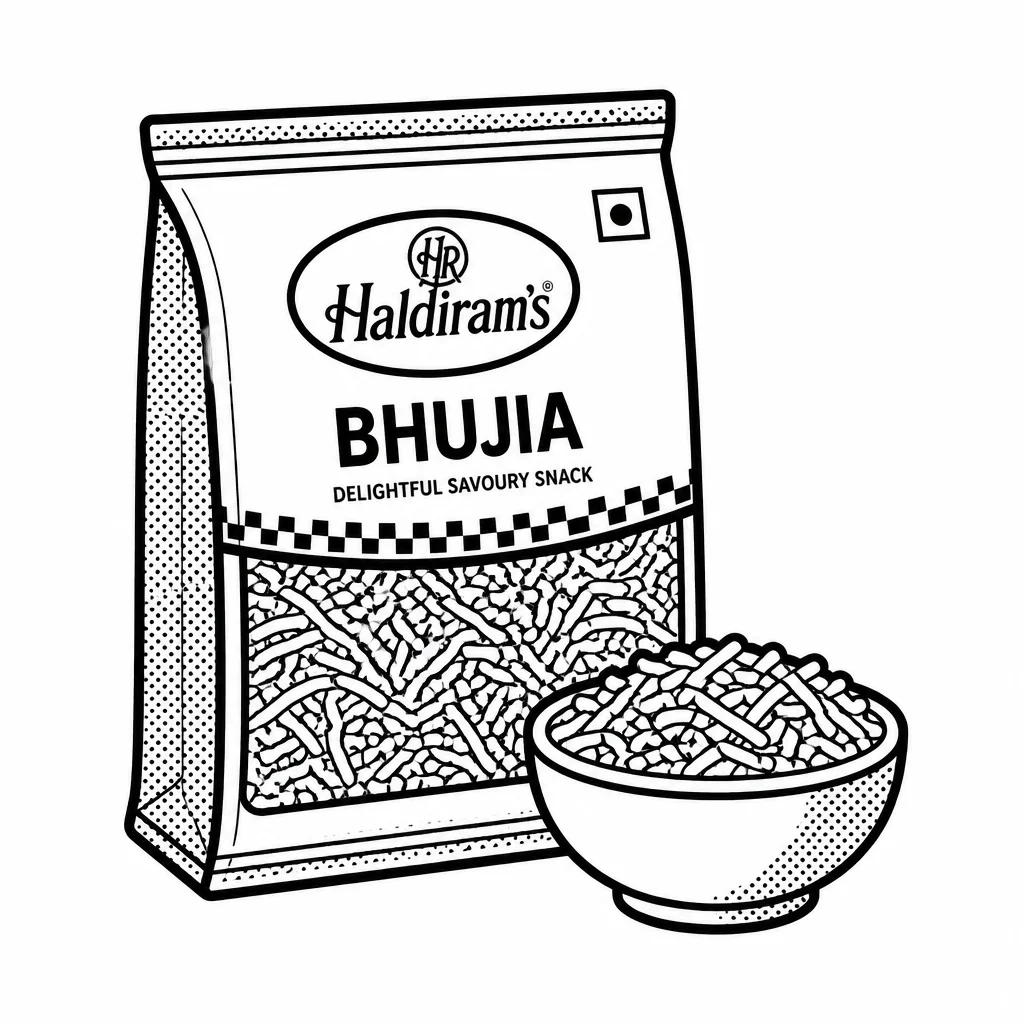
The business has an unusual structure: it's really three separate family-run companies that grew from one shop in Bikaner, Rajasthan, in the 1930s. There's the original Haldiram's in the north (which this company represents), a separate Haldiram's in Nagpur, and another in Kolkata. They split decades ago over a family feud and mostly sell in their own regions. That's why the same brand name can sit on two different packets on the same shelf. The family has talked about merging them for years, and outside investors have circled — notably Tata Consumer Products reportedly explored a stake — but no deal has gone through. The money comes from volume. Haldiram's sells millions of cheap packets of snacks through distributors, supermarkets, and its own restaurants and sweet shops. Its brand trust is the real moat: Indians are picky about snack quality and hygiene, and Haldiram's has spent generations building a reputation for consistency. It also exports to Indians living abroad, which gives it a growing overseas business.
The company is private, so it doesn't publish detailed financials, but its revenue runs into the thousands of crores of rupees and it's consistently profitable. The main risks are simple: competition from regional snack makers and bigger packaged-food rivals, rising ingredient costs, and the family structure itself, which makes decisions slower and keeps the three branches apart.
Saved answer · last researched 10 Nov 2026
BIG PICTURE
Haldiram's sells 8% of India's savoury snacks, behind PepsiCo's 12%
- 8% Haldiram's
- 12% PepsiCo India
- 7% Balaji Wafers
- 7% ITC
- 66% Others
India's savoury snack aisle has no single giant. PepsiCo leads with 12% of retail sales value, Haldiram's follows at 8%, and Balaji and ITC each hold 7%. The rest of the market is split among hundreds of smaller makers, so the biggest name still leaves most of the shelf to everyone else. For Haldiram's, that means plenty of room to grow, and plenty of rivals with the same idea. Source: Euromonitor, data from 2026
Timeline
A Bikaner Sweet Shop
In 1937, Ganga Bishan Agarwal opened a small sweets and namkeen shop in Bikaner, Rajasthan. Everyone else's bhujia was made from chickpea flour, but his was made from moth beans, and that one difference gave him a taste people remembered. That humble recipe became the seed of India's biggest organised namkeen business.
Haldiram Bhujiawala Goes to Kolkata
The first big jump came when the family set up a manufacturing plant in Kolkata, moving beyond a single Bikaner shop. The founder's eldest grandson, Shiv Kishan Agarwal, went along for the ride under the Haldiram Bhujiawala name. It marked the shift from one shop to real, scaled production.
A Bigger Plant in Jaipur
A few years later, a larger manufacturing plant came up in Jaipur to push expansion further. The family was no longer thinking like shopkeepers. It was starting to think like a food company.
Delhi Gives the Brand a National Face
Setting up in Delhi in 1982 gave Haldiram's a national identity. The Delhi plant fed the growing northern market and introduced cheap single-serve packs aimed at middle-class consumers. Over the next decade, word of mouth grew the business many times over.
The Family Splits Four Ways
By the 1990s, legal fights over the Haldiram name split the family business into four separate entities. Manohar Lal and Madhusudan Agarwal took Delhi, Shiv Kishan Agarwal took Nagpur, Shiv Ratan Agarwal took Bikaner with Bikaji, and Prabhu Agarwal took Kolkata. Delhi and Nagpur stayed the biggest, and this split shaped the company's fragmented structure for decades.
Beyond Namkeen and Sweets
In 2003, Haldiram's began developing convenience foods and widened its range into biscuits, cookies, fruit concentrates and ready-to-eat meals. It was a quiet but important turn: the snacks brand was becoming a broader packaged-foods business.
India's Largest Snack Company
By 2017, Haldiram's was named the country's largest snack company, having overtaken both domestic and multinational rivals, including PepsiCo. The little Bikaner shop now sat at the top of the Indian snack market.
The Two Big Arms Merge
In 2022, the packaged snacks businesses of Delhi-based Haldiram Snacks and Nagpur-based Haldiram Foods International were demerged and merged into one entity, Haldiram Snacks Food. The Delhi brothers, Manohar and Madhusudan Agarwal, got a 56% stake, while Nagpur's Shiv Kishan Agarwal got 44%. Bringing the two biggest family arms together was seen as clearing the way for a long-awaited IPO.
Temasek Buys In at Nearly $10 Billion
In 2025, Singapore's state-owned investor Temasek bought more than a 9% stake in Haldiram's, valuing the company at nearly 10 billion dollars. Alpha Wave Global and International Holding Company also took stakes. It was one of the largest recent deals in India's consumer-goods sector.
L Catterton Partners for the World Stage
Later that year, global consumer investor L Catterton invested in Haldiram's and formed a strategic partnership with it. The goal: defend its lead in India and speed up expansion abroad. With Sanjiv Mehta, former Hindustan Unilever chairman, leading L Catterton's India arm, the ambition was to turn Haldiram's into a global 'India for the World' brand.