Understand any stock in simple English
Enter a ticker to learn what the company does and how it makes money.
Nestlé India Limited
Nestlé India makes and sells packaged foods and drinks — from Maggi noodles and KitKat chocolates to Nescafé coffee and baby cereal — to households across India and abroad.
Nestlé India is the Indian arm of the world's biggest food company, and it makes the everyday snacks and staples that fill Indian kitchen shelves. Its most famous product is Maggi instant noodles, a brand so woven into Indian life that a scare over it once became a national crisis. But noodles are only part of the story: the company also sells KitKat and Munch chocolates, Nescafé and Nescafé Sunrise coffee, Milkmaid condensed milk, baby foods like Cerelac, and prepared dishes and cooking aids.
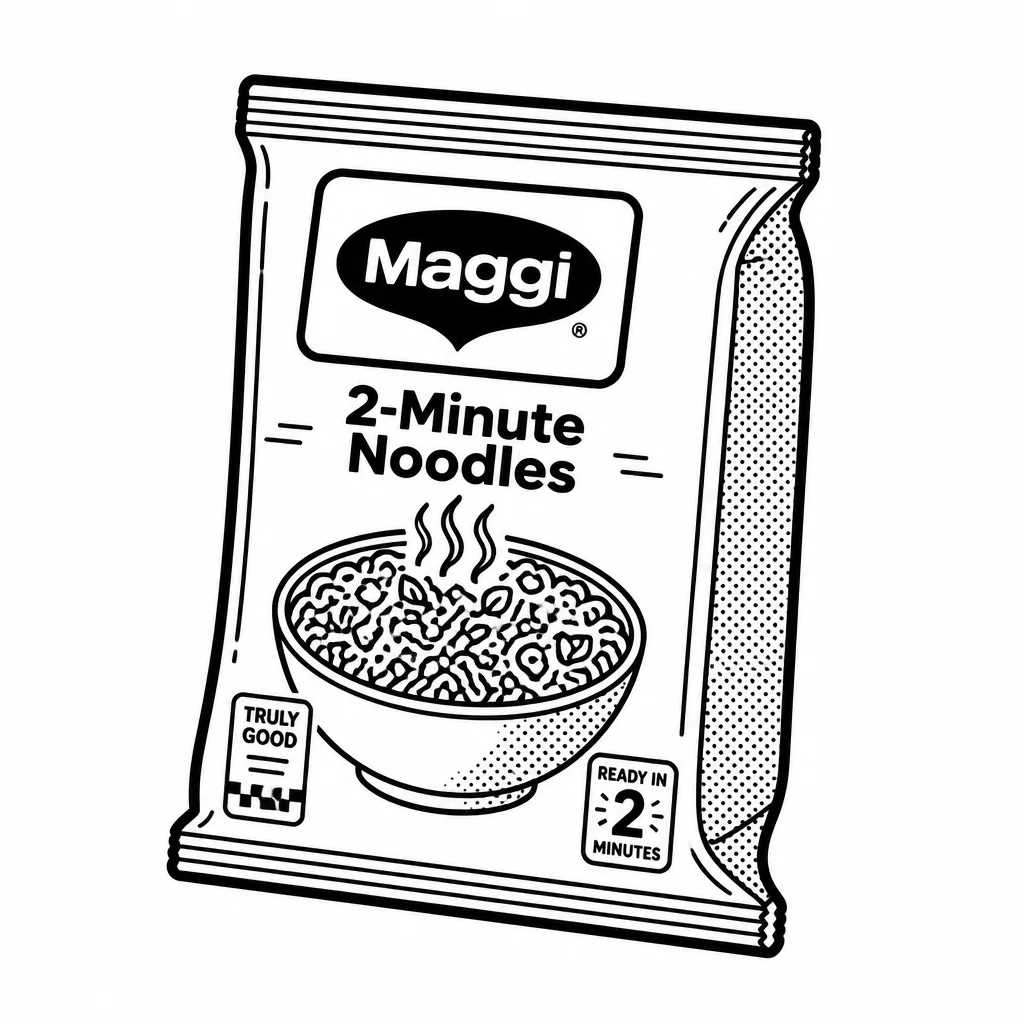
The way it makes money is simple. It buys raw ingredients — milk, wheat, cocoa, coffee beans, sugar — turns them into branded packaged products in its own factories, and sells them through millions of tiny shops, supermarkets, and online channels. Shoppers pay a little more than the ingredients cost because they trust the brand and know exactly what they're getting. That trust, built over decades of advertising and consistent taste, is the real product. A shopkeeper in a small town can stock a Maggi packet knowing it will sell, and a parent can buy Cerelac knowing it's safe. The business is strongest where habits are hardest to break. Maggi owns the instant-noodles category in India so completely that competitors struggle to get shelf space. KitKat and Munch ride on the same distribution machine, which reaches deep into rural India where big modern retailers don't go. That reach — lakhs of small stores served by a network of distributors and vans — is brutally expensive to copy. Nestlé India also exports some products, but the vast majority of its sales come from Indians buying things they already know and like. The company's history includes a cautionary tale that still shapes how it operates. In 2015, food safety regulators in one Indian state found lead above permitted limits in a batch of Maggi noodles, and the product was briefly banned nationwide. Nestlé pulled Maggi from shelves, destroyed stock, and fought a long legal and reputational battle to bring it back. The episode taught the company — and the whole Indian food industry — that trust in packaged food is fragile and that quality control is not a back-office function but the core of the business.
Nestlé India generates plenty of cash, and it returns most of it to shareholders as dividends rather than hoarding it or making big acquisitions. Its parent, the Swiss giant Nestlé, owns the majority stake, so the Indian arm operates with global backing but local management. The main risks are the ones any food company faces in India: competition from regional players and private labels, commodity price swings in milk and wheat, and the constant need to keep old brands feeling fresh to younger shoppers.
Saved answer · last researched 12 Nov 2026