Understand any stock in simple English
Enter a ticker to learn what the company does and how it makes money.
Grameen Bank
Grameen Bank is a Bangladeshi bank that gives tiny loans, called microcredit, to poor people—mostly women—who could never get a normal bank loan.
Grameen Bank is a bank for people the regular banking system walks past: the rural poor of Bangladesh, especially women with no collateral, no credit history, and no steady paycheck. Instead of asking for security, it lends small sums of money—often the equivalent of a few dozen dollars—so a borrower can buy a cow, a sewing machine, a tiny shop's stock, or a cell phone to rent out. The borrower pays it back in small weekly installments. The whole model rests on something deeper than paperwork: trust, group pressure, and the fact that a poor borrower would rather keep her standing in her village than default.
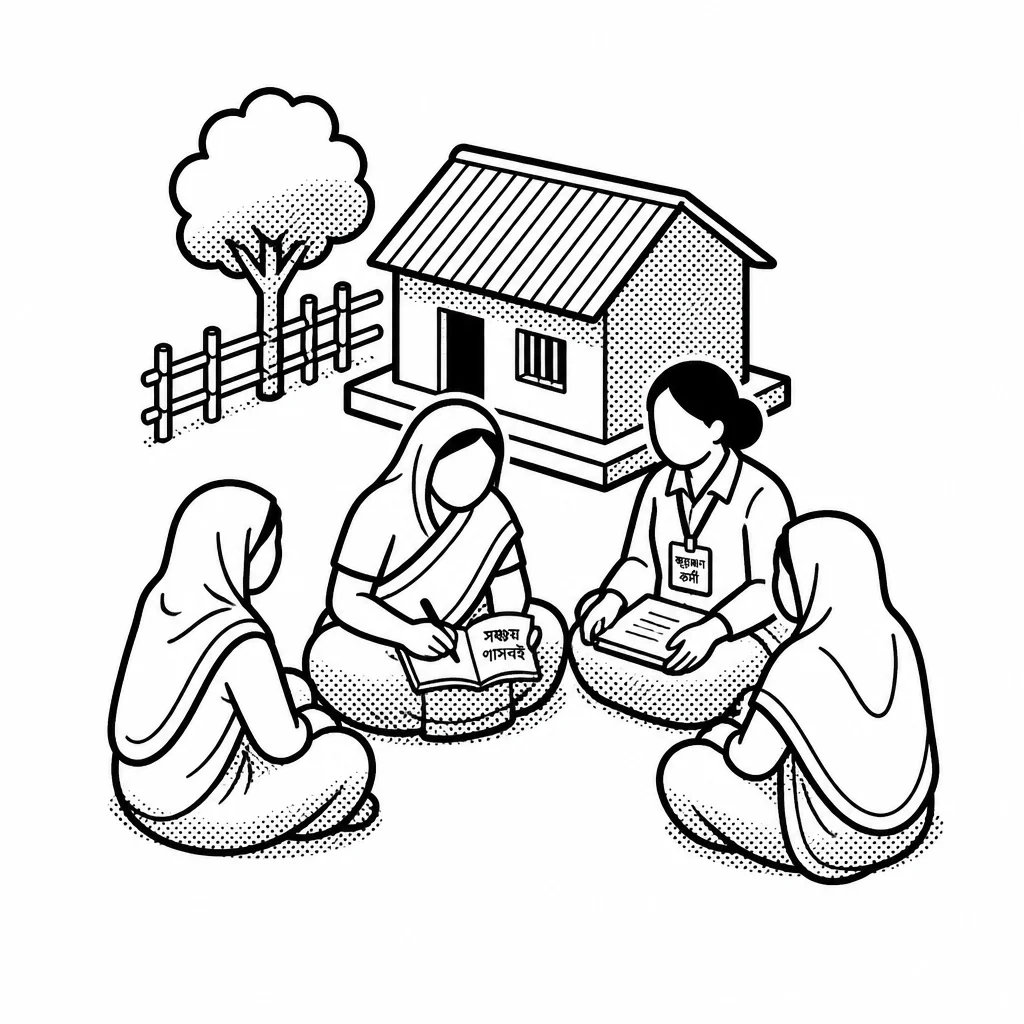
Its most famous feature is the group lending system. Borrowers form small groups of five, and each member's access to credit depends partly on the others repaying. This replaced collateral with something just as powerful—social accountability. If one woman stumbles, the group helps her get back on track, because everyone's future loan depends on everyone repaying. Over decades this let Grameen lend to millions of borrowers with repayment rates that stunned conventional bankers, and the idea spread worldwide as "microfinance." The bank is owned mostly by its own borrowers, with the government holding a small minority stake. Grameen was founded by Muhammad Yunus, an economist who started in 1976 with a personal loan of a few dollars to a group of poor villagers and turned it into a nationwide institution. In 2006, Yunus and the bank won the Nobel Peace Prize for showing that credit could be a weapon against poverty. Its identity is inseparable from that founder story—and also from a messy one. In 2011, a Norwegian documentary and later Bangladeshi government pressure led to Yunus being forced out as managing director amid a long, politically charged fight over the bank's governance and tax affairs.
The honest picture is that Grameen proved microcredit can reach people banks ignore, but it did not turn out to be the poverty cure-all that early hype promised. Critics point out that some borrowers take loans they struggle to repay, and that microloans rarely create big businesses—they mostly smooth a family's cash flow. The bank also depends heavily on Bangladesh's government and regulators, and its survival has been tangled up in politics. Still, as the institution that made microcredit a global idea, it changed how the world thinks about lending to the poor.
Saved answer · last researched 10 Nov 2026