Understand any stock in simple English
Enter a ticker to learn what the company does and how it makes money.
Oy Karl Fazer Ab
Fazer makes chocolate, candy, bread and other baked goods, and runs cafés and restaurants, mostly in Finland and Sweden.
Fazer is Finland's most famous food company, and chocolate is the heart of it. If you have ever eaten a Fazer Blue tablet — the pale blue wrapper with the chocolate inside — you have met the company's most beloved product. Finns are so attached to it that it is often called the national chocolate bar. But Fazer is bigger than one tablet: it bakes bread and pastries for supermarkets and cafés, makes biscuits and sweets, and runs a chain of cafés and restaurants in Finland, Sweden and a few other countries.
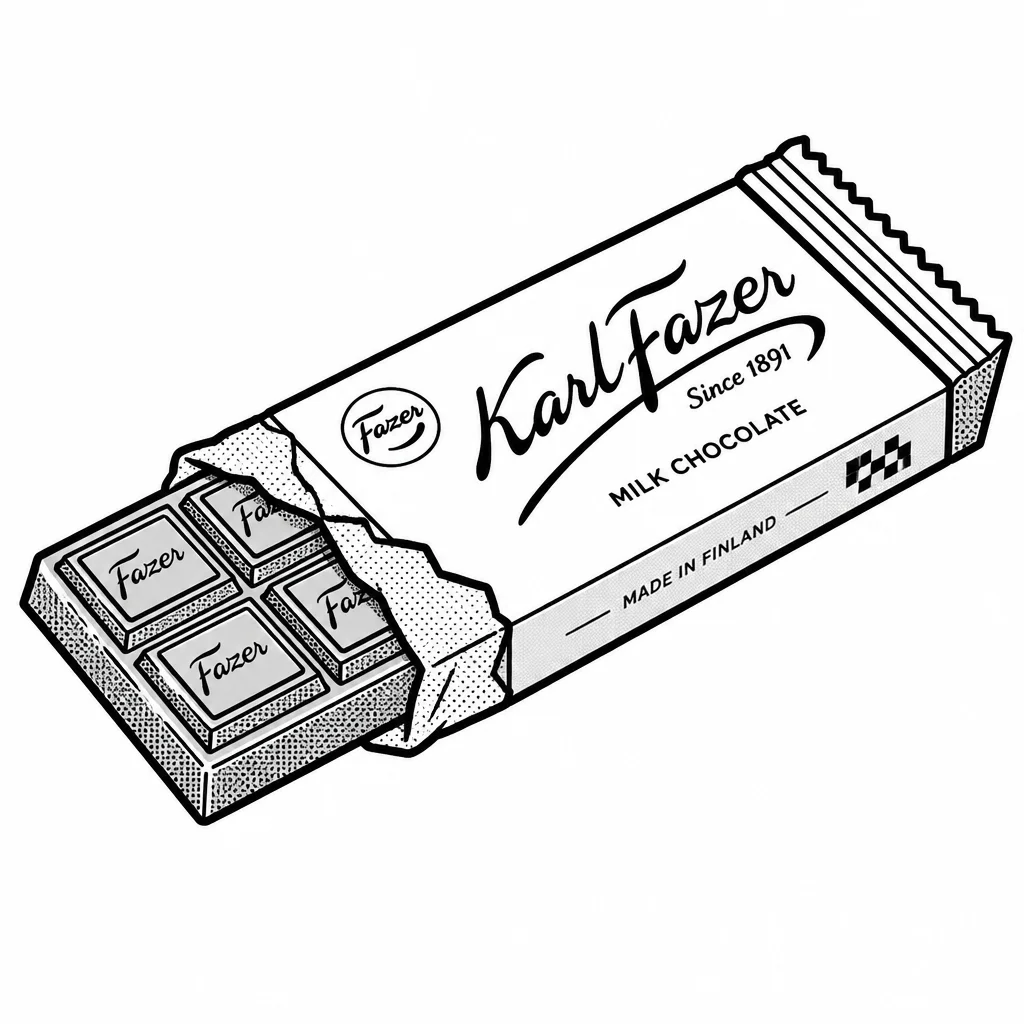
The business works in two main ways. Its food and confectionery arm sells packaged chocolate, biscuits and sweets to shops, which then sell them to you. Its bakery arm bakes fresh bread and pastries and delivers them to supermarkets, workplaces and cafés — a business where freshness and daily delivery matter more than brand names on the shelf. It also runs the Gateau bakery shops and Fazer cafés, where people buy bread, cakes and lunch directly. So Fazer earns money both from selling boxes of chocolate and from selling fresh bread every day. Fazer was founded in 1891 by Karl Fazer, a young baker in Helsinki, and the family-controlled company has stayed remarkably loyal to its roots. It is not a public stock; it is owned largely by the Fazer family and the Swedish-Finnish foundations tied to it, which lets it take a long view. The company has expanded over the years through acquisitions, including buying a big Swedish bakery business, and it has pushed into plant-based and healthier products as tastes change. Its biggest rivals in the Nordic snack aisles include Mondelez International (which owns chocolate brands like Marabou) and, in baking, large grocery chains that sell their own private-label bread.
The simple truth is that Fazer sells small everyday pleasures — a chocolate bar, a fresh loaf, a pastry with coffee — and does it well enough that people keep coming back. That is a good business, but not an easy one: cocoa prices swing wildly, supermarkets squeeze suppliers on price, and shoppers can switch to cheaper store brands. Fazer's defense is brand loyalty, especially for its chocolate, and its hold on fresh bakery, where being the reliable daily supplier counts for a lot. It is a family company selling comfort food, and it has done so profitably for more than a century.
Saved answer · last researched 10 Nov 2026