Understand any stock in simple English
Enter a ticker to learn what the company does and how it makes money.
Dualit Limited
Dualit makes kitchen appliances, most famously heavy-duty toasters, and sells them to homes, cafés, and hotels.
Dualit is a British kitchen appliance maker best known for one product: the toaster. Not just any toaster, but the chunky, chrome, hand-built kind you see lined up on café counters and in nice hotel breakfast rooms. Its machines are designed to be repaired rather than thrown away, and that single idea has shaped the whole company.
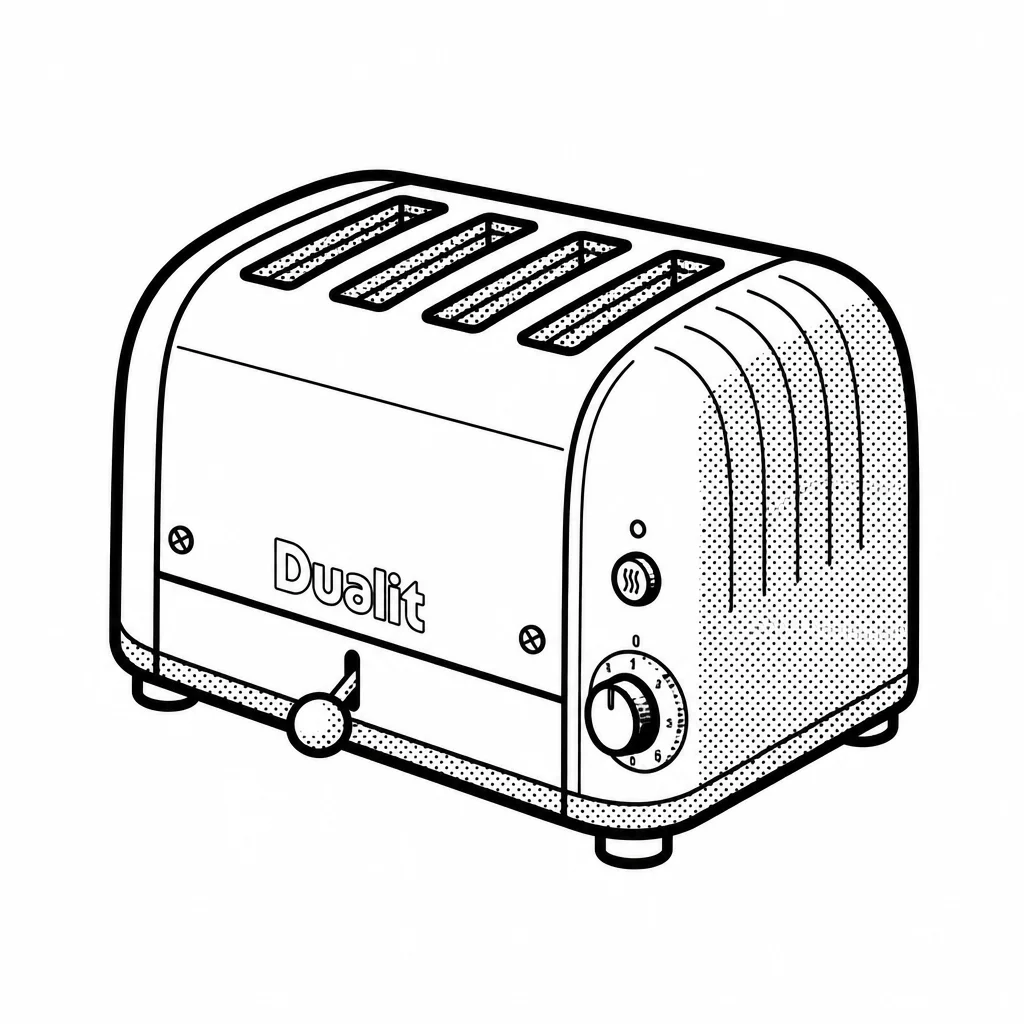
The business sells mostly through its own website and through retailers, plus a growing trade in spare parts. That parts business matters more than it sounds. Dualit's toasters are built so a broken element or timer can be swapped out, and the company sells those pieces directly to owners. A customer who fixes a toaster instead of replacing it is worth far more over decades than a one-off sale, and it builds fierce loyalty. The company also makes kettles, coffee machines, and commercial catering equipment for cafés and hotels, which pay more for machines that survive heavy daily use. The founding story is genuinely unusual. Dualit started in 1945 when Max Gort-Barten, a German-born inventor, began making small appliances in a London workshop. The toaster that made the brand famous arrived in the 1950s, built around a simple promise: it would last. The company is still family-run, now led by his son Leslie, and still assembles its toasters by hand in West Sussex rather than shipping production overseas. That choice costs more, but it is the reason the brand can charge premium prices and talk credibly about repairability.
The weak spot is size and reach. Dualit is a small private firm competing against giants like Breville-style mass-market brands and cheap imports, so it wins on quality and reputation rather than scale. Its bet is that shoppers will pay more once for something that lasts and can be fixed — a pitch that gets stronger as more people sour on disposable appliances.
Saved answer · last researched 24 Oct 2026
BIG PICTURE
Dualit builds its waffle iron for cafés that need up to 60 waffles an hour
- 60% Waffles per hour a commercial Dualit iron can produce
- 40% Not stated in the source
Dualit's commercial waffle iron is built to turn out up to 60 waffles an hour, the kind of pace a busy café needs at breakfast. That tells you where much of the money comes from: hotels, cafés and food-to-go operators buying sturdy machines, not only homes. The company says the line between professional and home kitchens is blurring as people copy café-style food at home. Source: LinkedIn post by Fabian Warislohner, Dualit Ltd, data from 2026
Timeline
Max Gort-Barten Starts Dualit in a Garage
In 1945, a German-born inventor named Max Gort-Barten set up shop in a garage off the Old Kent Road. His first product was a cocktail shaker, then came a heater that could do two jobs at once — and that dual function gave the company its name. From the start, Dualit was a British company built by an engineer, making appliances in its own workshop.
The Flip-Sided Toaster Is Patented
A year later, Max patented his first big hit: a toaster that flipped over on its side. That one product pointed the whole company in a new direction — toasters — which is what it would become famous for.
The Six-Slot Commercial Toaster
Soon after, Max designed a six-slot toaster for commercial kitchens, with a mechanical timer and a manual eject lever. That design became the blueprint for the Classic toaster Dualit still makes today — proof that a good idea can last for decades.
The Government Takes the Camberwell Factory
The government forced Dualit out of its Camberwell factory, buying it and giving Max money to build a new one on the Old Kent Road. It was a push, not a choice, but it gave the growing company a bigger base just as demand was rising.
Leslie Gort-Barten Joins the Company
Max's son Leslie, a trained engineer, joined the business. He would later take over as managing director — and he still holds the job today, keeping the company in family hands.
Export Grants Open Europe
Government export grants nudged Dualit to attend trade shows in Europe. Demand from foreign distributors, plus a 1980s craze for commercial-style kitchen gear, made orders jump almost overnight, and the factory had to be extended to keep up.
ProHeat Borrows from the Space Shuttle
Max and Leslie took technology from the Space Shuttle to develop a new heating element called ProHeat, and patented it. It won a Millennium award and is still fitted to every Classic toaster — a nice case of rocket science ending up in a kitchen.
Max Dies and Dualit Moves to Crawley
The year founder Max died, the company had outgrown its Old Kent Road home and moved to Crawley in West Sussex. Crawley is still Dualit's headquarters and factory today.
Dualit Launches Coffee Capsules
Dualit brought out its first coffee capsules, branded NX Coffee Caps. The clever part: the patented capsules worked in both Dualit machines and Nespresso machines, so Dualit could sell drinks as well as appliances.
Nestle Sues Over Compatible Capsules
Nestle took Dualit to court to block those Nespresso-compatible capsules, claiming patent infringement. The court sided with Dualit, so it could keep selling them — and that same year Dualit opened its own capsule plant. The capsules later reached high street shops and supermarkets, turning a legal fight into a real business.
The Velvetiser with Hotel Chocolat
Dualit teamed up with Hotel Chocolat to create the Velvetiser, a machine for making hot chocolate. It was a natural next step, stretching its drinks machines beyond coffee.
Dualit Turns 80
Dualit marked its 80th anniversary, still family-owned, with the founder's grandson Alex Gort-Barten as Sales and Marketing Director. It released a limited-edition Union Jack Classic Toaster to honour its British roots. Eight decades on, the company still hand-builds its Classic toaster in West Sussex — a garage startup that became a British institution.