Understand any stock in simple English
Enter a ticker to learn what the company does and how it makes money.
Decagon AI, Inc.
Decagon sells AI customer support agents that companies plug into their own help desks to answer customer questions automatically.
Decagon is an AI customer support company. It builds software "agents"—AI programs that talk to customers in chat, email, and other channels—so that a business can answer routine questions without a human typing every reply. The customers are mostly other companies: fast-growing tech firms, consumer apps, fintechs, and other businesses with lots of support tickets and a desire to handle them faster and cheaper.
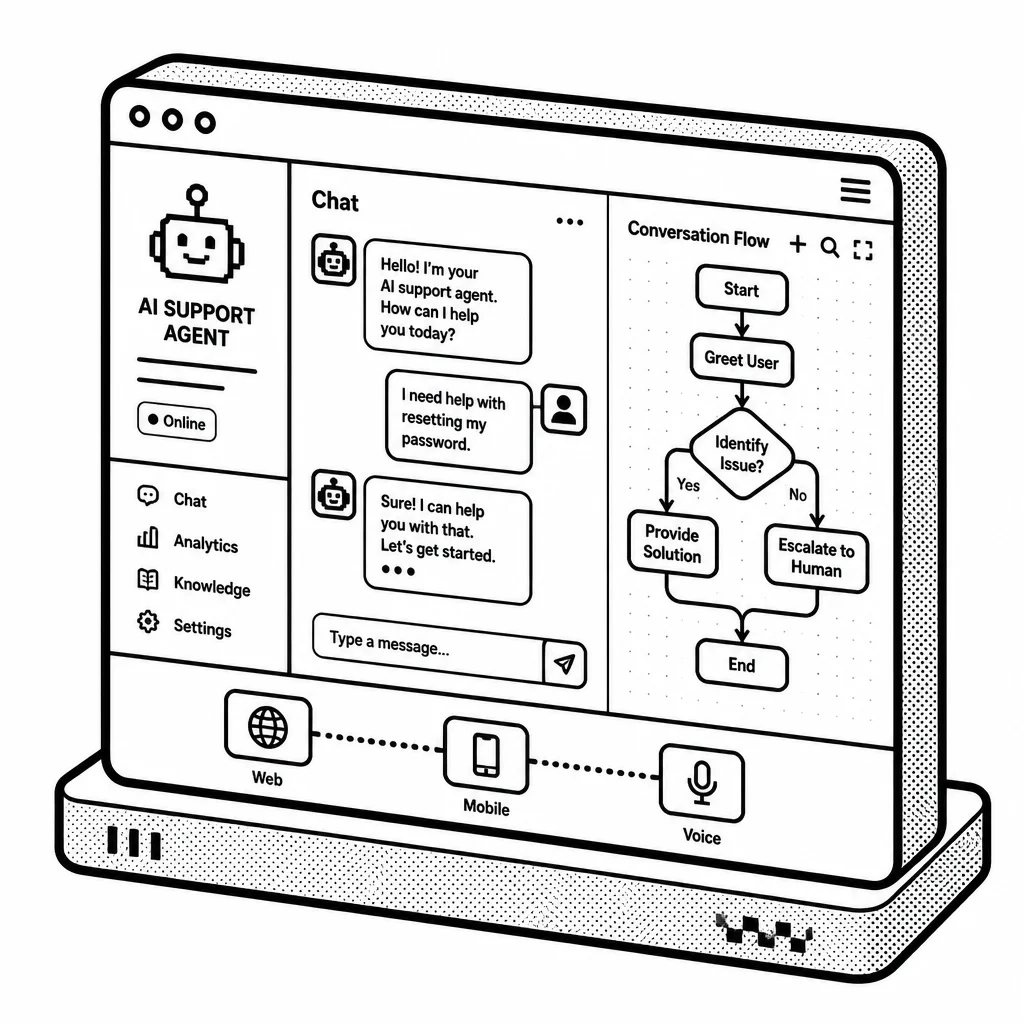
Here is the basic problem it solves. A company like a food delivery app or a software service gets flooded with the same questions again and again: where is my order, how do I reset my password, can I get a refund. Hiring enough people to answer all of that is expensive and slow. Decagon's AI reads the customer's message, pulls the answer from the company's own help articles and internal systems, and replies instantly. It can also take actions, like processing a refund or updating an account, which is what separates a useful support agent from a chatbot that just recites FAQ text. The company was founded in 2023 by Jesse Zhang and Ashwin Sreenivas, and it raised money quickly from venture investors, reaching a reported valuation around $1.5 billion in 2025 after a funding round led by Andreessen Horowitz-style venture firms and others. Its pitch is that its agents are accurate enough and controllable enough that companies trust them with real customer conversations, not just simple greetings. It competes with other AI support startups and with the big incumbents that already sell help desk software, such as Salesforce and Zendesk.
Decagon makes money by charging companies a subscription, typically tied to how many AI agents or conversations they use. The appeal is straightforward: a business can shrink its support costs and respond around the clock, while keeping humans for the hard cases. The risk is equally clear. AI that gives wrong answers to customers is a serious problem, and the big software vendors are racing to add similar features. Decagon's bet is that focusing only on support, and doing it better than general-purpose tools, wins the market.
Saved answer · last researched 10 Nov 2026