Understand any stock in simple English
Enter a ticker to learn what the company does and how it makes money.
Cellulant Corporation
Cellulant runs a digital payments network that lets people and businesses in Africa pay and get paid across different banks, mobile money services, and payment apps.
Cellulant is a payments company that connects the many different ways Africans move money. In much of Africa, cash and mobile money — the phone-based wallets run by telecom operators — dominate everyday payments, while banks and card networks sit alongside them. These systems usually don't talk to each other. Cellulant builds the pipes that let a business accept money from a customer regardless of which bank, wallet, or app that customer uses, and lets money flow the other way too.
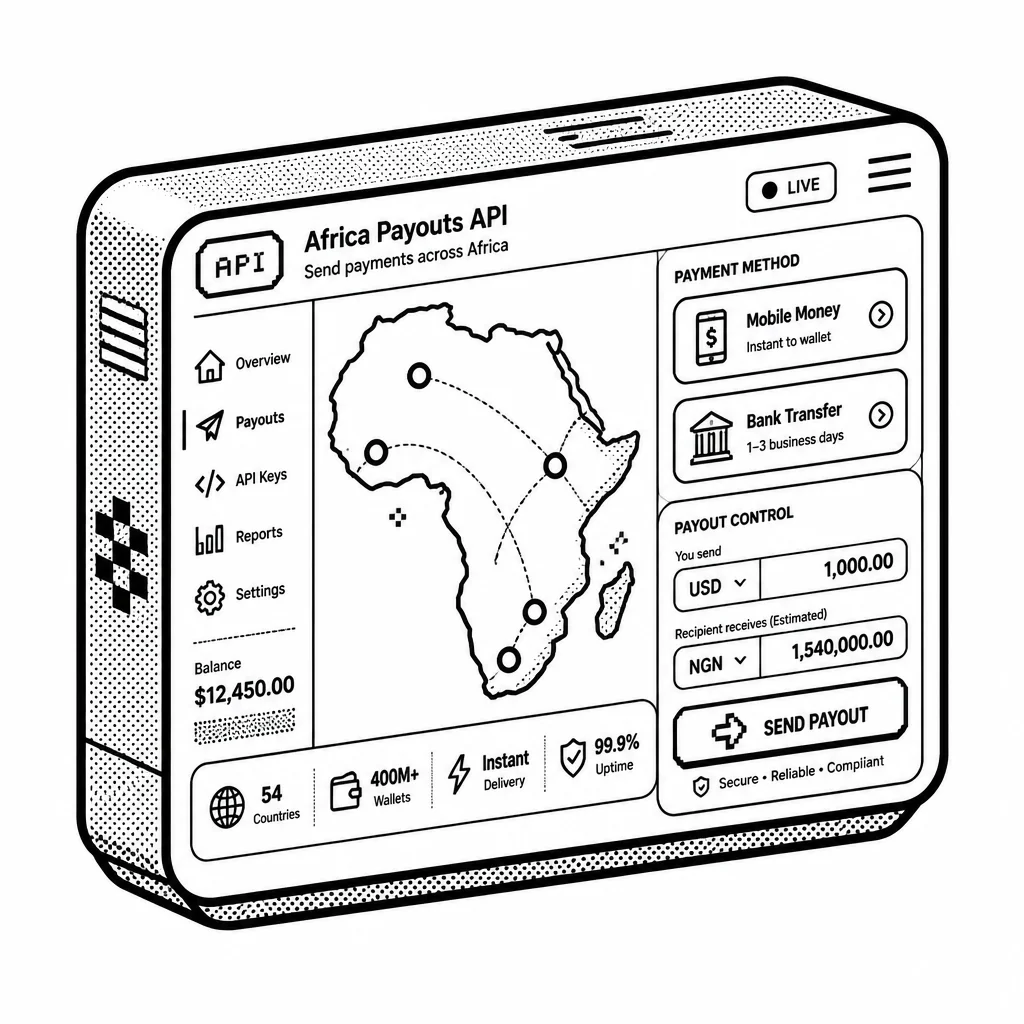
Its core product is Tingg, a platform that businesses plug into to collect payments, send payouts, and manage bills across many payment methods through one connection. So a restaurant, an online store, a utility, or a government agency doesn't have to strike separate deals with every bank and telecom. Cellulant sits in the middle, does the technical and settlement work, and takes a small slice of each transaction. Customers choose it because coverage is the hard part — reaching customers across dozens of wallets and banks in many countries is painful to build alone. The company was founded in Kenya in 2003 and grew into one of Africa's larger fintech players, operating across a long list of countries. Its home base in Nairobi matters: Kenya is the birthplace of mobile money, so payments infrastructure is a well-understood need there. Cellulant has raised significant venture funding over the years, and like many growth-stage fintechs it has gone through rounds of restructuring to focus on the business, including leadership changes as it pushed toward profitability.
The bet is straightforward: as more African commerce moves off cash, someone has to be the neutral connector between all these fragmented rails. That position is valuable but competitive — banks, telecoms, and other fintechs all want a piece of it, and the low-margin, high-volume nature of payments means scale and reliability decide who wins. Cellulant's fate rests on whether it can be that dependable middle layer for enough large merchants and institutions before rivals close the gap.
Saved answer · last researched 10 Nov 2026