Understand any stock in simple English
Enter a ticker to learn what the company does and how it makes money.
Cato Networks Ltd.
Cato Networks sells cloud-based networking and security that lets companies connect all their offices and workers through one system instead of a pile of separate hardware.
Cato Networks is a networking and security company. It sells a service that connects a company's offices, data centers, and remote workers to the internet and to each other, and it bundles in the security that inspects all that traffic. The pitch is simple: instead of buying firewalls, routers, and separate security boxes for every branch and then stitching them together, a company sends all its traffic through Cato's cloud and gets one system, one dashboard, and one bill.
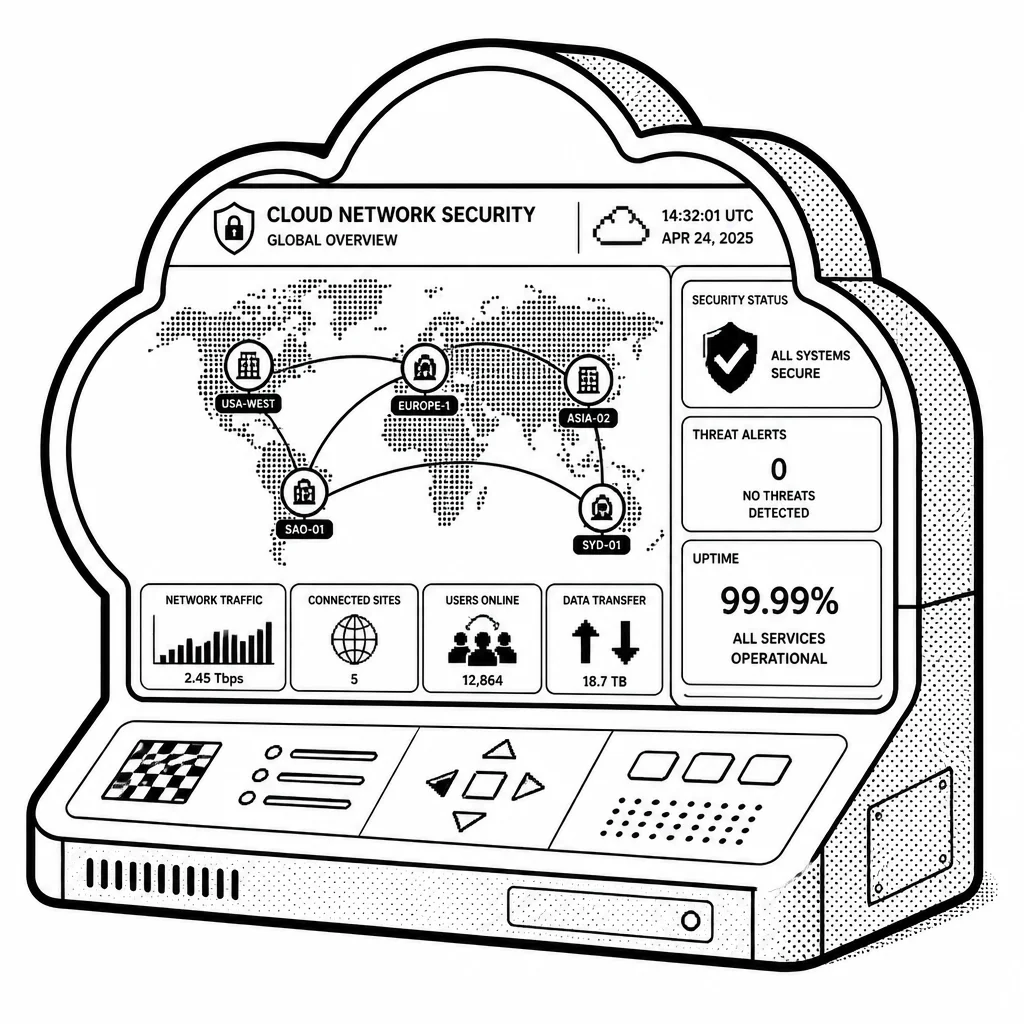
The service is built on top of a private global network that Cato operates itself, with points of presence around the world. Customer traffic enters the nearest one and travels Cato's own backbone rather than the open internet, which tends to be faster and more reliable. On top of that network sits a menu of features: secure remote access, a firewall, web filtering, protection against online threats, and tools for optimizing links to cloud apps. Cato sells subscriptions to businesses of all sizes, and it focuses especially on mid-sized companies and firms with many scattered branches, where the traditional approach of shipping hardware to each site is expensive and slow. The company was founded in 2015 by Shlomo Kramer, who had already co-founded the security firms Check Point and Imperva, and Gur Shatz. It is headquartered in Tel Aviv and has grown quickly, raising large funding rounds from investors including Lightspeed and Coatue and crossing the billion-dollar valuation mark. Its main competition comes from legacy network and firewall vendors like Palo Alto Networks, Fortinet, and Cisco, plus newer cloud security players like Zscaler, each selling part of what Cato sells. Cato's bet is that customers would rather buy the whole bundle from one place.
Cato remains a private, venture-backed company, so it doesn't report the quarterly results a public company would. The obvious question hanging over it is whether it eventually goes public or gets acquired, and until then its health shows up mainly in customer growth and the size of its funding rounds. The business is capital-hungry, because running a global private network means paying for data centers and circuits everywhere, but that network is also what makes the product hard to copy.
Saved answer · last researched 10 Nov 2026