Understand any stock in simple English
Enter a ticker to learn what the company does and how it makes money.
Carousell Pte. Ltd.
Carousell runs a marketplace app where people buy and sell secondhand things, and it makes money by charging sellers for extra features and ads.
Carousell is a Singaporean company that runs a marketplace app where people buy and sell stuff — mostly secondhand phones, clothes, furniture, and just about anything else sitting unused in someone's home. It started as a simple "snap to sell" app and grew into one of Southeast Asia's best-known consumer internet brands, with millions of listings across markets like Singapore, Malaysia, the Philippines, Taiwan, and Hong Kong.
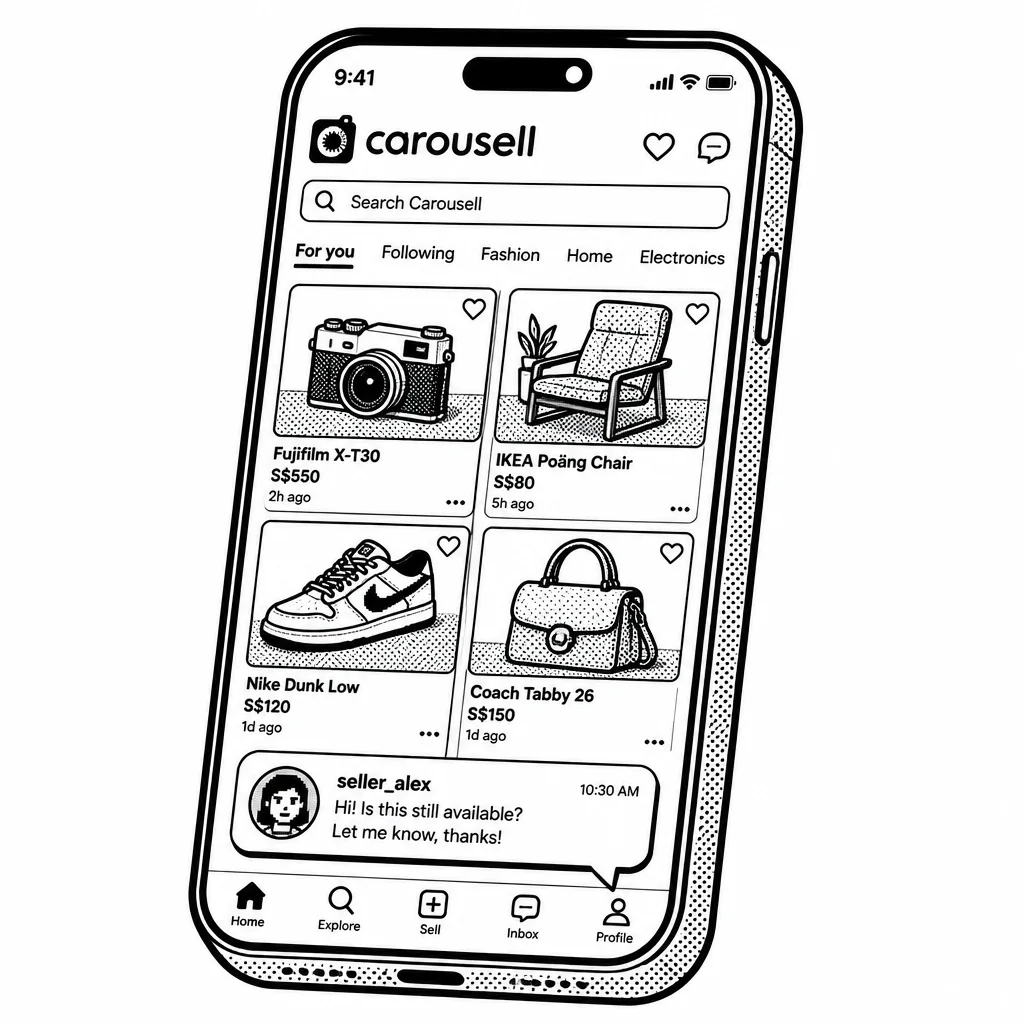
The core business is a classic online classifieds model. Sellers list items for free, and Carousell makes money when they pay for extras: bumping a listing to the top, adding spotlight ads, or buying a subscription for a shop. It also sells display and promoted advertising to brands. The beautiful part of this model is that the inventory costs nothing — ordinary people supply the goods — so the company mainly spends on building the app and marketing to keep buyers and sellers coming back. The obvious weakness is competition. In many markets it faces rivals like Meta Platforms's Facebook Marketplace, which has an enormous built-in audience and zero listing fees, plus local classifieds apps and Shopee, owned by Sea Limited. Carousell has leaned into trust and convenience — verified profiles, chat, and delivery — to keep people on its platform rather than scattering to social media.
Carousell has stayed private, backed by outside investors, and grew partly by acquiring other marketplaces and classifieds businesses to expand its reach. A notable turning point came with its expansion beyond pure peer-to-peer selling into refurbished and verified goods, an attempt to capture higher-value transactions where buyers want more guarantees. The business is ultimately a bet that people in Southeast Asia will keep trading used things online, and that sellers will pay a little for a better chance of being seen.
Saved answer · last researched 10 Nov 2026