Understand any stock in simple English
Enter a ticker to learn what the company does and how it makes money.
Black Forest Labs Inc.
Black Forest Labs builds AI image-generation models that other companies pay to use.
Black Forest Labs makes the AI software that turns a written sentence into a picture. Type "a cat in a spacesuit eating a hot dog on the moon," and its models generate an image in seconds. The company doesn't sell pictures to everyday people. It sells access to the model itself — through its own website and through partners who build it into their own apps and tools.
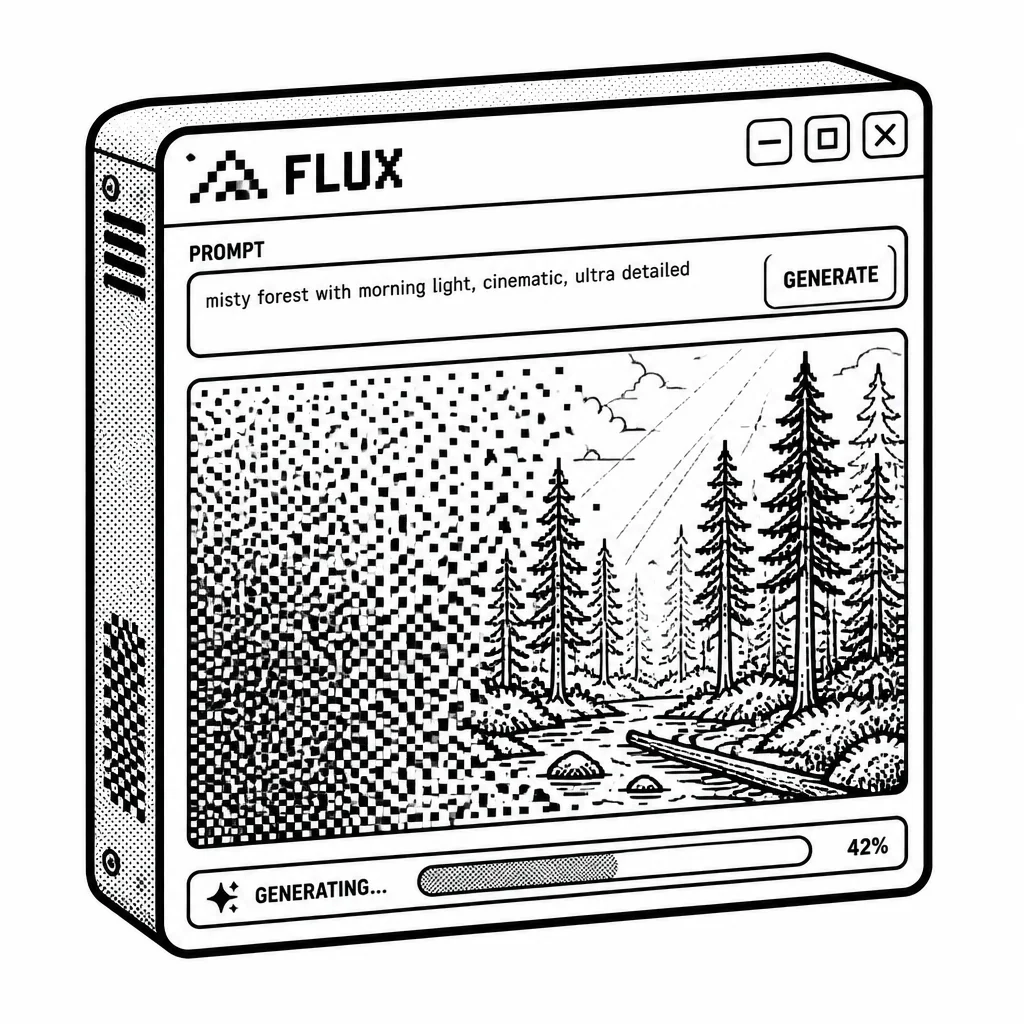
The company is best known for its Flux family of image models, which it makes available in different sizes. Smaller, faster versions are cheap enough for high-volume apps, while larger versions produce more detailed images. Customers include developers and businesses that need image generation built into their products, plus creative professionals who pay for premium access. Black Forest Labs makes money by charging for those model calls and subscriptions, and by licensing its technology to bigger platforms that want image generation without building it from scratch. The founders came out of the AI research world and helped build foundational image-generation technology before starting the company. That pedigree matters in this market, where a model's quality and speed are the whole product. The competition is fierce and well-funded, with rivals like OpenAI, Midjourney, and Stability AI fighting for the same developers and creators. The edge Black Forest Labs claims is a mix of image quality, openness, and speed — letting companies run the models more flexibly than a closed API allows.
The big risk is that image generation is becoming a commodity. Every major AI lab ships strong image models, and prices keep falling. That pushes Black Forest Labs to keep pushing the frontier and to win big partners that lock in steady usage. The company raised serious venture funding to fuel that race, and it also has to navigate the legal and ethical minefield around AI images, including copyright disputes and concerns about deepfakes. Whether it becomes the default image engine inside other products, or gets squeezed by the giants, is the central question for the business.
Saved answer · last researched 10 Nov 2026
Timeline
Stable Diffusion Team Found BFL
Robin Rombach and Andreas Blattmann helped build Stable Diffusion at Stability AI, then left to start their own company in 2024. Their edge came from latent diffusion research at German universities, which made powerful image models far cheaper to run. Instead of chasing Silicon Valley, they set up in Freiburg, betting that focus and nearby European talent beat the hype of the tech hubs.
FLUX Models Launch With Seed Round
That same year, Black Forest Labs came out of stealth with FLUX.1, its first text-to-image models, and raised a $31m seed round led by Andreessen Horowitz. The free, open versions acted as a doorway: developers tried FLUX, then paid for the stronger Pro model. It was a clever way to turn attention into revenue from day one.
xAI Partnership Ends Abruptly
Soon after launch, Elon Musk's xAI tapped BFL to power Grok's image generator, thrusting the young company into the spotlight. But by December the deal was over, as xAI built its own model, Aurora, after controversy over loose content guardrails. The episode taught BFL a hard lesson: hitching your brand to an unpredictable partner can scare off the serious business customers you want.
FLUX Moves Into Image Editing
BFL then pushed FLUX beyond making pictures from scratch. In 2025 it added Kontext, which let users edit an existing image with text instructions, and later FLUX.2, which could juggle up to ten reference images at once with precise edits. Each step moved the product closer to how real work actually gets done.
A $300m Series B
By December 2025, investors were practically fighting for a piece. BFL raised $300m at a $3.25bn valuation, co-led by Salesforce Ventures and AMP, with the round heavily oversubscribed and names like NVIDIA, Adobe, Canva and Figma chipping in. Some big customers even became shareholders, and the money was aimed at unified models that see and understand, not just generate.
A Lean Licensing Business
Quietly, BFL had built a serious business selling licenses to companies like Adobe, Canva, Meta and Microsoft, with total contract value past $300m and a Meta deal alone worth roughly $140m. Annual recurring revenue was estimated near $96m by August 2025, run by only about 70 people. That is the dream setup: small team, big checks, and customers who also own a slice of you.
FLUX 3 Leaps Into Physical AI
Then came the biggest pivot yet. In July 2026, BFL announced FLUX 3, a single model trained on images, video and audio and extended to predict physical actions, launched alongside FLUX-mimic, built with robotics firm mimic and already tested in production at Audi. The company that started by painting pictures was now aiming at robots and the physical world.