Understand any stock in simple English
Enter a ticker to learn what the company does and how it makes money.
Comuto SA
BlaBlaCar runs an online marketplace that connects drivers with empty seats to passengers going the same way, so both sides save money on long-distance travel.
BlaBlaCar is a ride-sharing marketplace for long-distance travel. A driver heading from Paris to Lyon, say, posts the trip and lists the empty seats; passengers book and pay to join, and the two sides split the cost of the fuel and tolls. The company does not own the cars or employ the drivers. It simply runs the platform, handles payments, and takes a cut of each booking.
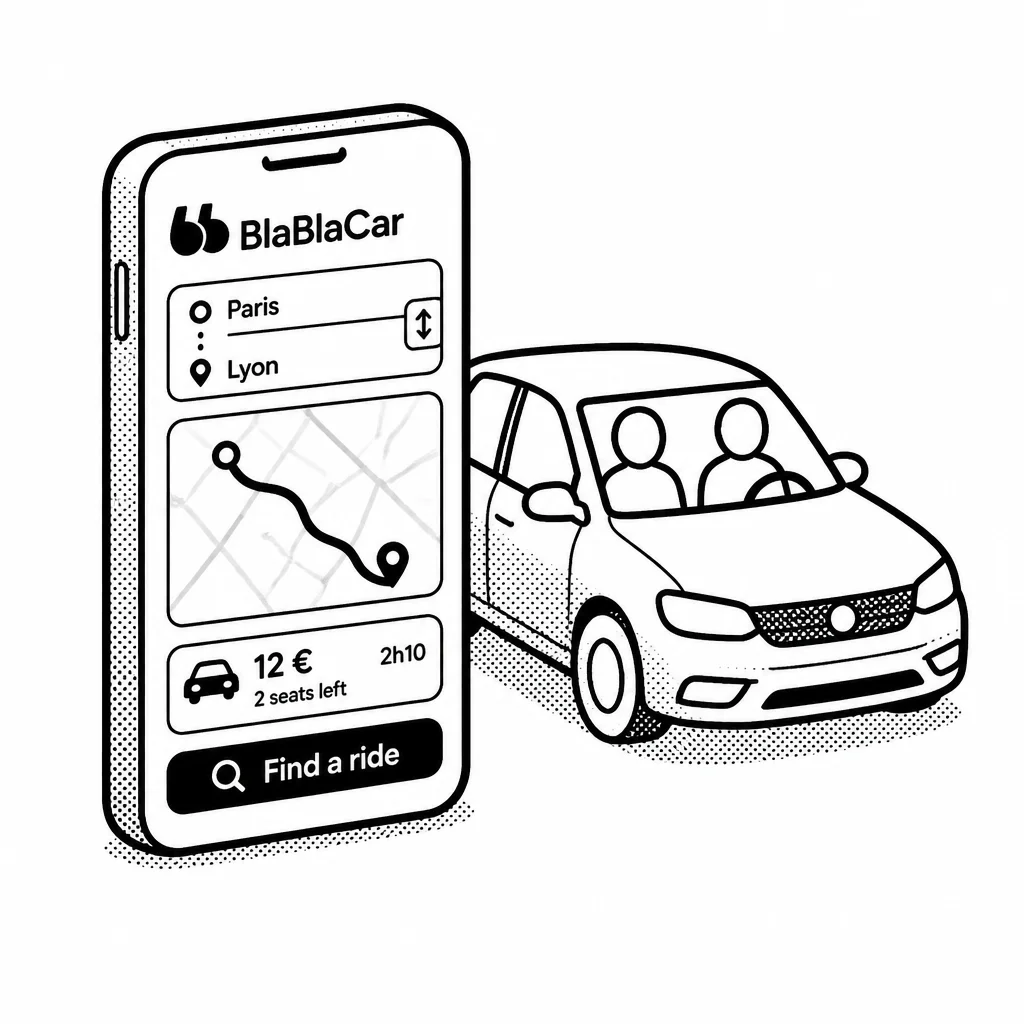
The model works because it solves an old problem: long car trips are expensive, and trains and planes can be pricey too. By filling seats that would otherwise sit empty, BlaBlaCar turns a sunk cost into shared savings. The name comes from the idea that passengers can choose how chatty they want the ride to be — "Bla" for talkative, "BlaBla" for a real conversation, and a silent option for people who just want to nap. That small feature reflects the real product: trust. Riding in a stranger's car requires confidence, so the platform leans on driver profiles, ratings, and verified identities to make it feel safe. The company, legally Comuto SA, is based in Paris and was founded in 2006. It is privately held, not traded on any stock exchange. It makes money mainly by charging a service fee on bookings, and it has expanded beyond France into markets across Europe, Latin America, and India. Along the way it bought rivals to grow faster, including the long-distance bus platform Ouibus from SNCF and the European carpooling competitor Carpooling.com. The bus business was a notable pivot: BlaBlaCar started selling bus tickets alongside carpool seats, betting that people want a cheap way to travel, not a specific vehicle.
Its biggest strength is the network effect — the more drivers and passengers who use it, the more useful it becomes, which makes it hard for a newcomer to catch up. Its weakness is that it depends on trust and regulation. Ride-sharing sits in a gray zone in many countries, where rules about licensed transport can shift. And it faces competition from trains, budget airlines, and FlixBus in Europe. Still, for millions of people, BlaBlaCar has become the default way to split a long drive — cheap for passengers, less costly for drivers, and a little more social than a bus.
Saved answer · last researched 10 Nov 2026