Understand any stock in simple English
Enter a ticker to learn what the company does and how it makes money.
Trainline plc
Trainline runs an app and website that lets people buy train and coach tickets, mostly in Europe, and takes a cut of each sale.
Trainline is a travel app and website that sells train and coach tickets. You type in where you're going, it shows you the options across different rail companies, and you buy the ticket in a few taps. That sounds simple, but it solves a genuinely annoying problem: in Europe, dozens of separate train operators each run their own lines, schedules, and pricing, and before Trainline came along, figuring out how to get from, say, London to Lyon meant wrestling with several different websites.
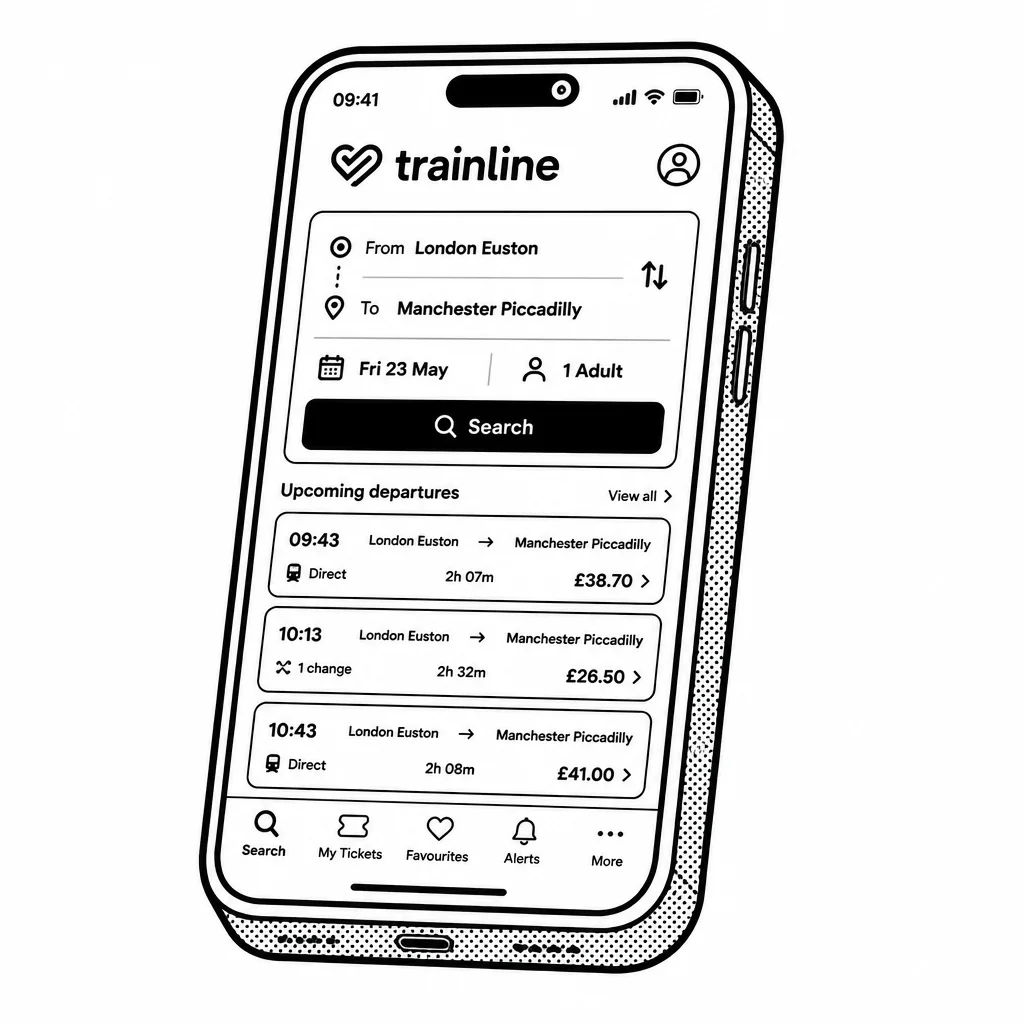
The company makes money by taking a small commission on each ticket it sells, plus booking fees in some markets. It doesn't own trains or employ drivers. It's a middleman between you and the rail operators, and it only earns when you actually buy. Its biggest customers are ordinary travellers in the UK, where it's the best-known way to buy train tickets, along with growing numbers of passengers across Europe. It also sells to businesses that need to book staff travel. Trainline's edge is convenience and data: it knows the routes, prices, and quirks of many operators, and it has spent years making the buying experience smooth. The business has one big vulnerability: rail operators can decide to sell directly and cut out the middleman, and some have tried. Regulators in the UK have also looked closely at whether the booking fees are fair. Trainline has pushed back by adding features like split-ticketing, which automatically finds cheaper combinations of tickets for a single journey—something most operators don't bother to offer. That kind of cleverness keeps customers coming back.
Trainline listed on the London Stock Exchange in 2019, and it has used its cash to keep investing in its app and expand into more European markets, where buying train tickets is often still clunky. The pandemic hit it hard, as lockdowns emptied the railways, but travel has since recovered and the company has returned to growth. It's a good example of a business that thrives on being genuinely useful in a messy market—as long as the people who run the trains keep letting it play.
Saved answer · last researched 14 Nov 2026