Understand any stock in simple English
Enter a ticker to learn what the company does and how it makes money.
Avadel Pharmaceuticals plc
Avadel sells LUMRYZ, a once-at-bedtime medicine for narcolepsy, to patients and prescribers in the United States.
Avadel is a small specialty drugmaker with one main job: selling LUMRYZ, a medicine for people with narcolepsy, a sleep disorder that makes it hard to stay awake during the day. LUMRYZ is a form of oxybate, the same active ingredient used in older narcolepsy drugs, but delivered as a single dose taken at bedtime instead of two doses split across the night. That convenience is the whole pitch — patients get their full night's medicine in one go rather than waking up for a second dose.
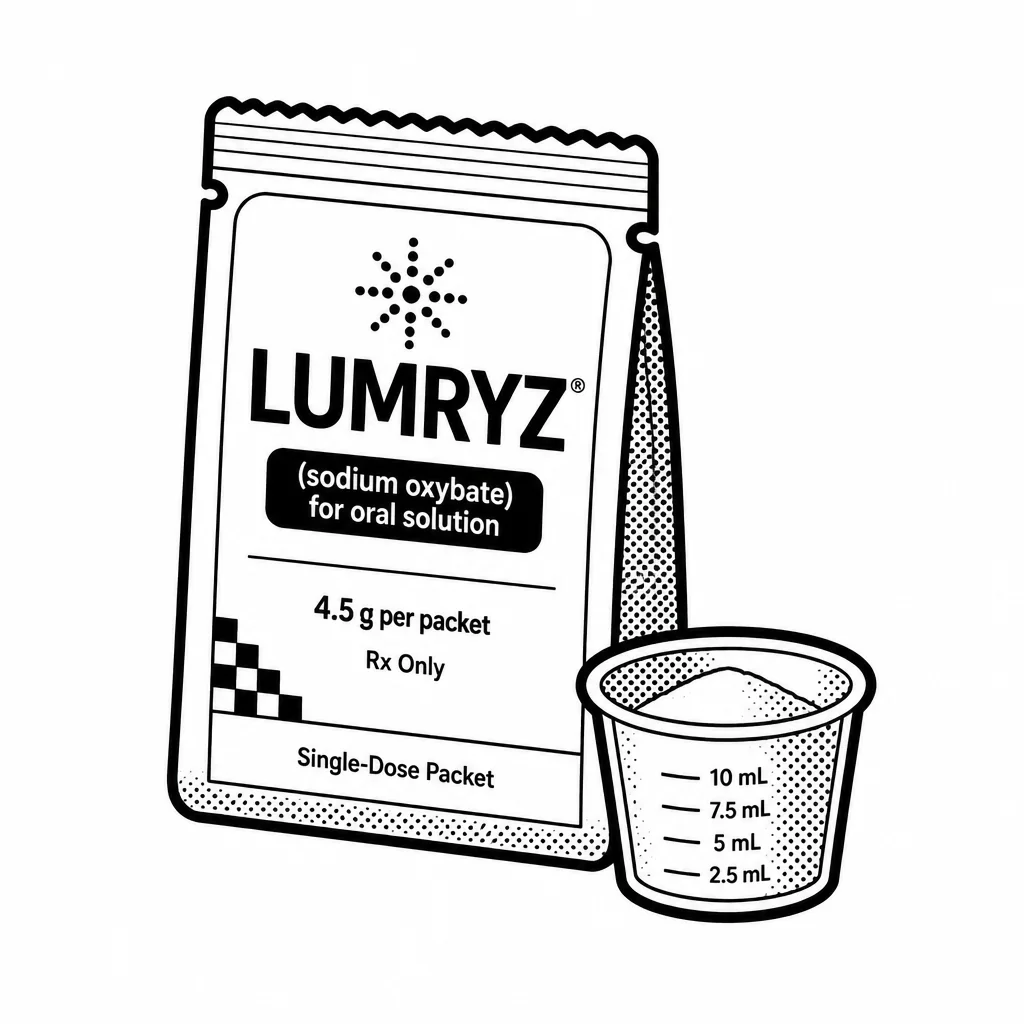
The people who pay are patients and the prescribers who write the scripts, though in practice most of the money flows through insurers and pharmacy benefit managers who decide whether to cover the drug. Avadel's challenge is convincing doctors to switch patients off the two-dose incumbents made by Jazz Pharmaceuticals, and convincing payers that a once-nightly option is worth covering. That fight over access and reimbursement is the real battleground, not the chemistry. Avadel is no longer a publicly traded company. Its shares stopped trading after Alkermes, a drugmaker focused on neuroscience, agreed to acquire it — the deal valued Avadel at roughly $2 billion and folded its narcolepsy franchise into Alkermes' portfolio. So the LUMRYZ business now sits inside Alkermes rather than standing on its own.
For a one-product company, everything rides on that product: manufacturing, marketing, and payer contracts all point at LUMRYZ. That makes Avadel's economics simple but fragile — a single drug either wins coverage and prescriptions or it doesn't, and there's little else to fall back on. The Alkermes deal was essentially a bet that a convenient once-nightly narcolepsy medicine is worth owning outright.
Saved answer · last researched 15 Nov 2026
BIG PICTURE
Half of LUMRYZ patients switched from older narcolepsy drugs rather than starting fresh
- 50% Patients who switched from another oxybate
- 50% Patients new to oxybate or restarting after stopping
Half of the people taking LUMRYZ came over from an older narcolepsy medicine instead of starting treatment for the first time. That matters because the pool of new oxybate starters in the U.S. is only 4,000 to 5,000 a year. Avadel's growth leans on convincing patients already on a twice-nightly drug to ask their doctor for a once-at-bedtime option. Source: Morgan Stanley 23rd Annual Global Healthcare Conference summary, data from 2026
Timeline
Flamel Starts in France
A small drug company called Flamel Technologies opened in Lyon, France. Its big idea was to take existing medicines and engineer them so they work better in the body, rather than inventing brand-new drugs from scratch.
Flamel Buys Éclat
Flamel bought Éclat Pharmaceuticals, a St. Louis company with its own products and a U.S. foothold. The French drug developer now had a commercial arm selling medicines in America, and with it, a reason to think bigger than research alone.
Buying FSC Holdings
Next came FSC Holdings and its pediatric, therapeutics, and laboratory businesses. The company kept stacking up pieces, pulling in a patchwork of products and services that each added revenue but also complexity.
Avadel Gets Its Name
Flamel, Éclat, and FCS Pediatrics merged into a single company that crossed the border from France to Ireland and took a new name: Avadel. The rebrand was meant to mark a fresh identity, a specialty drugmaker with a U.S. business and an Irish home.
Bankruptcy and a Leadership Shakeup
Things went badly. The CEO resigned, the chief operating officer stepped in temporarily, and the chairman left too. Soon after, Avadel filed for Chapter 11 bankruptcy, the legal process a company uses when it cannot pay its bills and needs protection to survive.
Lumryz Wins FDA Approval
Out of the restructuring came a real prize. The FDA approved Lumryz, a once-at-night oral suspension of sodium oxybate for people with narcolepsy, a disorder that makes it hard to stay awake. It was the kind of drug that could define the whole company.
A Bidding War for Avadel
With a promising drug in hand, Avadel became a target. Alkermes and Lundbeck, two rival drugmakers, fought over who would buy it, and in November the board accepted Alkermes' raised offer of about $2.37 billion.
Alkermes Closes the Deal
The bidding war ended with Alkermes completing the purchase in February. Avadel was delisted from the stock market and became a wholly owned subsidiary, folding its narcolepsy drug and its long, winding story into a larger company.