Understand any stock in simple English
Enter a ticker to learn what the company does and how it makes money.
Alice & Bob
Alice & Bob designs and builds quantum computers using a special type of hardware that is designed to make errors much less likely.
Alice & Bob is a quantum computing startup. It is building a new kind of computer that could one day solve certain problems—like simulating molecules for drug discovery or cracking certain kinds of encryption—that would take a normal computer thousands of years.
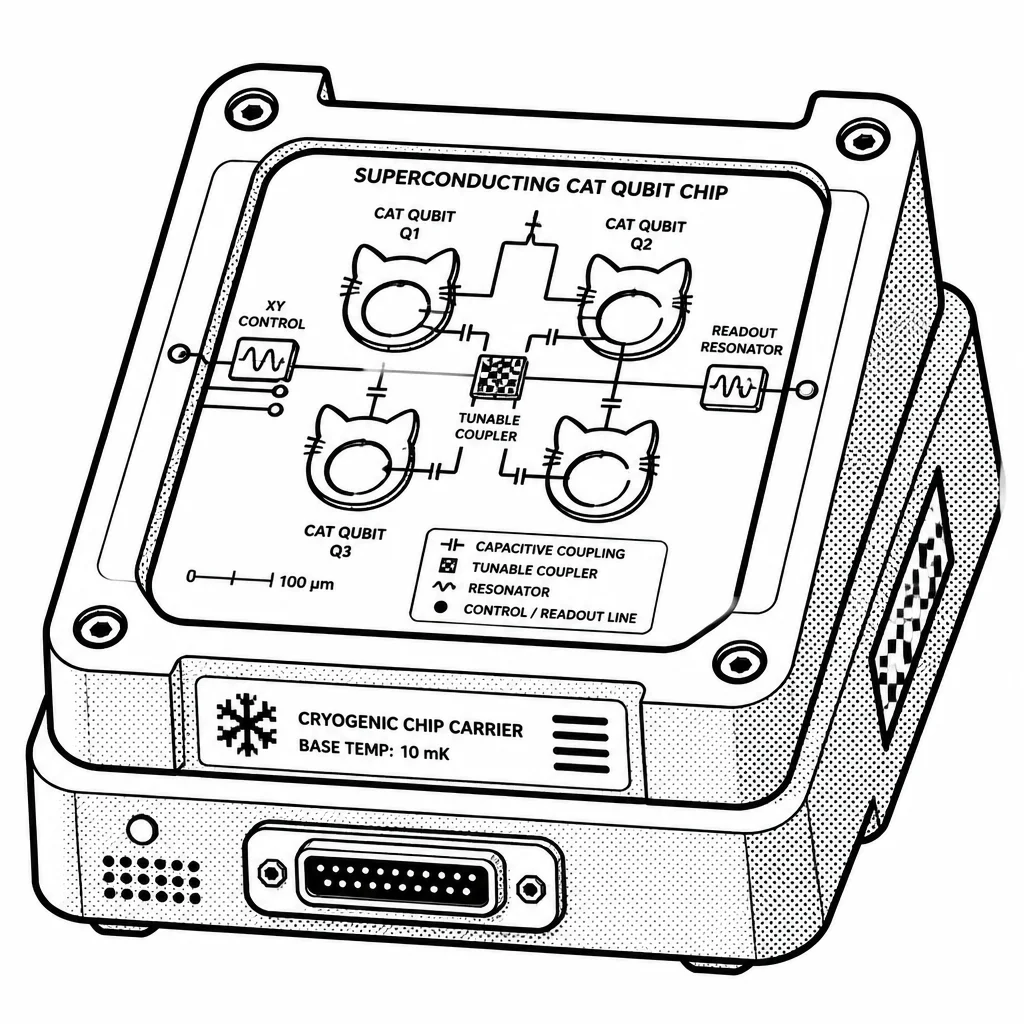
The hard part of quantum computing is that the basic building blocks, called qubits, are extremely fragile. A tiny bit of noise from heat or vibration makes them lose their information, which is called an error. Most companies try to solve this by building error correction in software after the fact. Alice & Bob takes a different route: it uses a design called a "cat qubit" that makes one specific type of error vastly less likely by its very nature. The bet is that this hardware-level fix makes building a useful, large-scale quantum computer much easier and cheaper. The company has raised tens of millions in venture funding and works with research labs and corporate partners to develop the technology. Alice & Bob is named after the two characters famously used in physics thought experiments about communication and encryption. Its big challenge is the same as everyone in the field: quantum computers are still experimental, nobody has built one that is broadly useful yet, and the company does not sell finished machines—it earns money through research partnerships and funding. The company is headquartered in Paris, France, where it develops its chips and control systems.
Whether cat qubits become a mainstream approach is still an open question. Big players like IBM and Google are pursuing their own quantum roadmaps, and many other startups are chasing the same prize. Alice & Bob's strength is its focused, differentiated engineering bet; its vulnerability is that the whole industry might take years longer to pay off than investors hope.
Saved answer · last researched 10 Nov 2026
BIG PICTURE
IBM, Google and private quantum players share 76% of the market, analysts say
- 76% IBM, Google and private players including Alice & Bob and Pasqal
- 24% Other players
Quantum computing has no clear winner yet. Analysts put 76% of the market in the hands of big names like IBM and Google plus private firms such as Alice & Bob and Pasqal, which leaves everyone else sharing the rest. Alice & Bob sells no finished machines at scale; its money comes from funding and research partnerships on error-resistant cat qubits. Source: TradeVae, data from 2026
Timeline
Cat Qubits Leave the Lab
Raphaël Lescanne had a clever idea in the lab: a quantum bit built so that it is naturally protected from one of the most common errors that spoil quantum computing. That kind of error is called a bit-flip, and it is a basic reason quantum machines struggle to stay reliable. Théau Peronnin saw the work and pushed Lescanne to turn it into a company. Alice & Bob was born with one job: take cat qubits from a physics paper to industry.
Three Million Euros and Ten Researchers
The young company raised its first three million euros and put together a scientific board. Within a month, the team had grown to ten researchers. For a startup that started as a lab idea, that was a strong sign people believed the physics could become a product.
A Hundred Seconds Without a Bit-Flip
An Alice & Bob chip set a world record: it went a hundred seconds without a bit-flip error. That got investors' attention, and they signed a twenty-seven-million-euro Series A. The company now had real money behind its bet on cat qubits.
Sixty Times Fewer Qubits
The team published evidence that its cat qubits would need about sixty times fewer qubits than other designs to run powerful quantum algorithms. That matters because building qubits is hard and expensive, so needing fewer of them is a huge advantage. The company also ran its first operations between qubits on its Hydrogen chip series.
Boston Branch and a Cloud Notebook
Alice & Bob opened a branch in Boston, its first step outside France. It also released a cat-qubit emulation notebook with partners Equinix and OVH Cloud, so other people could experiment with cat qubits without owning the hardware. The company was starting to build a community around its approach.
Two Hundred Times Fewer Qubits
The company proposed a new error-correction technique that would need around two hundred times fewer qubits than other state-of-the-art designs. Error correction is the hard part of making quantum computers useful, because qubits make mistakes and you need a way to fix them. Each jump like this made the case that cat qubits could get to a working machine sooner.
A Hundred Million Euros for a Bigger Lab
Alice & Bob closed a hundred-million-euro Series B. The money would fund a large research and development facility in Paris and support the push to build the first fault-tolerant logical qubit, with the goal of a useful quantum computer by 2030. A fault-tolerant logical qubit is the milestone where error correction finally works well enough to trust the machine.
NVIDIA Joins the Series B
After two years of working together on the technical side, NVIDIA invested through its NVentures arm in an extension of the Series B. The deal deepened the integration of cat qubits with NVIDIA's CUDA-Q and NVQLink hybrid computing ecosystem, tying Alice & Bob's hardware into a much larger software and computing world.