Understand any stock in simple English
Enter a ticker to learn what the company does and how it makes money.
ALDI Süd (Aldi Süd Dienstleistungs-GmbH & Co. oHG)
Aldi Süd runs a huge chain of bare-bones discount supermarkets across southern Germany and several other countries, selling everyday groceries and household basics at the lowest prices it can manage.
Aldi Süd is one of the two companies that most of the world simply calls "Aldi." It runs discount supermarkets — mostly food, plus household basics like detergent, paper towels, and cheap seasonal gadgets — and its whole pitch is brutally simple: sell a small range of good-enough products at prices competitors struggle to match. Shoppers go there to save money on the weekly grocery bill, not to browse.
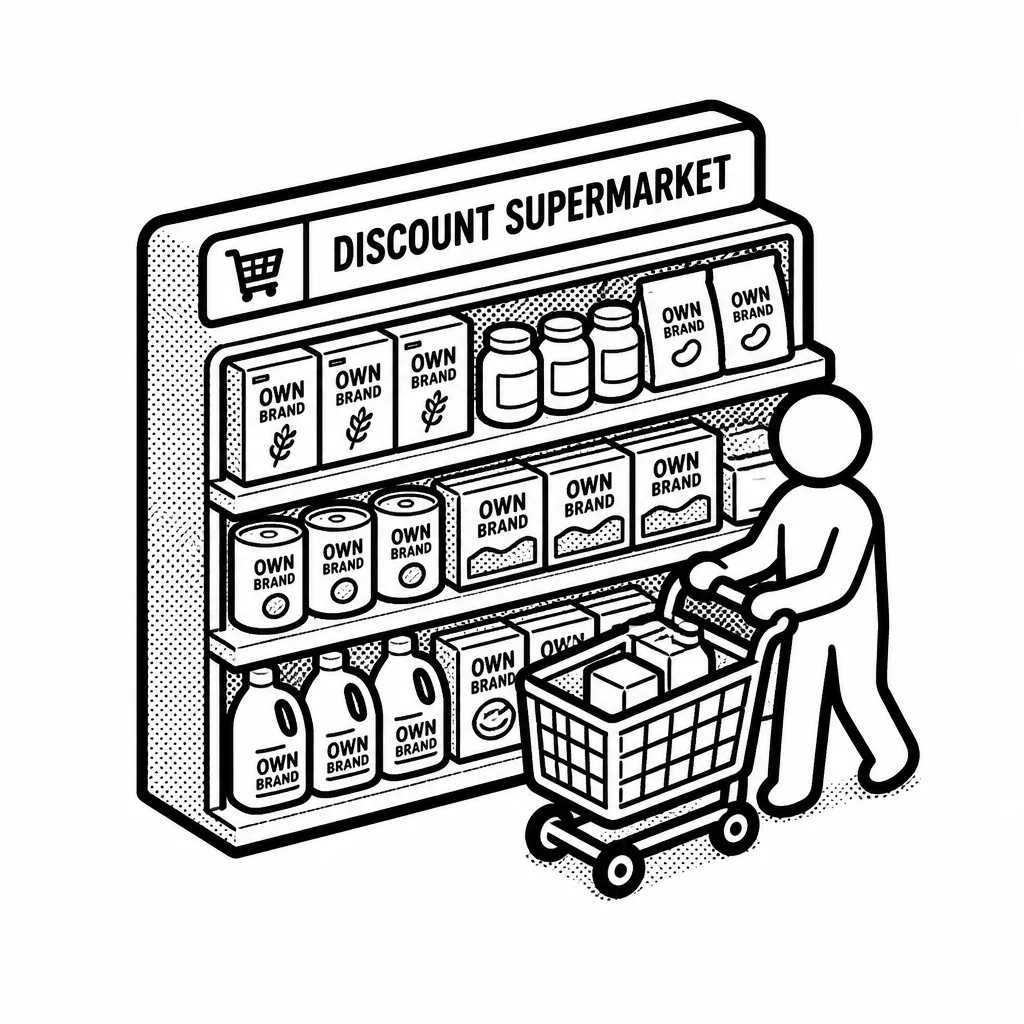
The trick is extreme frugality. Stores are small and plain, most goods sit in their cardboard boxes on pallets, and customers bring their own bags and often bag their own groceries. Aldi Süd keeps only a limited number of brands, leans heavily on its own private labels, and buys in enormous volumes, which squeezes suppliers on price. That low-cost machine lets it undercut full-range supermarkets and still make money on thin margins. The company is private — no stock ticker — and famously secretive. It grew out of the Albrecht family's discount empire: the brothers Karl and Theo split the business in 1961, with Karl taking the south (Aldi Süd) and Theo the north (Aldi Nord), which is why Germany has two separate Aldis. Aldi Süd's reach stretches well beyond Germany, and its US arm (branded simply "Aldi") has been expanding fast, pushing Walmart and other grocers to sharpen their own prices.
Aldi Süd competes with discount chains and big supermarkets alike — in Germany chiefly Lidl's owner Schwarz Group (private) and other low-cost grocers, and abroad against established players. Its edge is cost discipline and a loyal bargain-hunting customer base; its weakness is that it offers little frill, so it can lose shoppers who want choice, service, or a full weekly shop in one trip.
Saved answer · last researched 10 Nov 2026
Timeline
A Mother's Small Store
Long before Aldi existed, a mother in a suburb of Essen, Germany, opened a small grocery store. Her sons, Karl and Theo Albrecht, inherited it, and it survived the wartime bombings. That modest shop became the seed of everything that followed.
The Brothers Build a Chain
After the war, the Albrecht brothers officially founded their grocery chain, selling a limited range of products at low prices from small neighbourhood stores. The idea was simple: strip out everything fancy and let the low price do the talking. It worked, and by the mid-1950s they ran over a hundred stores, undercutting competitors in a country rebuilding itself.
A Split Between Brothers
The brothers had built the business together, but by 1960 they jointly owned 300 shops and could not agree on how to run them. The reported trigger was whether to sell cigarettes; some observers instead point to their very different management styles. Either way, they divided the company: Theo took Aldi Nord, Karl took Aldi Süd, and the two halves went their separate ways.
The Name Aldi
Soon after, the brothers gave their stores a name: Aldi, short for Albrecht-Diskont, or Albrecht Discount. It started as a label and became the formal corporate name years later. The name told customers exactly what to expect — a discount, nothing more.
Two Companies, One Map
By the mid-1960s, Aldi Nord and Aldi Süd were fully separate businesses, financially and legally. They split the world between them, each taking different countries, with one curious exception: the United States, where both would operate. It was a tidy arrangement between two brothers who no longer wanted to share a checkbook.
First Step Abroad
Aldi Süd made its first move outside Germany by buying the Austrian grocery chain HOFER. Austria became its first foreign market, and the Hofer name stuck for stores in Austria and Slovenia. It was the beginning of a long run of international expansion.
Crossing to America
Aldi Süd opened its first US store in Chicago. America would become the one country where both Aldi branches operate side by side — and, for Aldi Süd, a key growth market. The move planted a flag that would matter a great deal later.
The Founders Step Back
The Albrecht brothers retired as CEOs, handing control to private family foundations rather than to outside managers. Aldi Süd passed to the Siepmann Foundation. The company would stay privately held and famously quiet, run for the long term rather than for the applause of public markets.
Buying Winn-Dixie and Harveys
Aldi Süd struck a deal to acquire about 400 Winn-Dixie and Harveys Supermarket locations across the southeastern United States. The purchase closed the following March, giving Aldi Süd a big new foothold in a region where it had been thin. It was a bold bet on American growth.
A Nine-Billion-Dollar Push
Aldi Süd announced it would invest over $9 billion and open 800 new US stores by the end of 2028. By late 2024 it operated over 2,400 stores across 39 states. America had become the company's central growth engine — the place where its future would be decided.
The Cost of Cutting Too Hard
Then came the reckoning. A drive to cut costs — shedding more than 1,200 jobs, simplifying the product range, reducing suppliers — backfired, and Aldi Süd lost market share in most of the eleven countries where it operates, especially Germany, the UK, Ireland and Switzerland. Stores grew messy and shelves went empty, customers noticed, and rival Lidl gained ground. Aldi Süd began rethinking its strategy, trying to balance efficient logistics with the customer service and in-store experience it had let slip.