Understand any stock in simple English
Enter a ticker to learn what the company does and how it makes money.
Ada Support, Inc.
Ada sells software that lets companies build AI chatbots to answer customer support questions automatically.
Ada is a customer service software company. It helps businesses handle the flood of routine questions — "where is my order," "how do I reset my password," "what's your return policy" — without making customers wait on hold or forcing a human agent to type the same answer for the hundredth time. Its product is an AI-powered chatbot platform that companies plug into their website, messaging apps, and phone lines, and the bot answers customers in plain language on its own.
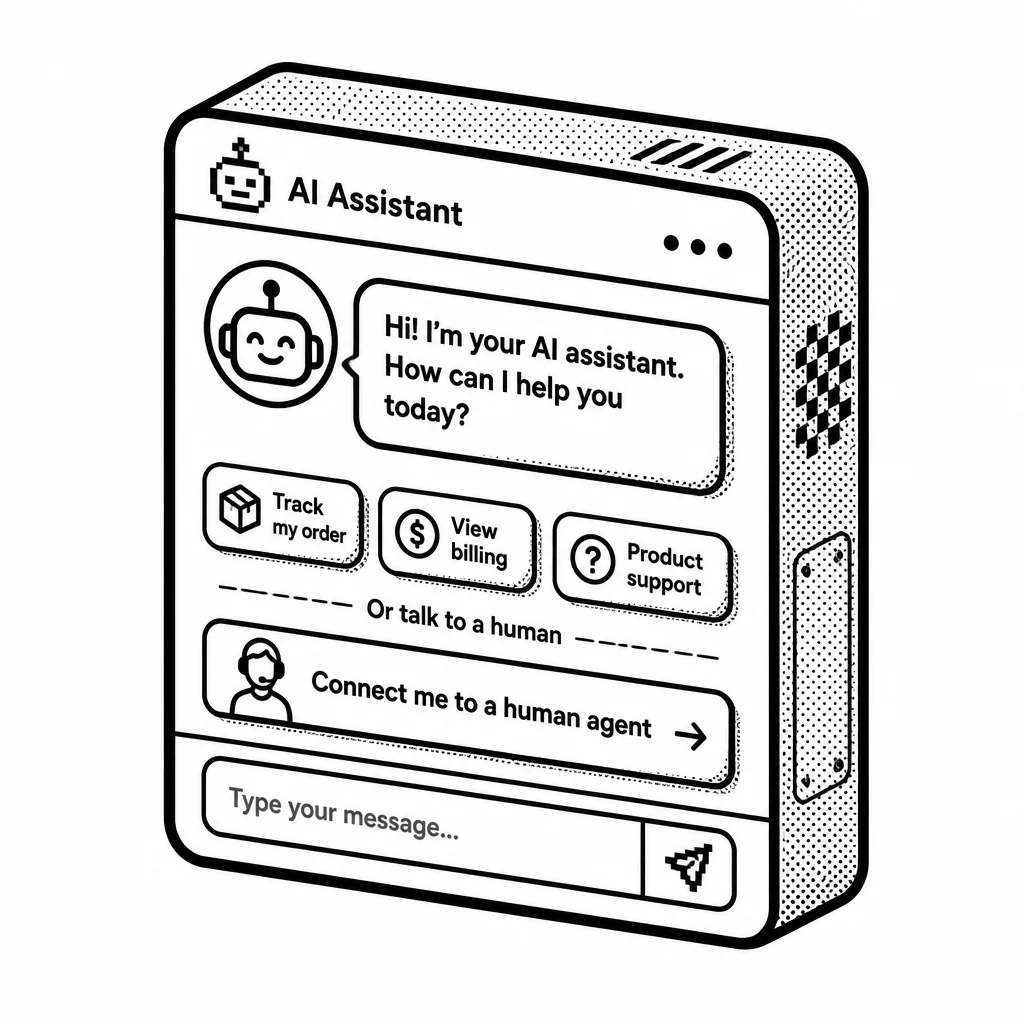
The way it works: a company connects Ada to its help articles, order systems, and other data, and Ada's software builds a virtual agent that can respond to real questions. When the bot can't solve something, it hands the customer off to a live human agent, ideally with the context already gathered. Customers pay Ada a subscription based on how much the bot is used, so the more conversations Ada automates, the more the company is worth to its clients. The pitch is simple: cut support costs, keep customers happy, and let human agents focus on the hard problems. Competitors include Salesforce with its Service Cloud, Zendesk, and Freshworks, plus a crowd of newer AI-native rivals. Ada was founded in Toronto in 2016 by Mike Murchison and David Hariri, and it became one of Canada's more closely watched software startups, riding the wave of interest in AI as large language models made chatbots suddenly far more capable. The company raised a substantial venture round to build out its platform and expand into the United States and Europe. Like many venture-backed software firms, it is private, so it doesn't report public financials — but its bet is clear: every company with a customer support desk is a potential customer.
The risk is real, though. The chatbot market has become ferociously crowded, and the big platforms — the customer service suites that companies already use — can bundle their own AI agents and make it painful to switch. AI models are getting cheaper and easier to build with, so the technical edge that once made a specialized chatbot company special is narrowing. Ada's survival depends on staying faster and smarter than the giants, and on convincing customers that a dedicated specialist beats a checkbox feature bolted onto software they already own.
Saved answer · last researched 10 Nov 2026