Understand any stock in simple English
Enter a ticker to learn what the company does and how it makes money.
Waste Connections, Inc.
Waste Connections picks up and disposes of trash and recycling for homes, businesses, and cities, mostly in the US and Canada.
Waste Connections is a garbage company — but in the nicest, most literal sense. It collects non-hazardous waste from homes, businesses, and municipal customers, hauls it away in trucks, and either dumps it in landfills it owns or transfers it to someone else's. It also runs recycling operations and sells recovered materials. The company operates across the US and Canada, with its headquarters in The Woodlands, Texas, just outside Houston.
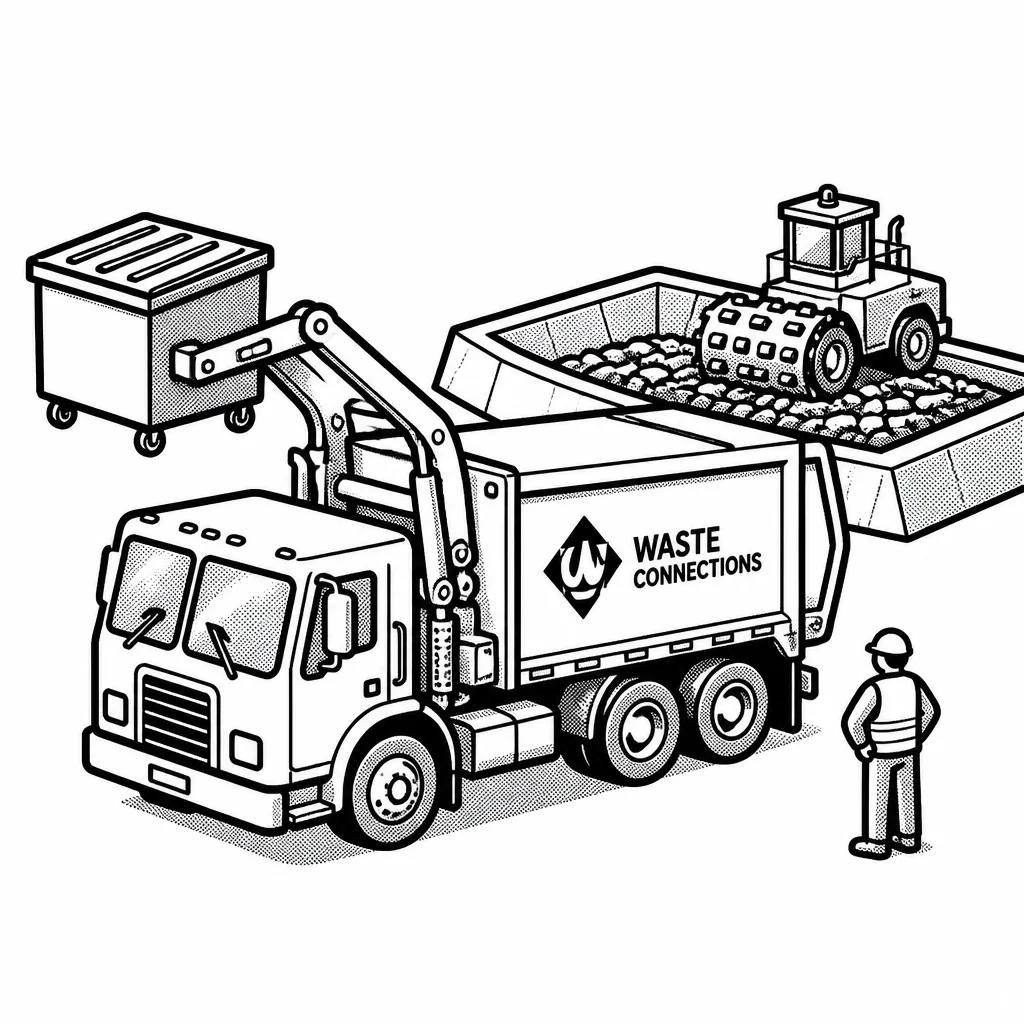
Here's why trash is a surprisingly good business. Everyone generates it, every day, and nobody wants to keep it. You can't outsource your garbage to a cheaper country or download it. The service is local, the routes are dense, and once a city signs a multi-year contract, switching haulers is a hassle. That gives Waste Connections something close to a moat: steady, recurring revenue that barely blinks when the economy wobbles. The company has spent years buying up smaller independent haulers and landfills, a roll-up strategy that lets it expand without building everything from scratch. Its main rivals are Waste Management and Republic Services, the two giants of North American trash, plus countless small private operators. Waste Connections differentiates itself by focusing on secondary markets and rural areas where competition is thinner and prices hold up better than in crowded big cities. It also leans on its landfill network: owning the place where trash ends up is far more profitable than just driving the truck.
One thing that stands out: Waste Connections pays a dividend and has raised it consistently, and it also buys back shares — a sign it generates more cash than it needs for trucks and landfills. In recent years it has kept acquiring smaller companies, pushing into new regions and adjacent services like oilfield waste in parts of the US and Canada. The business is boring in the best way. Trash isn't going anywhere, and neither is the company that hauls it.
Saved answer · last researched 12 Nov 2026