Understand any stock in simple English
Enter a ticker to learn what the company does and how it makes money.
Siltronic AG
Siltronic makes ultra-pure silicon wafers — the blank discs that computer chips are built on — and sells them to chipmakers around the world.
Siltronic makes the starting material for almost every computer chip on Earth: a perfectly round, mirror-polished disc of pure silicon, roughly the size of a dinner plate. Chipmakers buy these blank wafers, then print billions of microscopic circuits onto them and cut the result into individual chips. Without a clean, flawless wafer underneath, none of it works — a single stray atom can ruin a chip, so the purity here is extreme.
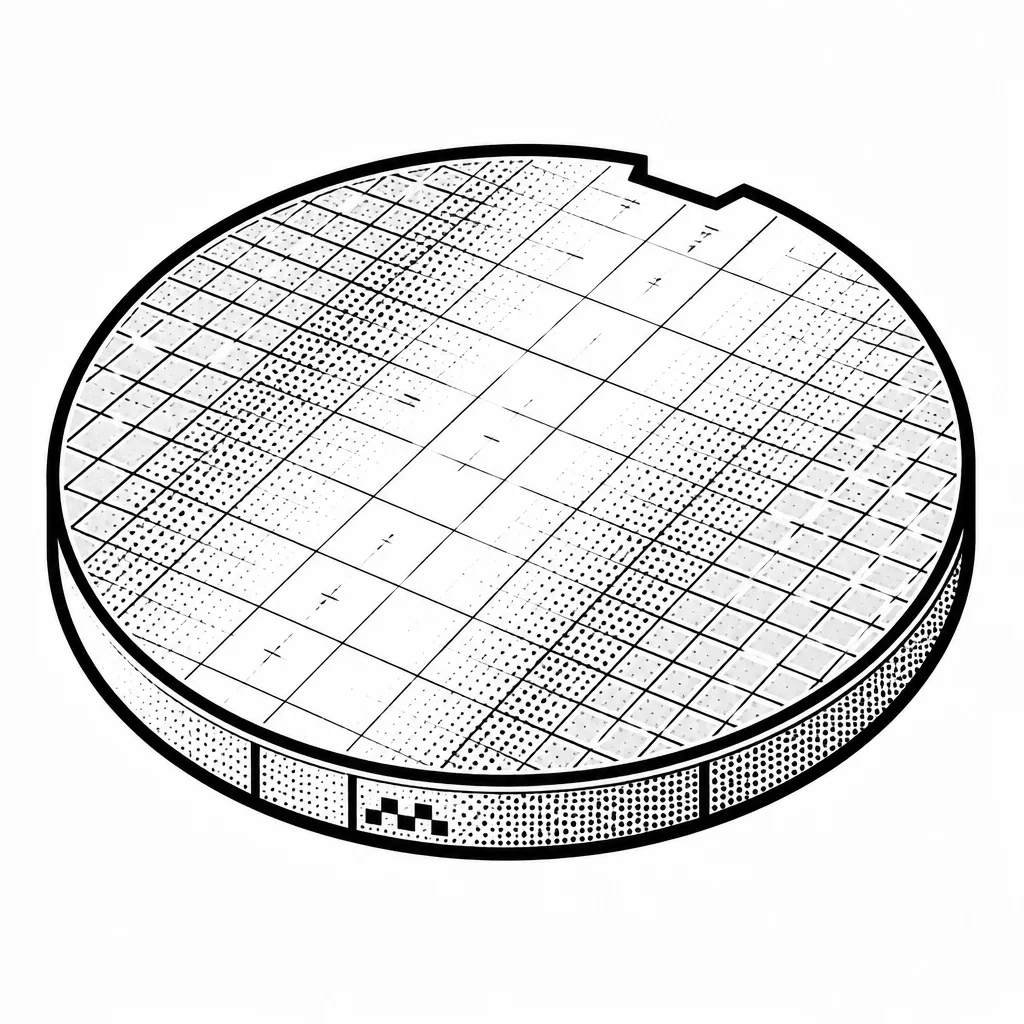
The business is essentially a race to make something almost impossibly perfect, at enormous scale and low cost. Siltronic grows giant silicon crystals, slices them into wafers thinner than a sheet of paper, and polishes them to near-atomic smoothness. Most of its wafers are 300 millimeters across, the industry standard for cutting-edge chips, and it sells to the biggest chipmakers, including TSMC, Samsung, and Intel. Customers stay loyal because switching suppliers means re-qualifying every manufacturing step — a slow, expensive process — so once Siltronic is designed in, it tends to stay designed in. That loyalty cuts both ways. Siltronic's fortunes swing with the chip cycle: when demand for phones, cars, and data centers booms, wafer prices and volumes rise; when inventories pile up, orders slump fast. The company is based in Munich, Germany, and its roots run back to Wacker-Chemie, which is why it was long known as Wacker Siltronic before listing on the Frankfurt exchange in 2015. A planned merger with Taiwan's GlobalWafers was blocked by regulators in 2022, leaving Siltronic independent.
Making wafers is brutally capital-intensive. Building a new plant costs billions and takes years, so the company spends heavily on factories and equipment rather than showering cash on shareholders. In good years it pays a modest dividend and keeps the rest to fund expansion and ride out downturns. That is the whole gamble: spend big in the booms, survive the busts, and stay essential to an industry that cannot build a single chip without you.
Saved answer · last researched 12 Nov 2026
BIG PICTURE
Siltronic expects server wafers to use 50% more silicon area this year as AI data centers spread
- 50% Growth in wafer area used by servers in 2026
- 50% All other demand, such as recovery in 200mm wafers
Siltronic says the amount of silicon wafer area bought for servers will grow by half in 2026, while smartphone and PC makers pull back because memory chips are scarce. The company's 300mm wafers are running near full capacity, and its new Singapore fab exists to feed that AI-driven server demand. Prices outside long-term contracts are only inching up, though, which is why the sales gains have not yet turned into a profit. Source: Der Aktionär, data from 2026