Understand any stock in simple English
Enter a ticker to learn what the company does and how it makes money.
Tecsys Inc.
Tecsys sells supply chain management software and consulting services that help hospitals, retailers, distributors, and logistics companies track and move their inventory.
Tecsys makes software that keeps warehouses, hospitals, and stores from running out of the things they need. When you order a product online or a hospital needs a box of gloves, someone has to know exactly where that item is, how many are left, and when to reorder. Tecsys builds the digital system that answers those questions. Its customers are mostly wholesale distributors, retailers, logistics providers, and healthcare organizations.
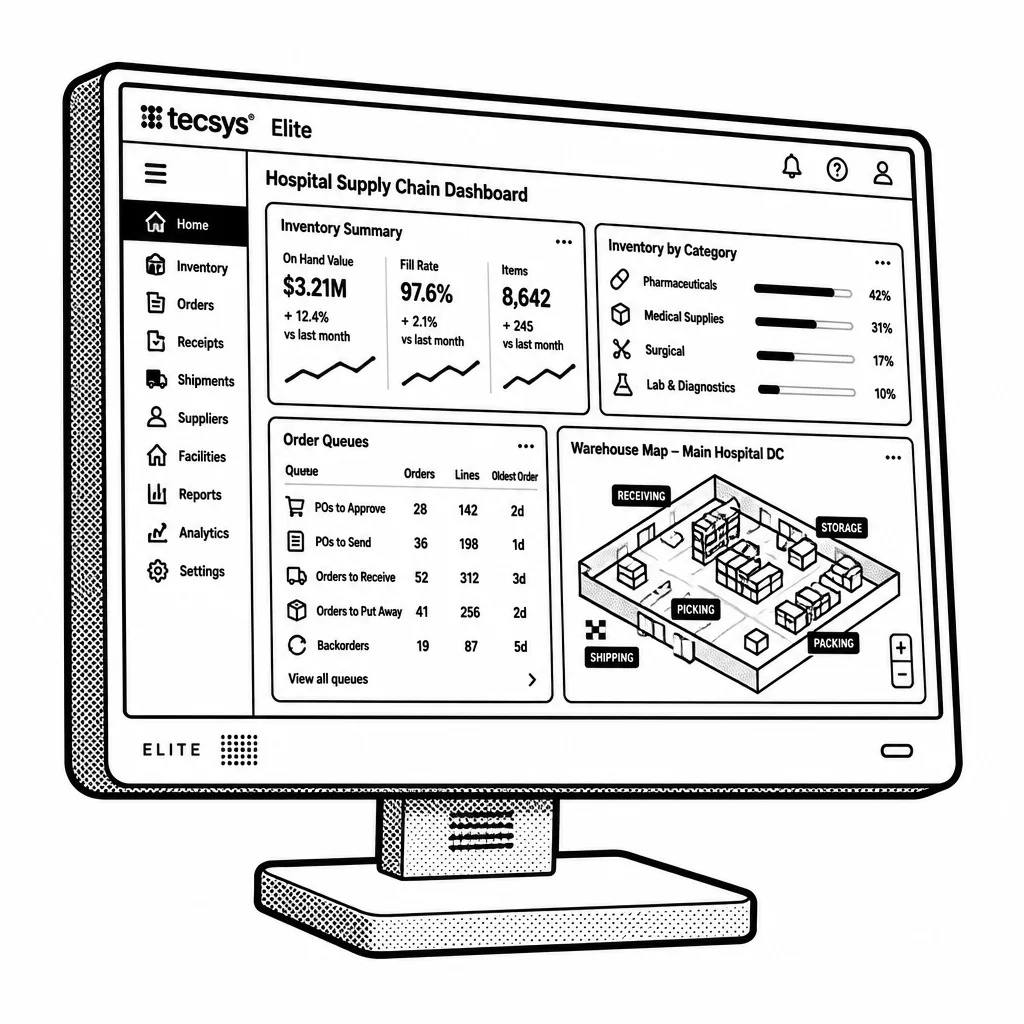
The company started out making warehouse management software — the brain that tells workers where to find items on shelves and how to pack orders efficiently. Over time it expanded into planning tools that forecast demand, track inventory across many locations, and manage the flow of goods. It also sells consulting services to help customers install and customize all this, which matters because big hospitals and distributors have complicated operations that off-the-shelf software can't handle. Healthcare became a big focus. Hospitals use Tecsys software to manage medical supplies the way a warehouse manages packages, making sure critical items are stocked without wasting money on excess. That niche is sticky: once a hospital wires its supply chain into a system, ripping it out is painful, so customers tend to stay for years and keep paying for support and upgrades.
Tecsys competes with much larger players like SAP and Oracle, but wins customers who want something focused rather than a giant all-in-one suite. It pays a small dividend and has generally run a profitable, steady business rather than chasing hypergrowth. Its real risk is that it's small and sells to cautious buyers — hospitals and distributors don't switch software quickly, which cuts both ways: slow to lose customers, but also slow to win new ones.
Saved answer · last researched 16 Nov 2026