Understand any stock in simple English
Tata Motors Limited
Tata Motors builds trucks, buses, small commercial vehicles, and electric vehicles for customers in India and around the world.
Tata Motors is one of India's biggest makers of trucks, buses, and commercial vehicles. If you run a delivery business, a bus company, or a factory that needs to move goods, Tata Motors sells you the wheels to do it. It builds everything from tiny last-mile cargo vans to massive highway trucks and passenger buses, and it sells these mostly in India but also across Africa, the Middle East, and other international markets.
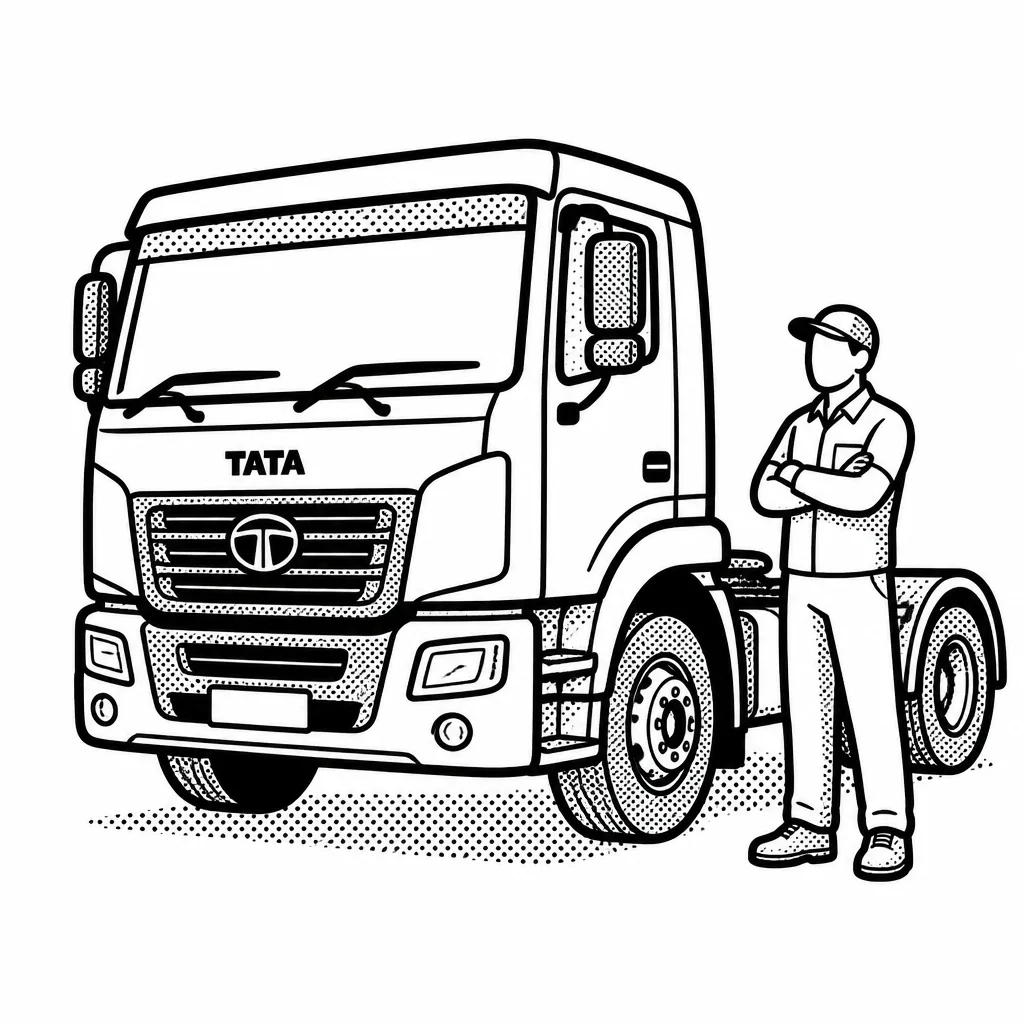
The company makes money by selling vehicles and, just as importantly, by selling spare parts and service over the life of those vehicles. A truck is a tool for earning money, so buyers care about uptime — a truck sitting in a repair shop earns nothing. Tata Motors' wide dealer and service network across India is a real advantage here, because a driver is rarely far from a mechanic who stocks the right parts. The commercial vehicle business is also cyclical: when the economy booms and freight moves, truck sales jump; when it slows, they slump. Tata Motors was formerly called TML Commercial Vehicles Limited, and today it is focused on commercial vehicles and electric vehicles. The electric push matters: India's cities are choking on pollution, and electric buses and small electric commercial vans are a natural fit for short, predictable daily routes that return to a depot to charge. This makes the company a bet on India's freight and passenger transport, plus the slow electrification of that fleet.
The business is not without bruises. Commercial vehicle demand swings hard with the economy, competition from rivals like Ashok Leyland and global players is intense, and building electric vehicles requires heavy spending before the profits arrive. Still, for a country that needs to move people and goods every single day, Tata Motors sits right in the middle of that flow — selling the machines that keep India's roads working.
Saved answer · last researched 17 Nov 2026