Understand any stock in simple English
Enter a ticker to learn what the company does and how it makes money.
Sysco Corporation
Sysco is a giant food distributor that buys food and supplies in bulk and delivers them to restaurants, hospitals, schools, and hotels.
Sysco is the middleman that keeps much of the food world running. It buys enormous quantities of food and nonfood supplies — everything from frozen chicken and fresh produce to napkins and cleaning chemicals — and trucks them to restaurants, hospitals, schools, hotels, and cafeterias. Most customers could buy these things themselves, but Sysco does the messy work of sourcing, storing, and delivering it all in one order, which saves them time and lets them focus on running their kitchens.
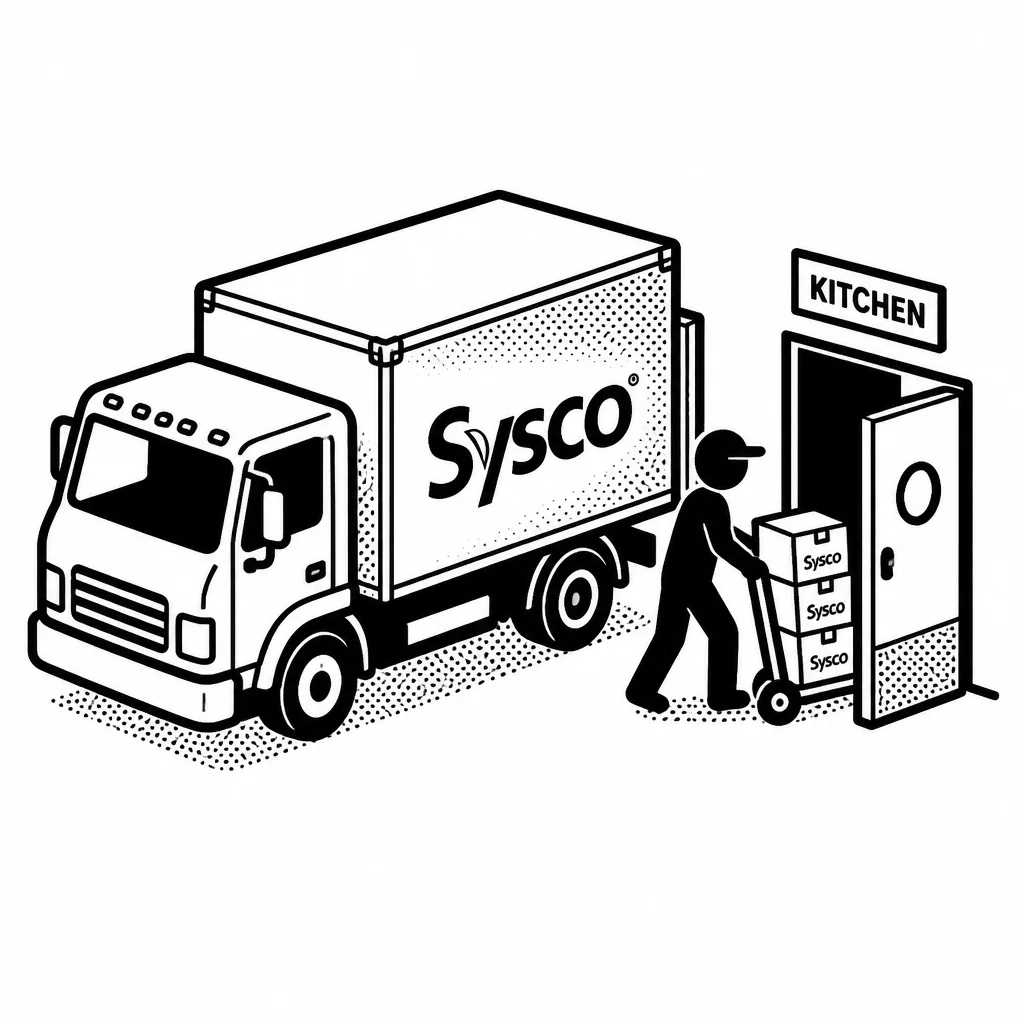
The business runs on scale and logistics. Sysco operates a huge network of warehouses and delivery trucks, and its size lets it negotiate lower prices from suppliers than a single restaurant ever could. It then charges customers for the convenience and reliability of one-stop delivery. The margins on each case of food are thin, so the whole model depends on moving massive volume efficiently and keeping trucks full. When fuel, labor, or food costs rise, Sysco feels the squeeze, and it has to pass costs along carefully without losing customers to rivals like US Foods or Performance Food Group. Its customers are the food service industry, and their health is Sysco's health. When restaurants are busy and travel and dining out are strong, orders grow. When recessions hit or people stay home, those orders shrink. Sysco also serves steadier customers like hospitals, nursing homes, and schools, which helps balance out the ups and downs of the restaurant business. The company has grown partly by acquiring smaller distributors, folding regional players into its national network to expand reach and squeeze out more efficiency.
Sysco is a mature, cash-generating business rather than a fast grower. It returns a lot of that cash to shareholders through dividends — it is a reliable dividend payer — and it has bought back stock over the years. The big question for investors is always the same: can Sysco keep its costs in check and win customers in a low-margin industry where pennies per case decide who profits? It is a steady, unglamorous giant that most people never notice, even though it likely delivered the food on their plate.
Saved answer · last researched 12 Nov 2026