Understand any stock in simple English
Enter a ticker to learn what the company does and how it makes money.
AB SKF (publ)
SKF makes the bearings, seals, and lubrication systems that keep machines and vehicles running, and sells related services to industrial and automotive customers worldwide.
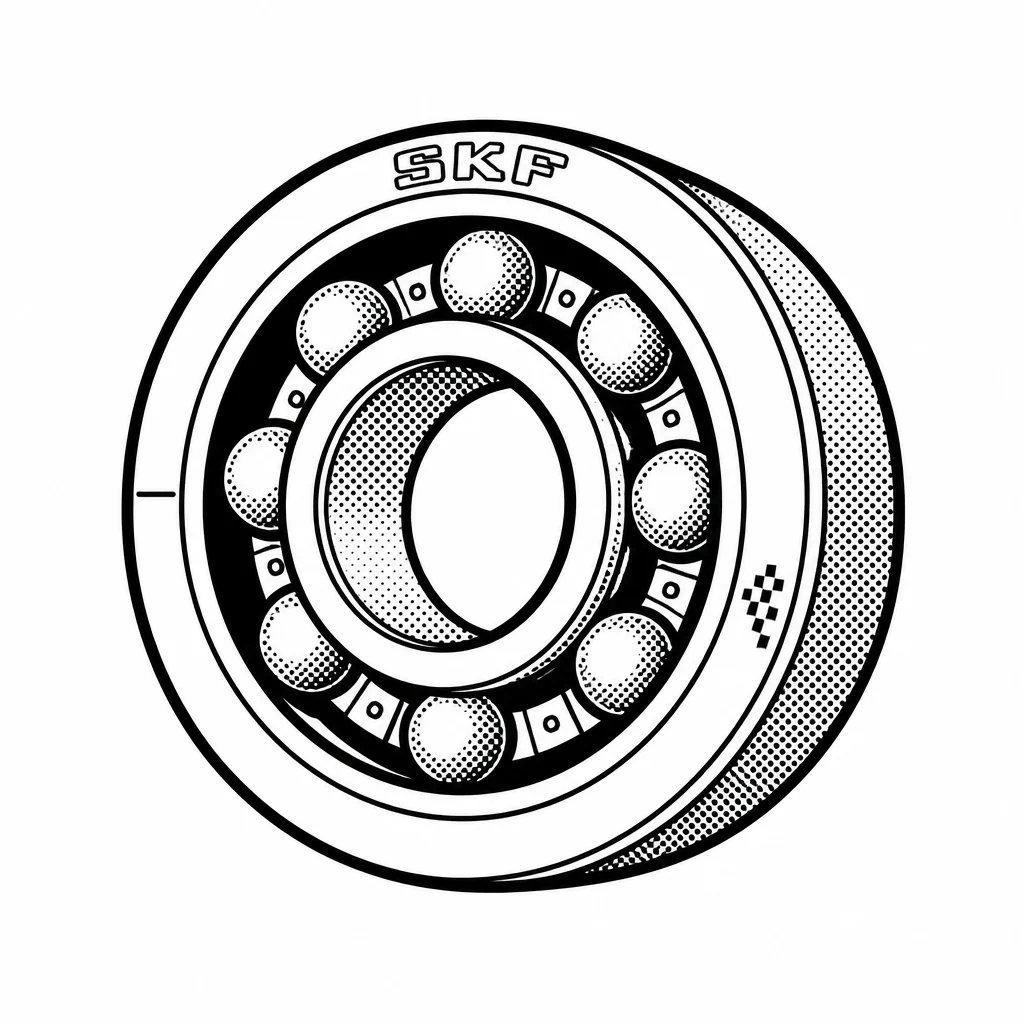
SKF makes the small, unglamorous parts that almost every machine on earth depends on. Its core product is the ball bearing: a ring of tiny steel balls that lets a shaft spin smoothly instead of grinding against metal. Look inside a conveyor belt, a wind turbine, a train axle, or a car wheel and you will probably find one. SKF also makes seals that keep dirt out and oil in, lubrication systems that feed grease to hard-to-reach parts, and condition-monitoring gear that senses when a machine is about to fail. It sells all of this to factories, mines, railways, and automakers, plus services like maintenance advice and remanufacturing.
The business splits into two big pieces. Industrial customers — think mining, energy, paper mills, food processing, and aerospace — form the larger, steadier half, buying bearings and the services around them. Automotive is the other half, selling parts to car and truck makers and to the aftermarket. Customers pick SKF because a failed bearing can shut down an entire production line, so reliability matters more than a few cents of price. That is also SKF's vulnerability: rivals like Schaeffler and Timken make the same parts, and the big automakers squeeze suppliers hard on price. SKF was founded in Gothenburg, Sweden, in 1907, and it is still headquartered there. Its scale matters. The company runs factories in dozens of countries and sells in roughly 130, so it can serve a mine in Chile and a car plant in China from local plants. It also spends heavily on research — bearings are simple in principle but brutally hard to make well at scale, since a tiny flaw in the steel can cause a premature failure years later. That engineering depth is the moat, thin as it is.
The company is a slow-growth, cyclical business that swings with industrial production and car sales. It generates steady free cash flow and pays a dividend, and it has spent years trimming costs and shifting toward higher-margin services and monitoring, where it can sell software and expertise alongside the metal. In 2024 it reported sales of about 100 billion Swedish kronor, roughly flat on the prior year, as weak industrial demand offset pockets of growth. The bet is that as factories get smarter, they will pay SKF not just for the part but for the data and service that keep it spinning.
Saved answer · last researched 15 Nov 2026