Understand any stock in simple English
Enter a ticker to learn what the company does and how it makes money.
Securitas AB (publ)
Securitas sells security services — mainly guards, patrols, and alarm monitoring — to businesses and organizations around the world.
Securitas is a security company, and its core product is people: trained guards who stand at reception desks, walk around warehouses at night, check that doors are locked, and respond when an alarm goes off. It sells these services to businesses and organizations — factories, offices, ports, data centers, hospitals — that want someone else to handle the daily job of keeping places safe. That guarding business is the backbone of the company, and it is what most customers pay for.
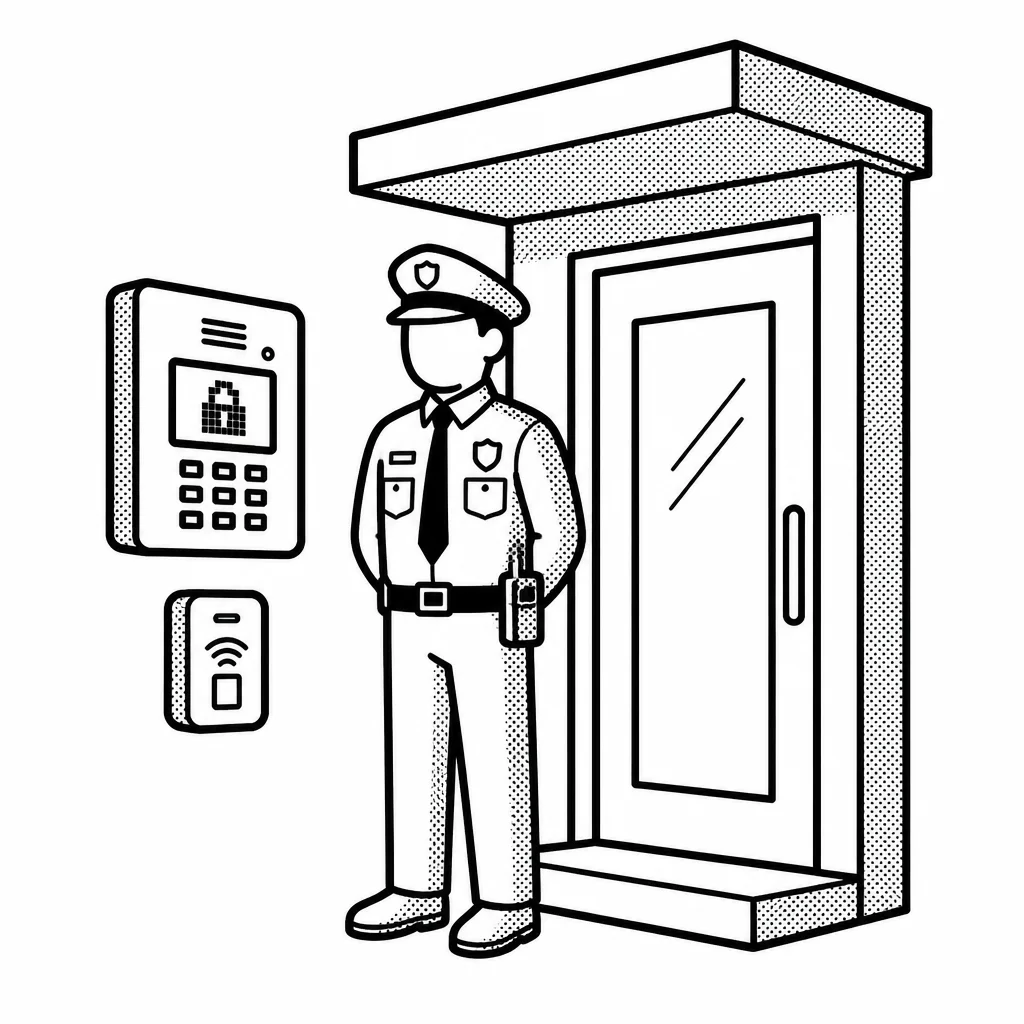
Around that core, Securitas has built two related businesses. One is technology: it installs and monitors alarms, cameras, and access systems, so a client can watch a building remotely instead of paying a guard to stand there. The other is consulting, where it assesses a client's risks and designs a security plan. The logic of the mix is simple — a camera can watch more doors than one person can, so guard work and tech work increasingly get sold together, and the company has pushed hard to grow the technology and monitoring side because it earns better margins than plain guarding. The business is enormous but thin-margin. Securitas operates across Europe, North America, and Latin America, employing hundreds of thousands of people, and most contracts are long-term and renewed, which gives it steady recurring revenue. The catch is that guarding is labor-intensive: wages are the biggest cost, and clients are price-sensitive, so profit per contract is small and the company lives on volume and efficiency. Competitors include other large security firms such as Allied Universal in the US and G4S historically in Europe, though the industry is fragmented with many local players. In 2024 the company reported roughly 150 billion Swedish kronor in annual sales, a figure that shows both the scale and the modest margins of the business.
One important structural detail explains a lot about the company. Securitas spun off its electronic security solutions business, now called Verisure, in 2018, handing shareholders a separate company focused on alarm systems for homes and small businesses. That left Securitas focused squarely on guarding and business security. Its free cash flow tends to go toward acquisitions of smaller security firms to expand geographically, paying dividends, and trimming debt. It is not a glamorous business — no one gets excited about a security guard — but it is a durable one: the need to protect people and property does not disappear in a recession, contracts renew quietly, and the company keeps getting a little bigger by buying rivals one region at a time.
Saved answer · last researched 12 Nov 2026